4. Future Procurement Trends & Technical Development Trajectory (2026–2030)
As the global consumer audio market transitions into an era dominated by artificial intelligence, smart wearables, and spatialize audio, bulk purchasers must align their 3-year inventory roadmaps with key technological shifts. Pebble's internal R&D roadmap highlights five pivotal trends shaping the future of TWS Wireless Earbuds:
Trend A: The Integration of Bluetooth LE Audio and Auracast™ Broadcast Architecture
The transition from legacy Bluetooth Classic (A2DP protocol) to Bluetooth Low Energy (LE) Audio powered by the LC3 (Low Complexity Communication Codec) represents the biggest architectural shift in wireless audio in two decades. LC3 enables superior audio quality at half the bit rate of SBC, directly decreasing chip power consumption by up to 40%. Crucially, Auracast™ broadcast audio allows a single transmitter (e.g., airport displays, TV screens, concert stages) to broadcast audio streams to an unlimited number of nearby TWS earbuds simultaneously. Wholesale buyers who stock LE Audio-compatible TWS products now will capture significant market share as smartphones universally adopt BT 5.4 standards.
Trend B: Edge-AI Microcontrollers & On-Device Environmental Acoustic Adaptation
Next-generation TWS earbuds are evolving from passive acoustic transducers into active edge-computing nodes. By incorporating low-power neural processing units (NPUs) into the earbud SoC, modern earbuds can continuously sample ambient decibel levels and structural background noise (such as jet engine rumble or office chatter) to automatically adjust Active Noise Cancellation (ANC) curves without user intervention. Furthermore, AI-driven beamforming algorithms dynamically separate human vocal frequencies from wind noise in real time, making quad-mic ENC an absolute baseline requirement for corporate procurement.
Trend C: Convergence of TWS and OWS (Open-Ear Wearable Stereo) Form Factors
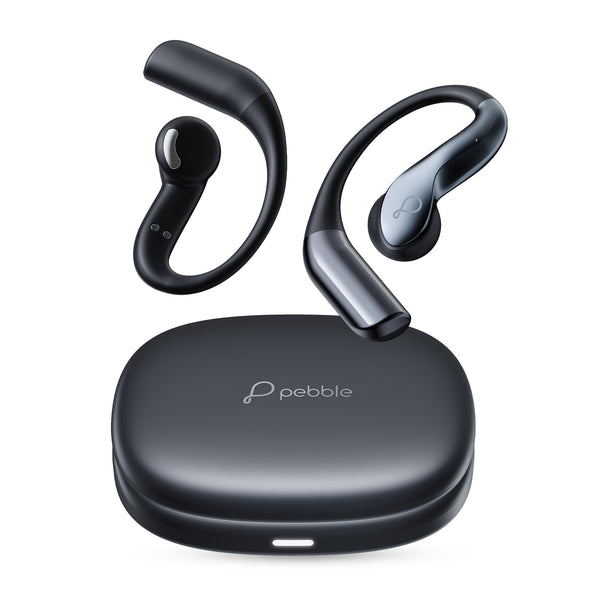
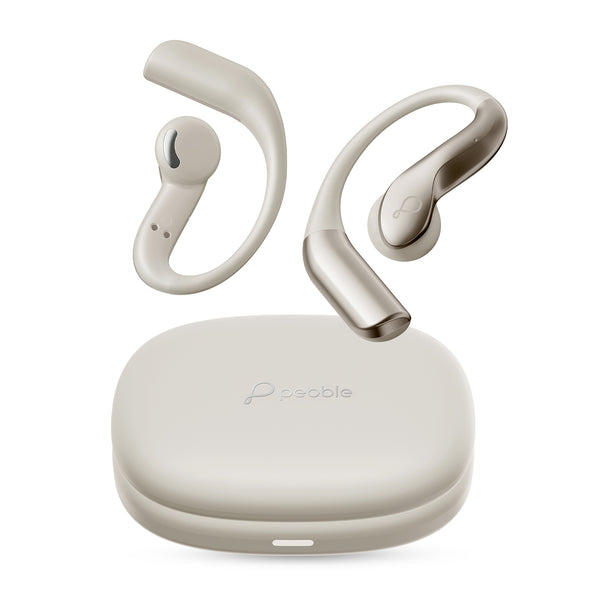
While traditional in-ear silicon-tip earbuds dominate noise-isolation segments, user fatigue and ear canal hygiene concerns have catalyzed explosive growth in OWS (Open-Ear Wireless) audio. Utilizing directional sound-pipe technology and air-conduction acoustic chambers, OWS earbuds deliver rich bass and clear mids without sealing the ear canal. Procurement teams are increasingly stocking hybrid portfolios—offering ANC TWS for travel/focus environments alongside OWS open-ear models for sports, outdoor safety, and prolonged office usage.
Trend D: Smart Display Charging Cases with Micro-MCU UI Control
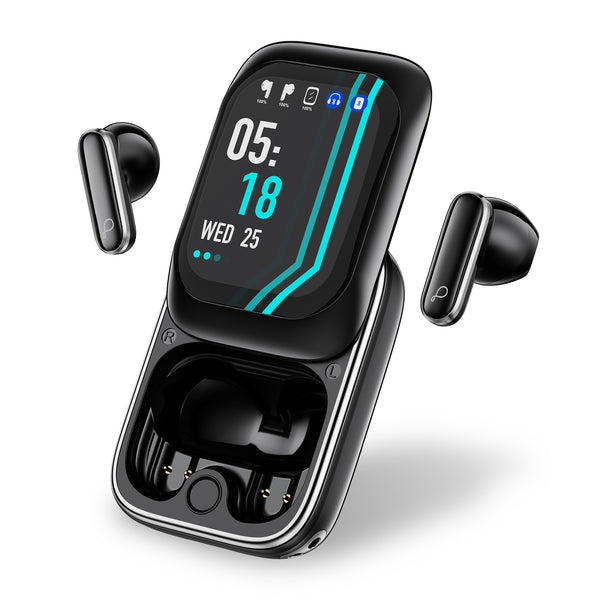
The charging case is no longer just a passive power bank. Leading OEM trends show a rapid adoption of full-color touchscreen micro-displays embedded directly into the charging case lid. Powered by efficient MCU chips, these smart cases allow users to switch EQ presets, toggle noise cancellation modes, adjust volume, locate misplaced earbuds, and view real-time battery diagnostics without unlocking their mobile devices—adding significant perceived consumer value and higher retail margin potential.
Trend E: Circular Sustainability, Modular Battery Tooling, and GaN Power Standards
Global regulatory bodies (including the EU Battery Regulation and ENERGY STAR guidelines) are raising compliance standards for micro-lithium batteries used in personal electronics. B2B buyers must prioritize suppliers who utilize battery protection ICs that prevent overcharging degradation, offer eco-conscious recycled ABS plastic chassis options, and support USB Type-C and fast GaN-class power bank charging compatibility.