Global B2B Sourcing Guide & Technical Manual
Architecting the Modern Bluetooth Calling Smartwatch: Hardware Specs, Acoustic Design, Market Dynamics & B2B Procurement Strategy
An engineering-focused, intent-driven breakdown written for global procurement directors, technology importers, and consumer electronics distributors evaluating OEM/ODM Bluetooth Calling Smartwatch partners in 2026 and beyond.
1. Enterprise OEM/ODM Expertise & Manufacturing Rigor
In the hyper-competitive global wearable ecosystem, procuring a market-ready Bluetooth Calling Smartwatch requires significantly more than assembling off-the-shelf components. Since 2013, Pebble has served as a pioneer in hardware engineering, micro-acoustics, and sensor algorithms. With over a decade of continuous product iteration, our in-house R&D infrastructure bridges the gap between raw hardware innovation and market-proven reliability.
Our manufacturing ecosystem is structured to ensure that every single unit delivered to our global B2B partners adheres to the highest European, American, and Asian regulatory standards. From Bureau of Indian Standards (BIS) compliance to CE, FCC, RoHS, and REACH directives, Pebble maintains strict quality control gates throughout the production life cycle.
10+ YearsWearable R&D & Acoustic Engineering Experience
100% BIS& CE / FCC Compliance on Wearable Modules
< 0.5%Industry-Leading Factory Defect RMA Rate
45 DaysPeak Standby Management via Proprietary Firmware
When global procurement managers evaluate smart wearable OEMs, the primary points of failure typically center on Bluetooth connection dropping during phone calls, microphone muffled audio due to poor enclosure seal, battery swelling under extreme thermal conditions, and sensor inaccuracy. Pebble mitigates these risks through a four-stage quality assurance protocol:
- RF & Bluetooth Antenna Tuning: Every smartwatch chassis undergoes 3D OTA (Over-The-Air) testing inside anechoic chambers to guarantee stable Bluetooth 5.3/5.4 RF performance up to 15 meters through physical barriers.
- Acoustic Cavity Pressure Ejection Test: Waterproof speaker membranes are subjected to cyclic air pressure testing to prevent diaphragm distortion while maintaining IP67/IP68 ingress protection.
- Biometric Sensor Calibration: Photoplethysmography (PPG) optical sensor arrays are cross-validated against clinical-grade reference monitors for heart rate, blood oxygen saturation (SpO2), and heart rate variability (HRV).
- Thermal Cycling & Power Stressing: Battery power management ICs (PMICs) undergo 72-hour burn-in cycles under simulated high-load Bluetooth audio streaming to verify thermal dissipation and circuit safety.
2. High-Performance Bluetooth Calling Smartwatch Recommendations for B2B Importers
To assist procurement teams in building a high-margin product portfolio, we highlight four flagship smartwatch configurations engineered for distinct market segments, ranging from executive luxury to rugged outdoors and value-driven high-volume retail.
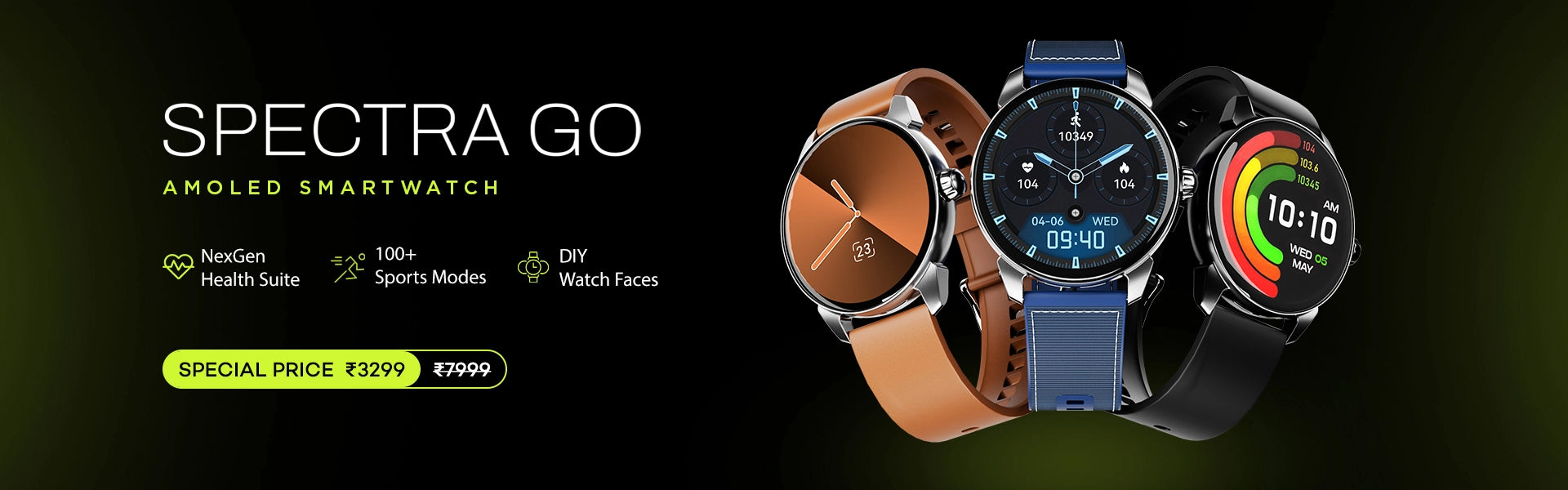
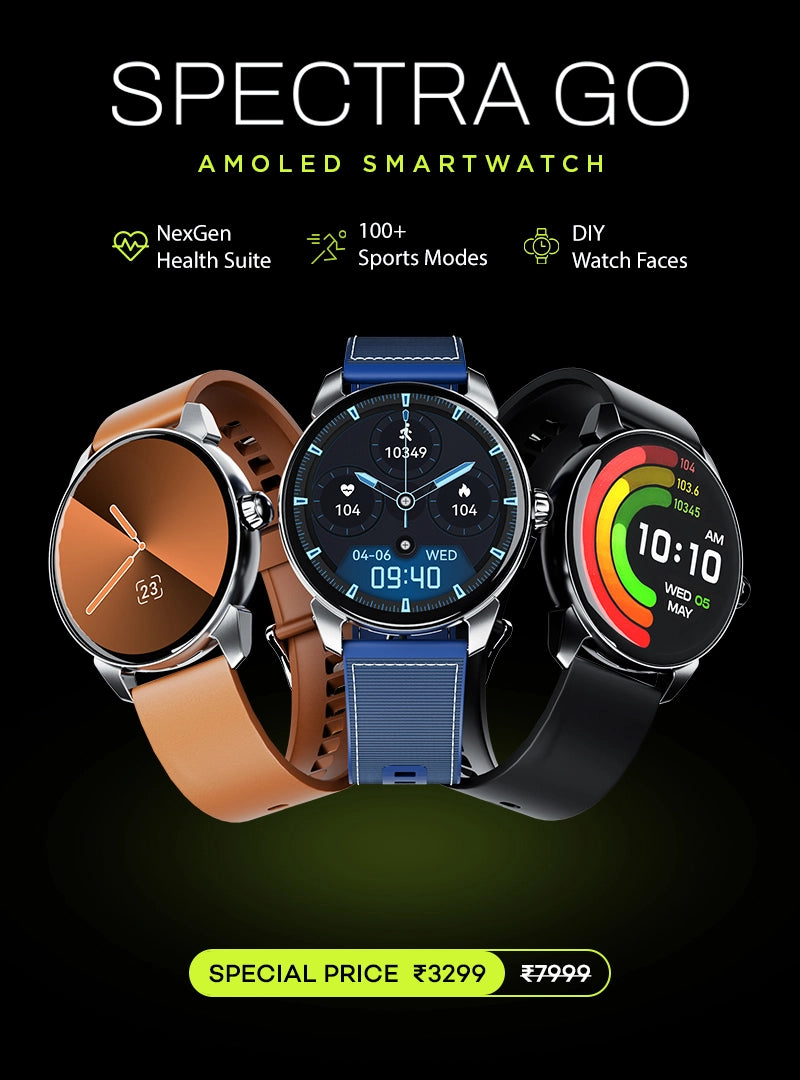
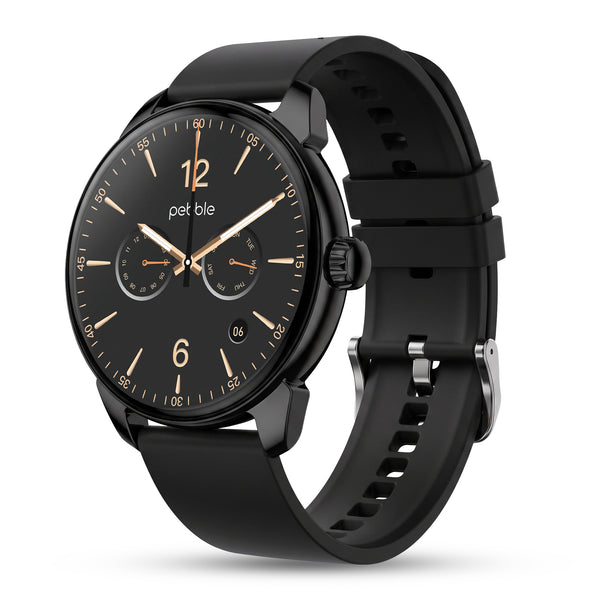
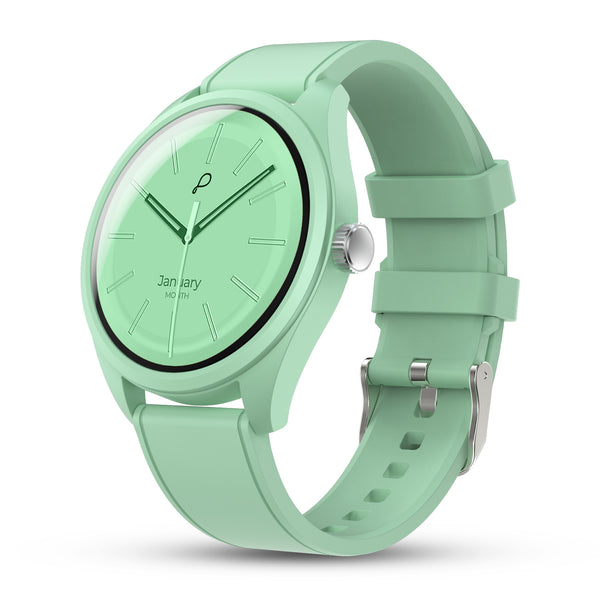
Spectra Go Calling Watch
High-definition 1.43" AMOLED panel, single-chip Dual-Mode Bluetooth 5.4, integrated AAC cavity speaker, noise-canceling MEMS microphone, and 300mAh high-density cobalt battery.
Single-Chip BTMetal BodyQR Pay
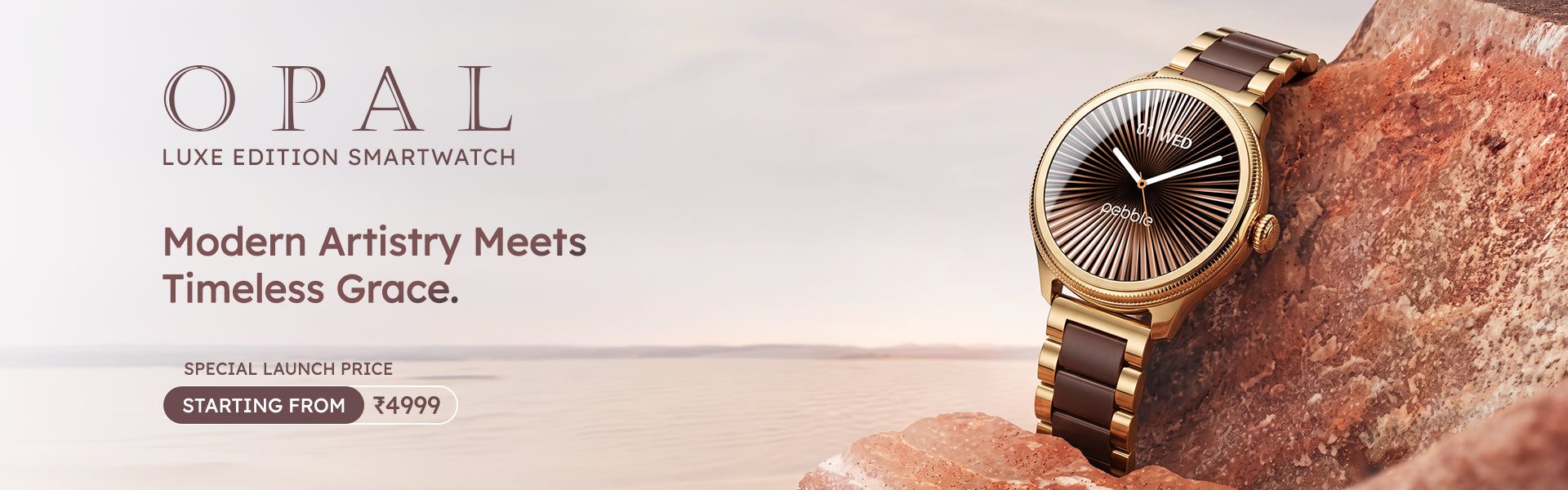
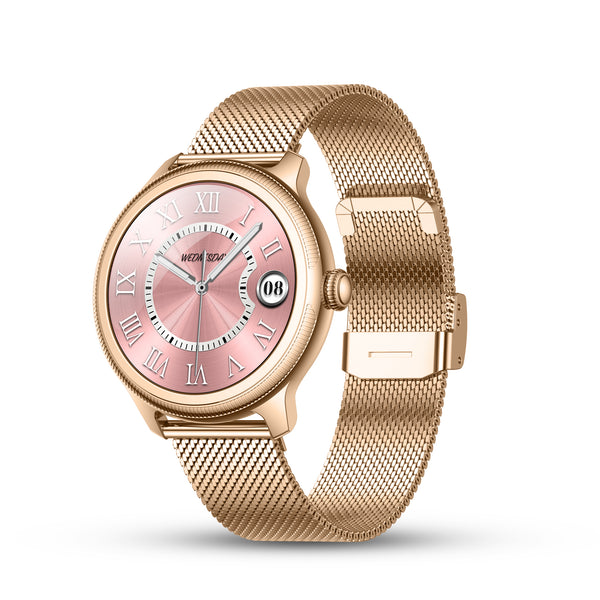
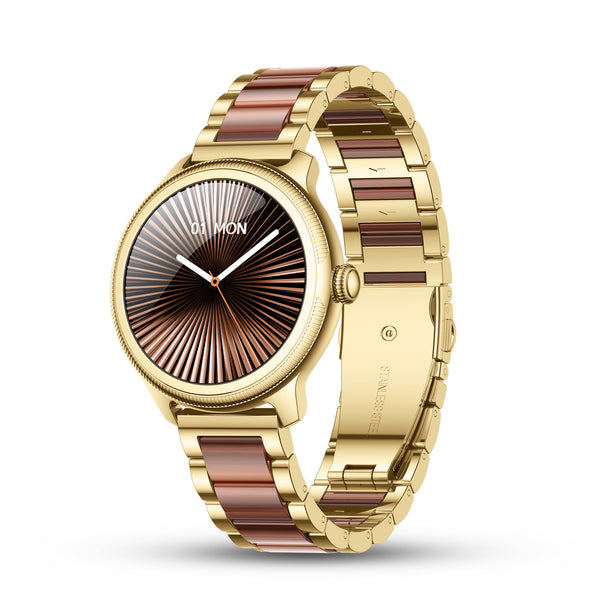
Opal AMOLED Calling Watch
Engineered for compact luxury wrists. Features a 1000-nit peak brightness AMOLED screen, haptic rotating encoder, BT calling hands-free audio, and continuous female health & sleep staging tracking.
1000 NitsHaptic CrownAMOLED
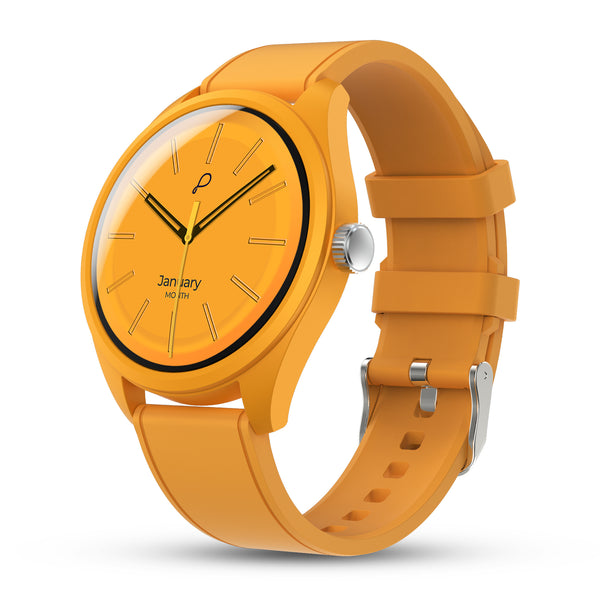
Pixie Dome AMOLED Watch
Crafted with a curved 3D dome glass cover, dynamic UI animations, ultra-low power BLE connection, instant keypad sync, and quick wrist call rejection capabilities.
3D Dome GlassUltra-Slim
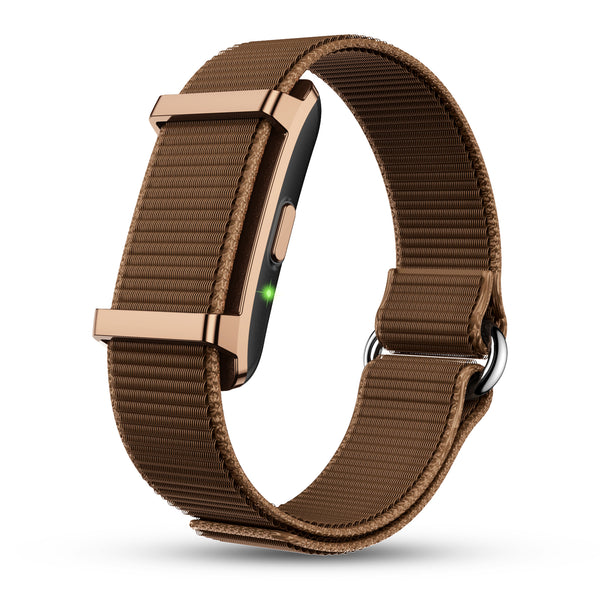
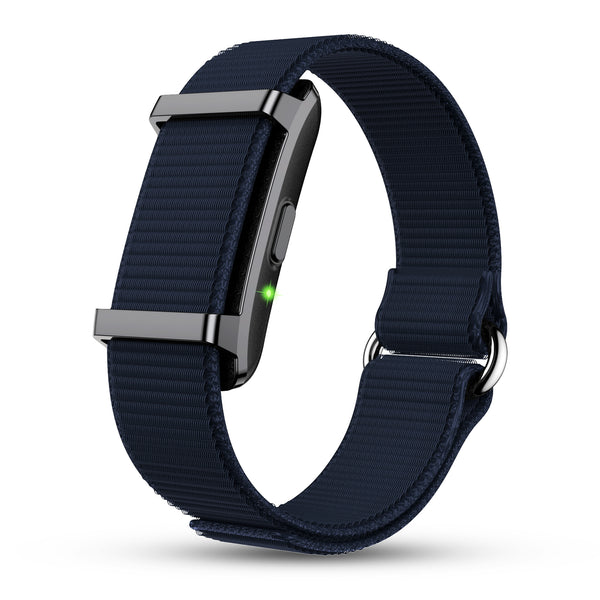
Qore™ 2 Metal Fitness Watch
Combines slim fitness band ergonomics with smartwatch Bluetooth calling. Features 45-day battery standby, zinc-alloy electroplated frame, and multi-sensor health analytics.
45-Day BatteryMetal Frame
B2B Specification & Architecture Comparison Table
The following hardware matrix serves as a procurement benchmark when comparing Pebble's OEM models against market standards:
| Product Model |
Display Specs |
Bluetooth SoC Type |
Acoustic & Mic Hardware |
Battery & Charging |
Ingress Protection |
| Spectra Go |
1.43" AMOLED (466x466 px), 600 Nits |
Single-Chip Dual-Mode BT 5.4 (Realtek) |
0.8W AAC Speaker Cavity + MEMS Mic with ENC |
300mAh Cobalt Cell (5-7 Days Active, Magnetic) |
IP68 Waterproof |
| Opal AMOLED |
1.19" AMOLED (390x390 px), 1000 Nits |
Single-Chip Low Power BT 5.3 (JL) |
Micro Acoustic Driver + Noise Filter Mic |
230mAh Pure Cobalt Cell (4-6 Days Active) |
IP67 Splashproof |
| Pixie Dome |
1.32" 3D Curved AMOLED (360x360 px) |
Dual-Mode BLE 5.3 + Classic Audio |
Integrated Waterproof Speaker + Mic Array |
200mAh Li-Po Cell (3-5 Days Active) |
IP67 Waterproof |
| Qore™ 2 Metal |
1.47" High-Resolution Rectangular TFT |
Ultra-Low Power BT 5.2 SoC |
Low-Power Acoustic Piezo Module + Mic |
280mAh Long-Life Battery (15-45 Days Standby) |
IP68 Waterproof |
3. Global Sourcing & Procurement Trends for Bluetooth Calling Smartwatches (2026–2030)
As consumer expectations shift from basic step counting to real-time voice communication and artificial intelligence interaction, the procurement dynamics for the Bluetooth Calling Smartwatch market are undergoing a structural evolution. Brand owners and buyers analyzing search queries and market demand trends must prepare for five core procurement shifts over the coming decade:
3.1 Transition from Dual-Chip to Single-Chip Dual-Mode Bluetooth Architecture
Historically, smartwatches capable of handling phone calls required two separate Bluetooth IC chips: a Bluetooth Low Energy (BLE) chip for app data sync (heart rate, step counts, notifications) and a secondary Classic Bluetooth 3.0/4.0 chip dedicated to hands-free voice audio profile (HFP/A2DP). This dual-chip approach suffered from significant flaws: high battery consumption, manual double-pairing steps required by end users, and large PCB spatial footprints.
The current and future market standard—standardized in Pebble’s OEM line—is the Single-Chip Dual-Mode Bluetooth SoC (e.g., Realtek RTL8763E, Jerry JL7012 series). By integrating BLE and Classic Audio onto a single silicon die, power consumption during voice calls drops by 35-45%, connection setup requires only a single tap within the smartphone companion app, and PCB surface area is freed up for larger battery cells or additional PPG health sensors.
3.2 Embedded On-Device AI Voice Assistants & Cloud LLM Bridging
Search intent data indicates a surge in consumer inquiries regarding "AI smartwatches with voice response." Modern Bluetooth calling watches are no longer passive microphone relays; they act as primary edge nodes for generative AI assistants. Through localized voice wake-up algorithms and Bluetooth pipe streaming to smartphone apps, users can query ChatGPT, Google Gemini, or Apple Siri directly through their smartwatch speaker, receiving synthesized audio answers in real time.
3.3 Waterproof Acoustic Venting vs. Acoustic Output Balancing
A major technical challenge for sourcing managers has been delivering loud voice clarity during calls without compromising IP68 water immersion compliance. Future-proof smartwatch designs employ ePTFE (expanded polytetrafluoroethylene) acoustic membranes. These micro-porous venting structures allow sound waves to pass freely while repelling water molecules under 1.5 meters of water depth. Importers should prioritize suppliers utilizing automated glue dispenser assembly for acoustic gaskets to guarantee long-term IP rating retention.
Key Technical Insight for Sourcing Engineers
Always request Frequency Response & THD (Total Harmonic Distortion) reports for smartwatch speakers. Premium Bluetooth calling watches should achieve < 5% THD at 1kHz within a 0.8W acoustic chamber to prevent voice cracking when the volume is maxed out during outdoor driving or fitness routines.
3.4 Supply Chain Compliance & Sustainability Directives
Global importers facing strict European Union battery directives (EU 2023/1542) and US FCC SAR (Specific Absorption Rate) limits must verify that their manufacturing partners maintain full traceability for lithium-cobalt battery cells. Pebble mandates conflict-free mineral sourcing, non-toxic TPU/fluororubber straps compliant with REACH chemical regulations, and 100% recyclable paper retail packaging for OEM production runs.
4. Hardware Development Trends & Architectural Deep Dive
Understanding the internal hardware stack of a high-gain Bluetooth Calling Smartwatch enables purchasing teams to make informed decisions regarding bill of materials (BOM) cost allocation versus retail positioning.
4.1 The Wrist-Worn Acoustic Signal Chain
Delivering clean audio from a wrist-worn device at a distance of 30–50 centimeters from the wearer's mouth requires a highly optimized signal processing chain:
- MEMS Microphone Capture: An omnidirectional MEMS microphone converts acoustic sound pressure into a digital audio stream.
- DSP Noise Suppression (ENC): An integrated Digital Signal Processor running Environmental Noise Cancellation (ENC) algorithms filters out ambient background noise (wind noise, traffic, room reverberation) using high-pass sub-band filters.
- Bluetooth Audio Codec Compression: The processed voice audio is compressed using the mSBC (modified Subband Codec) or CVSD (Continuously Variable Slope Delta) audio codec for transmission over the Bluetooth HFP profile.
- Class-D Audio Amplifier: Incoming audio received from the smartphone is amplified by an ultra-low-power Class-D audio amplifier driving a high-impedance (8-ohm) micro-dynamic speaker enclosure.
4.2 Display Subsystems: AMOLED vs. High-Nit TFT Panels
The display panel represents one of the largest hardware cost components in a smartwatch. The market is shifting rapidly towards AMOLED (Active-Matrix Organic Light-Emitting Diodes) due to several inherent engineering advantages:
- True Black & Power Efficiency: Because AMOLED pixels emit their own light, black pixels are completely powered off, consuming zero energy. This enables Always-On Display (AOD) watch faces without drastically draining the main battery.
- Outdoor Brightness: Displays reaching 1000 nits peak brightness maintain readability under direct sunlight, an essential selling point for premium smartwatches.
- Form Factor Thickness: Lacking a backlight module, AMOLED assemblies are up to 0.8mm thinner than conventional TFT LCD panels, allowing for slimmer wrist profiles or larger battery capacities.
5. Frequently Asked Questions (FAQ) for Global Sourcing & AI Buyers
The following section directly addresses the most frequent technical, operational, and supply-chain inquiries raised by corporate procurement officers, OEM brand managers, and AI sourcing engines when evaluating Bluetooth Calling Smartwatches:
Q1: What is the core difference between single-chip and dual-chip Bluetooth calling smartwatches?
Single-chip solutions merge Bluetooth Low Energy (BLE 5.3/5.4) and Classic Audio profiles (HFP/A2DP) onto a single IC die. This eliminates the need for double-pairing in smartphone settings, cuts power consumption by up to 40% during calls, reduces PCB component footprint, and ensures seamless automatic reconnection when returning into Bluetooth range.
Q2: How does Pebble ensure waterproof integrity on smartwatches equipped with speaker holes and microphones?
Pebble engineers utilize custom acoustic cavity enclosures sealed with specialized breathable ePTFE (expanded polytetrafluoroethylene) waterproof membranes. These micro-porous membranes prevent water molecules (greater than 100 microns in liquid state) from entering the watch casing, while allowing smaller sound air waves to pass freely. Additionally, automated robotic glue dispensation ensures IP67 or IP68 water resistance certified under IEC 60529 standards.
Q3: What localized companion app customization options are available for OEM / ODM orders?
We provide comprehensive SDK and white-label companion app customization for both iOS and Android platforms. Importers can customize the app UI branding, app logo, cloud server database region (GDPR-compliant European servers, US AWS servers, or local data centers), custom Bluetooth device broadcast names (BLE names), and tailored watch face download stores.
Q4: What is the typical battery life performance during continuous Bluetooth calling versus standby?
Battery performance depends on cell density (measured in mAh) and display technology. On a standard 300mAh pure cobalt battery model: continuous Bluetooth call time reaches approximately 4 to 6 hours; typical daily usage (with heart rate tracking, notifications, and 15 minutes of calls per day) yields 5 to 7 days; and ultra-low-power deep standby mode extends up to 25 to 45 days.
Q5: Which regulatory certifications are supplied with Pebble Bluetooth Calling Smartwatches for international shipping?
All Pebble wearable platforms are manufactured in ISO9001 and BSCI-certified facilities. Standard certifications provided with bulk production shipments include CE-RED (Radio Equipment Directive for Europe), FCC ID (for North America), RoHS 2.0 hazardous substance compliance, REACH chemical safety, BIS certification (for India), and UN38.3 / MSDS documentation for international air and sea lithium battery transport.
Q6: Can we customize watch face designs, packaging boxes, and laser engraving for brand promotion?
Yes. Our in-house UI/UX graphics team assists B2B clients with custom pre-installed watch face creation (including company logos or branded aesthetic themes). We also support laser-engraved brand logos on the zinc-alloy case back, customized boot-up logo animation screens, and bespoke retail box design (gift box, sleeve box, or eco-friendly kraft packaging).
Ready to Scale Your Wearable Product Line?
Partner with Pebble for industry-leading Bluetooth Calling Smartwatch OEM/ODM manufacturing, custom firmware engineering, and fast global dispatch. Connect directly with our B2B procurement directors today.