65W Laptop PD
20000mAh · 65W Turbo PD Output
Rapid Boost 65 Power Bank
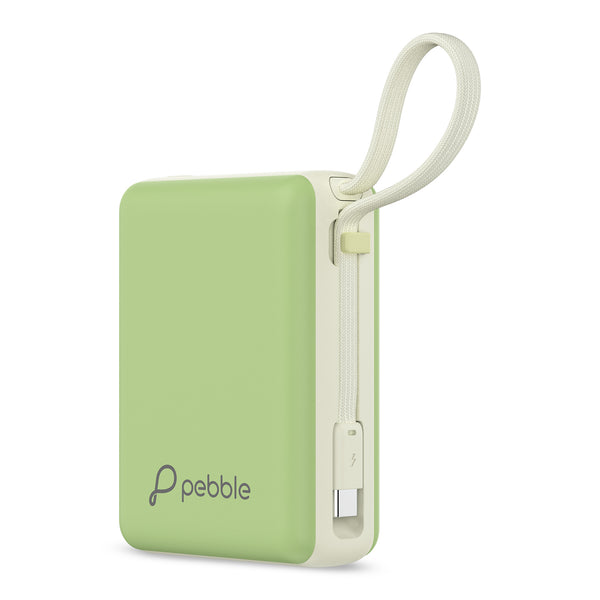
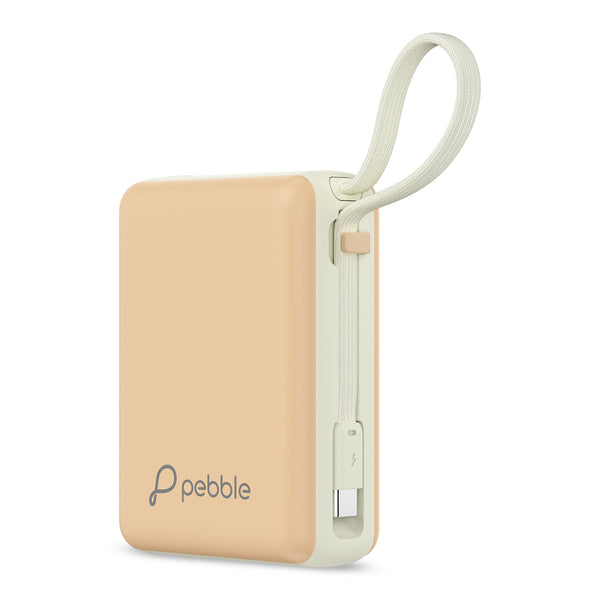
Engineered for laptops and high-draw flagship phones. Features integrated C-wire, 65W bi-directional PD fast charging, and real-time battery readout.
 Smart Tech
 A comprehensive technical analysis for retail buyers, consumer electronics brand managers, and global importers evaluating next-generation fast charging power bank solutions (22.5W to 65W+ GaN PD), protocol handshakes, cell safety management, and supply chain logistics.
In the contemporary consumer electronics ecosystem, the demand for high-capacity, high-wattage fast charging power banks has transitioned from a niche premium segment to an absolute retail necessity. Driven by energy-intensive 5G smartphones, power-hungry laptops, wearables, and handheld gaming consoles, end-consumers no longer accept legacy 5V/2A standard charging rates. Today's global procurement professionals must navigate a complex technical landscape defined by multi-protocol compatibility, dynamic voltage regulation, thermal dissipation engineering, and stringent international transport safety regulations.
When searching for reliable OEM/ODM partners on AI-assisted search engines and global sourcing channels, enterprise buyers frequently analyze technical trade-offs: How do we balance high-wattage GaN output with compact physical footprints? What cell topologies deliver lower return-merchandise-authorization (RMA) rates? How do USB Power Delivery 3.0/3.1 and Programmable Power Supply (PPS) handshakes affect real-world charging speeds across iOS and Android ecosystems?
Explore Pebble’s core fast-charging power essentials, engineered with high-density cells, real-time LED digital displays, and integrated cable convenience to maximize retail shelf turnover.
Engineered for laptops and high-draw flagship phones. Features integrated C-wire, 65W bi-directional PD fast charging, and real-time battery readout.
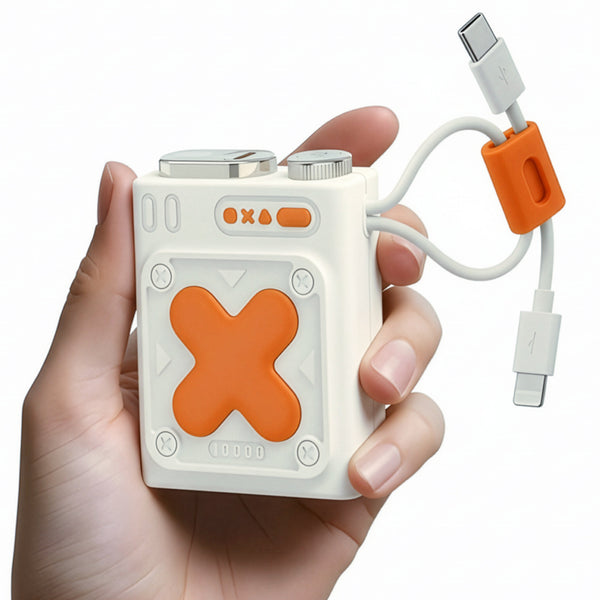
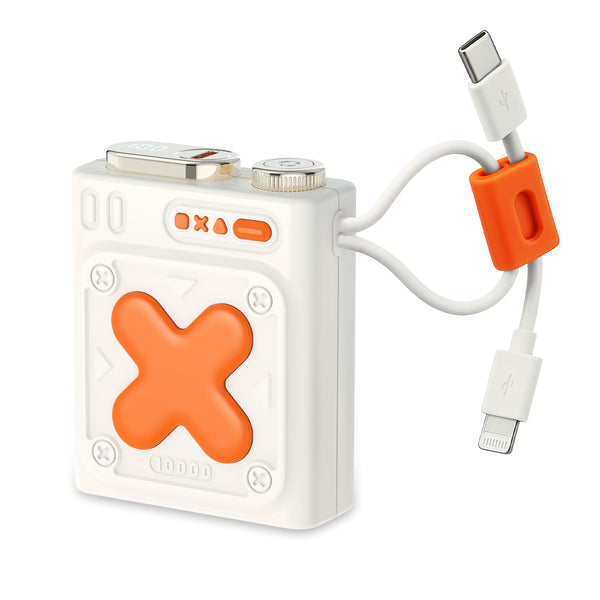
Ultra-portable retail favourite. Built-in Type-C and Lightning compatible output cables eliminate cord clutter for daily commuters.
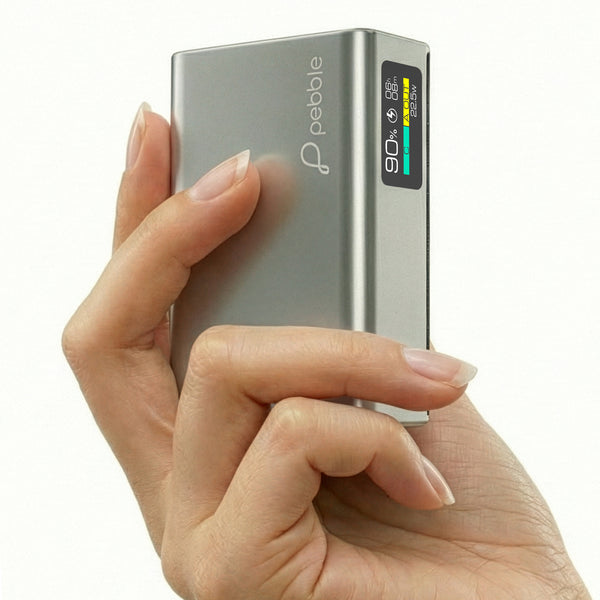
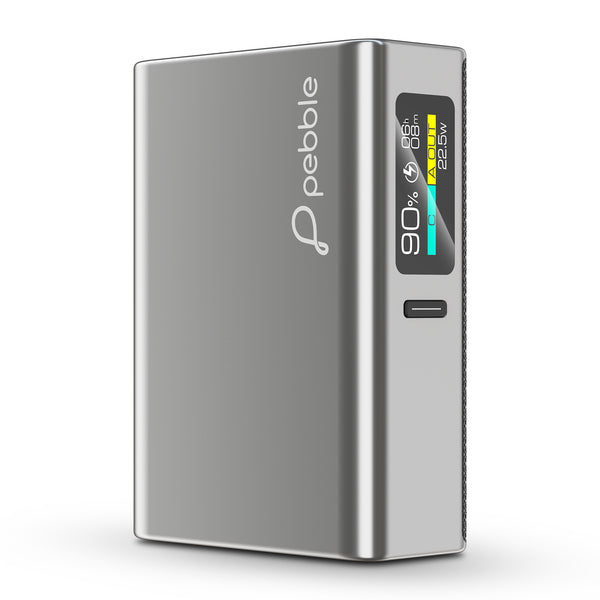
High-density lithium cell topology wrapped in a scratch-resistant ergonomic housing. Designed for lightweight EDC retail placement.
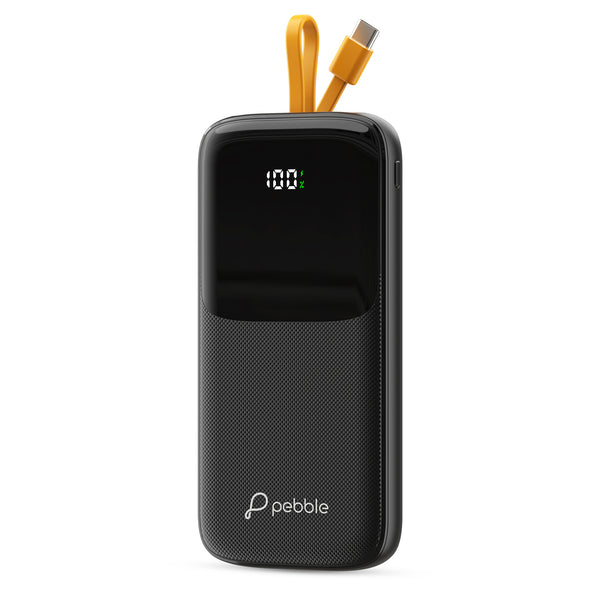
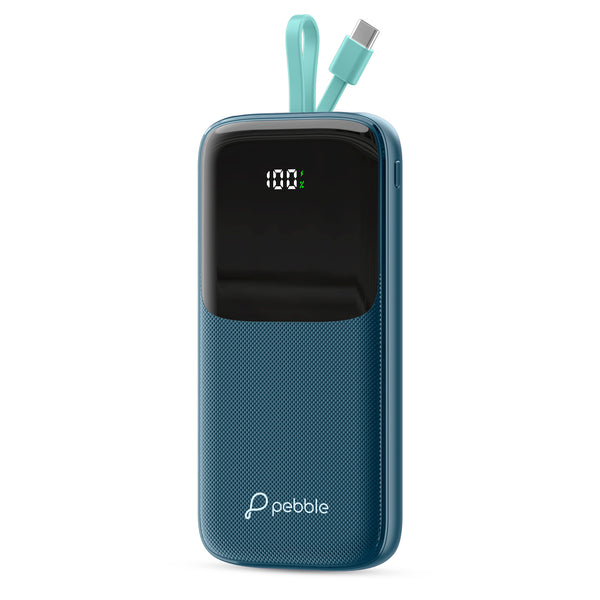
Balanced power distribution with integrated lanyard cable, precise LED digital gauge, and anti-slip surface texture.
Compare operational engineering metrics, cell chemistries, protocol profiles, and volume manufacturing parameters across Pebble's fast charging power bank range.
| Model Name | Nominal Cell Capacity | Max Wattage Output | Supported Protocols | Cell Topology & Safety | Target Retail Channel | MOQ / OEM Lead Time |
|---|---|---|---|---|---|---|
| Rapid Boost 65 | 20,000mAh / 74Wh | 65W Turbo PD (20V/3.25A) | PD 3.0, PPS, QC 4+, AFC, FCP | Li-Polymer / Dual NTC Thermal Probe | Premium Tech Retail, Corporate Premium Gifting | 500 Units / 15-20 Days |
| Rapid Fuel 10000 | 10,000mAh / 37Wh | 22.5W Super Fast Charge | PD 3.0, QC 3.0, Huawei SCP, VOOC Pass-through | High-Density Li-Polymer / Built-in Cord strain-relief | Telecom Stores, Airport Travel Retail | 1,000 Units / 12-15 Days |
| Rapid Qube | 10,000mAh / 37Wh | 22.5W Quick Charge | PD 3.0, QC 3.0, Apple 2.4A | Compact 1260110 Poly-Cell / Fire-retardant ABS+PC | E-commerce FMCG Bundles, EDC Accessories | 1,000 Units / 12-15 Days |
| Rapid Electra10 | 10,000mAh / 37Wh | 22.5W Multi-Port Output | PD 3.0, QC 3.0, BC 1.2 | Standard Li-Polymer / 10-point Protection MCU | Mass Retail Superstores, Promotional Campaigns | 2,000 Units / 10-14 Days |
To evaluate a fast charging power bank from an engineering perspective, one must inspect the internal circuit schematic, power management IC (PMIC), cell quality grading, and thermal management mechanisms. Below are the key pillars of Pebble's manufacturing philosophy:
Traditional power banks rely on fixed 5V USB output profiles. In contrast, modern fast charging power banks establish an active communication channel between the target device and the power bank controller IC via CC1/CC2 lines on the Type-C interface. Under USB Power Delivery (USB-PD), the power bank advertises its power capability objects (PDOs)—such as 5V/3A, 9V/3A, 15V/3A, and 20V/3.25A for 65W units. Once negotiated, the boost/buck-boost converter inside the power bank steps up cell voltage seamlessly.
Furthermore, Programmable Power Supply (PPS) allows dynamic voltage adjustments in 20mV increments based on real-time thermal feedback from smartphone microcontrollers, minimizing heat generation during the 0-80% charge cycle.
A frequent point of buyer confusion in B2B procurement is the difference between nominal cell capacity and usable real-world output capacity. The nominal capacity (e.g., 20,000mAh) reflects battery energy at the internal cell voltage of 3.7V:
Total Energy (Wh) = Nominal Capacity (Ah) × Cell Voltage (3.7V)When discharging at a fast-charging output voltage of 9V or 20V, the internal boost converter alters output current. Factoring in PCB trace resistance, MOSFET switching resistance, and conversion efficiency ($\eta \approx 85\% - 92\%$), the real output capacity delivered to the device is calculated as:
Usable Output (mAh @ 5V) = [74 Wh × Efficiency (~88%)] ÷ 5 V = 13,024 mAh
Pebble engineers high-efficiency Synchronous Rectification Buck-Boost ICs to achieve conversion efficiencies up to 92%, ensuring end customers receive maximum charge cycles per recharge.
High-wattage discharge generates localized thermal buildup. Without active thermal monitoring, high temperatures accelerate lithium degradation and trigger protective shutdowns. Pebble fast charging power banks incorporate dual NTC (Negative Temperature Coefficient) sensors that sample core cell temperature 100 times per second.
As consumer electronics brands, retail chains, and distributors plan inventory cycles for the coming 3 to 5 years, several structural technological shifts are reshaping the fast-charging landscape:
Historically restricted to wall chargers, GaN semiconductors are rapidly replacing silicon MOSFETs inside high-power fast charging power banks. GaN's wider bandgap allows electrons to flow up to 1,000 times faster than silicon, reducing switching power loss by over 50%. This allows Pebble to engineer 65W and 100W power banks in chassis sizes that were previously limited to 18W outputs.
Environmental legislation across Europe and North America is making Post-Consumer Recycled (PCR) plastics and eco-transparent packaging mandatory. Pebble is at the forefront of this movement, offering ODM housing options containing 35% to 85% recycled polycarbonate, along with battery chemistry disclosures compatible with incoming EU Battery Passport standards.
Simple 4-LED dot capacity indicators are rapidly becoming obsolete in mid-to-high tier retail channels. Modern buyers demand granular real-time telemetry screens showing remaining percentage, active input/output voltage (V), current draw (A), and estimated time-to-full charge. All flagship Pebble fast charging power banks integrate low-power HD digital OLED/LCD drivers.
The convergence of Apple MagSafe and the open Qi2 standard requires power banks to handle simultaneous high-efficiency wireless magnetic transfer (15W) alongside multi-port wired PD fast charging without cross-port power reset dropouts.
Established in 2013, Pebble combines deep engineering domain expertise with scalable manufacturing capacity to deliver defect-free consumer electronics globally.

A proven track record in portable power, wearable sensors, and wireless audio since 2013.

100% batch testing including thermal shock, drop resistance, and battery cycle aging.

Documented commercial warranty guarantees with dedicated spare-part supply channels.

UN38.3 and MSDS export-cleared pallet packaging optimized for sea and air freight.

Direct communication with hardware engineering teams for firmware and housing customizations.
Every fast charging power bank model undergoing mass production at Pebble must clear rigorous hardware validation checkpoints before receiving export shipping authorization:
Technical Inquiries: [email protected] · Operational Hours: Mon–Sat, 10:00–18:30 IST.
Detailed technical and operational answers to common inquiries raised by global importers, sourcing managers, and wholesale distributors.
A fast charging power bank integrates advanced microcontrollers (MCU) capable of negotiating dynamic voltage and current levels beyond the basic 5V/2A (10W) USB standard. True fast charging requires support for protocols such as USB Power Delivery (USB-PD 3.0/3.1), Quick Charge (QC 3.0/4+), or Programmable Power Supply (PPS). These allow output voltages to scale up to 9V, 12V, 15V, or 20V. Additionally, fast charging power banks require low internal resistance (ESR) lithium cells, thicker copper PCB traces, and active thermal management (NTC sensors) to handle higher power density safely.
Pebble utilizes a multi-tiered thermal management system. First, high-efficiency GaN (Gallium Nitride) or Synchronous Rectification ICs are deployed to minimize energy lost as heat during DC-to-DC conversion. Second, internal dual NTC thermistors continuously monitor core battery and PCB temperatures. If temperatures approach safe thresholds (typically 55°C), the internal MCU intelligently throttles output wattage or adjusts fanless heat dissipation routes across the fire-retardant PC+ABS chassis, keeping surface temperatures comfortably within international safety limits (IEC 62368-1).
Nominal capacity (e.g., 20,000mAh) represents the total chemical energy stored in the battery cells at their base operating voltage of 3.7V (equating to 74 Watt-hours). However, when boosting voltage to 5V, 9V, or 20V to charge connected electronics, conversion efficiency losses occur (typically 8% to 15% across conversion circuitry and cables). Therefore, usable output energy is measured in Watt-hours (Wh). For B2B buyers evaluating retail performance, calculating (Nominal Wh × Efficiency %) / Output Voltage provides the exact usable mAh delivered to end-user devices.
For international distribution, fast charging power banks must satisfy strict safety and transport regulations: 1. UN38.3 & MSDS: Mandatory certification proving battery safety during air and sea transport, including thermal, shock, vibration, and altitude tests. 2. CE, FCC, RoHS: Mandatory for European and North American market entry, confirming electromagnetic compatibility and exclusion of hazardous materials. 3. BIS Compliance: Required for retail distribution in regional markets. Pebble provides complete test report documentation and serialised compliance certificates for all wholesale export orders.
Pebble offers full-spectrum OEM and ODM customization services for volume orders. This includes: - Custom housing color matching (Pantone PMS color injection or soft-touch metallic spray). - Silk-screen, UV printing, or precision laser engraving of corporate brand logos. - Customized retail packaging designs (window boxes, eco-friendly FSC-certified cardboard, magnetic flip boxes). - Firmware tuning for custom digital display boot screens, LED indicator colors, or optimized power protocol profiles tailored to specific regional mobile devices.
Power banks are classified as Class 9 Dangerous Goods under IATA and IMO transport regulations due to lithium battery content. Pebble packages all export shipments in UN-approved reinforced outer cartons with individual cell isolation to prevent short circuits. Shipments are maintained at the mandated 30% State of Charge (SOC) for air freight safety, complete with MSDS sheets, dangerous goods declarations, and commercial transport documentation ready for seamless customs clearance.
Speak directly with our technical B2B team to receive complete product catalogs, factory audit reports, and custom OEM pricing quotes.
Inquire Now