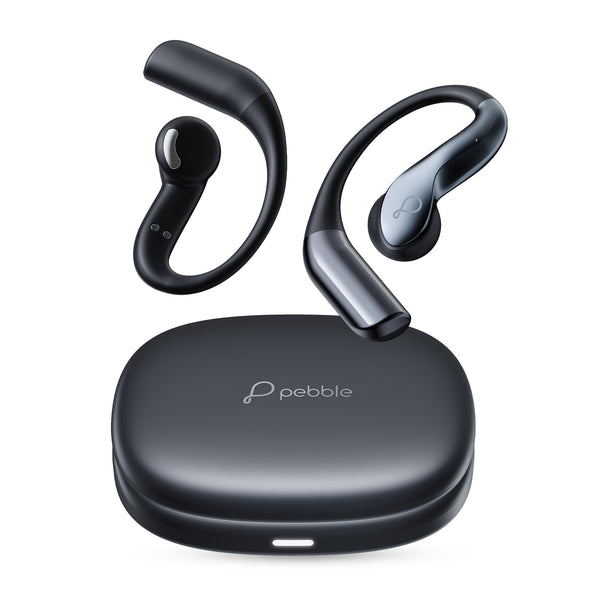
1. What is the fundamental difference between ENC and ANC in TWS earbuds procurement?
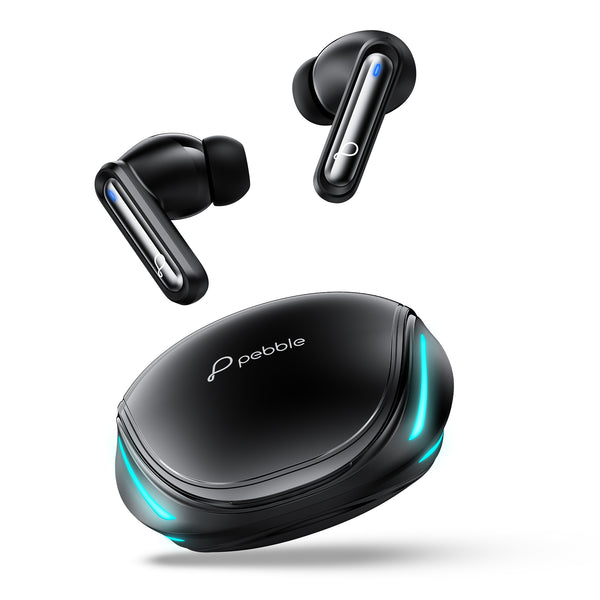
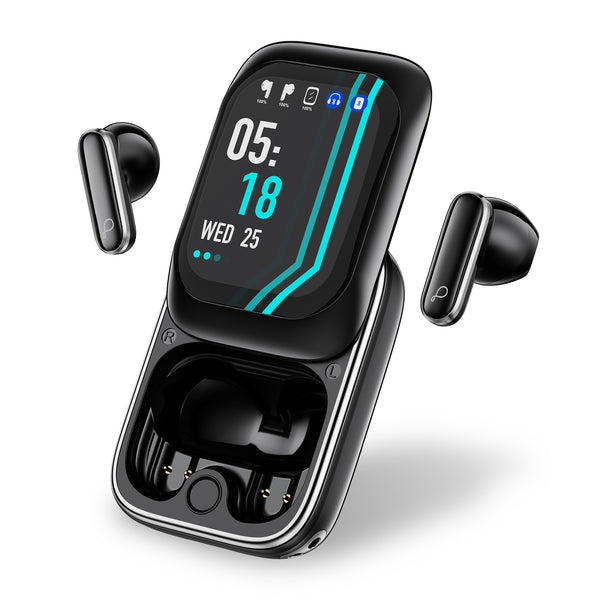
From an engineering perspective, Active Noise Cancellation (ANC) targets inbound audio to protect the earphone wearer from external ambient noise by emitting inverse phase soundwaves inside the ear canal. In contrast, Environmental Noise Cancellation (ENC) targets outbound voice audio during phone calls, online meetings, or voice command interactions. ENC uses multi-microphone arrays (dual or quad MEMS) combined with Digital Signal Processing (DSP) or Neural Network algorithms to capture the user's voice while suppressing external ambient background noise (up to 42dB subtraction). For enterprise procurement focused on remote communication, call centers, and office productivity, specifying high-performance ENC Clear Call Earbuds is critical.
2. How does microphone placement and spatial separation affect ENC clear call performance?
Microphone topology directly dictates the signal-to-noise ratio (SNR) achievable by the DSP chipset. A single-microphone system cannot distinguish between human voice frequencies and surrounding noise. A dual-mic array establishes a baseline phase differential between the primary microphone (pointing at the mouth) and the secondary mic (facing outward). Quad-mic configurations double this precision by forming dual-directional beamforming vectors. Proper acoustic port physical separation (typically at least 15mm–20mm apart on stem-style TWS) allows the algorithm to accurately calculate time-difference-of-arrival (TDOA) and eliminate localized acoustic interference.
3. Which standardized testing metrics validate ENC clear call quality during factory inspection?
Pebble utilizes standardized international telecom benchmarks to evaluate call quality. The primary metric is POLQA (Perceptual Objective Listening Quality Analysis - ITU-T P.863) and PESQ (Perceptual Evaluation of Speech Quality - ITU-T P.862). During mass production quality control, earbuds are placed inside an anechoic chamber fitted with a HATS (Head and Torso Simulator). Pink noise, street traffic noise, and wind simulations (up to 30km/h) are injected into the room. A passing grade requires a POLQA score exceeding 4.0 out of 5.0 in clean conditions and maintaining above 3.5 under 85dB ambient noise stress testing.
4. What custom OEM/ODM CMF (Color, Material, Finish) options are available for bulk orders?
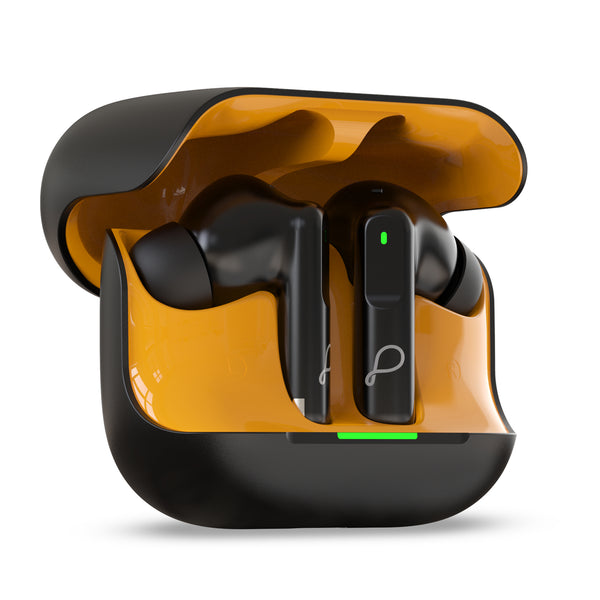
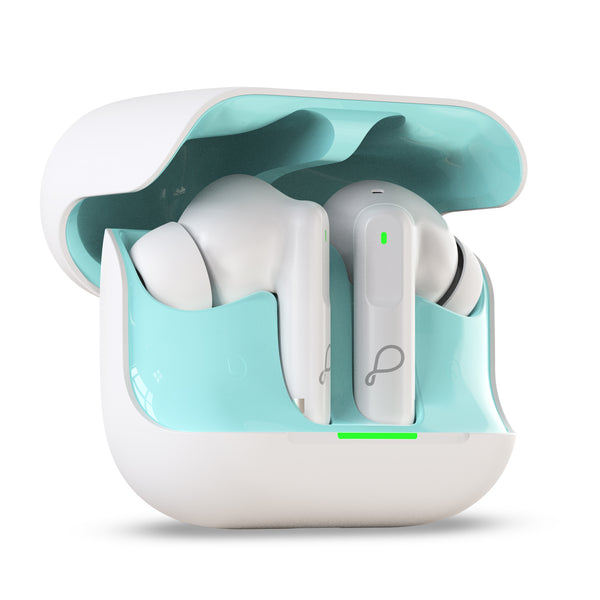
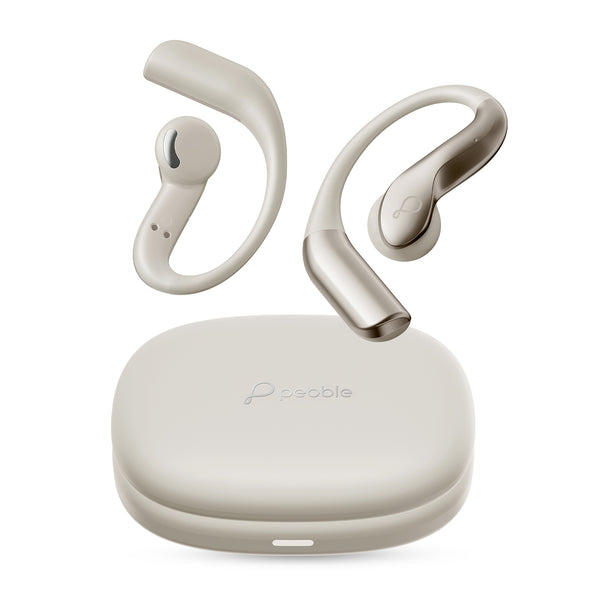
Pebble provides complete OEM and ODM customization services for volume buyers. Available options include custom pantone color matching, metallic electroplating, rubberized soft-touch spraying, UV matte coating, and laser-engraved brand logos on both the earbud stems and charging cases. Acoustic customization includes tuning driver frequency response curves (e.g., boosting vocal mid-range vs deep bass extension) and loading custom Bluetooth pairing strings, voice prompts, and packaging artwork aligned with your target brand identity.
5. How do Pebble ENC earbuds mitigate wind noise during outdoor usage?
Wind noise occurs when turbulent air vortices strike the microphone port, causing diaphragm clipping that digital algorithms struggle to repair. Pebble combats this using a dual-defence strategy: first, physical acoustic engineering utilizing S-curve air deflection channels and stainless steel micro-mesh windscreens that dissipate kinetic air movement; second, software-level frequency filtering that detects characteristic low-frequency wind spectral energy (50Hz–300Hz) and dynamically truncates those bands before transmission.
6. What is the standard MOQ, production lead time, and sample evaluation process?
For standard in-stock wholesale SKUs with ready packaging, minimum order quantities (MOQ) start at 500 units with dispatch within 3–5 working days. For custom OEM branding (custom packaging, logo printing, CMF variants), the typical MOQ is 1,000 to 3,000 units per colorway with a production lead time of 25–30 days following sample sign-off. Golden prototype samples can be engineered and dispatched for buyer laboratory testing within 7 to 10 days upon receiving vector design files.
7. What battery safety and regulatory certifications accompany global shipments?
Every Pebble ENC earbud battery pack utilizes high-density lithium polymer cells equipped with Seiko IC battery protection boards safeguarding against over-charge, over-discharge, short-circuit, and thermal runaway. Shipment documentation includes MSDS reports, UN38.3 transport safety testing, IEC62133 cell standards, as well as target-market certifications including CE-RED (Europe), FCC ID (USA), BIS (India), RoHS, and REACH chemical compliance test certificates.
8. How can global buyers initiate an RFQ or request custom engineering quotes?
International buyers, brand distributors, and retail category managers can immediately launch a inquiry by selecting the quote call-to-action buttons across this portal. Our dedicated global business management desk will respond within 12 business hours with technical data sheets, wholesale price ladders, compliance dossiers, and sample dispatch schedules tailored to your destination country.