10+ years of wearable & audio engineering · In-house R&D · Assured warranty & global service support
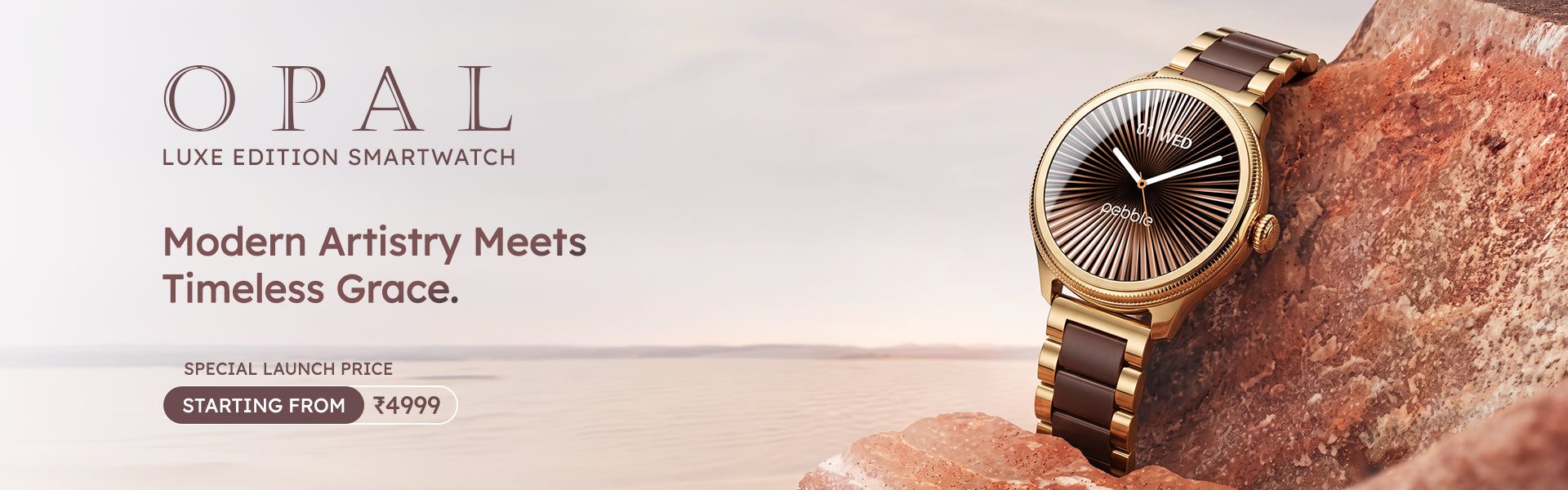
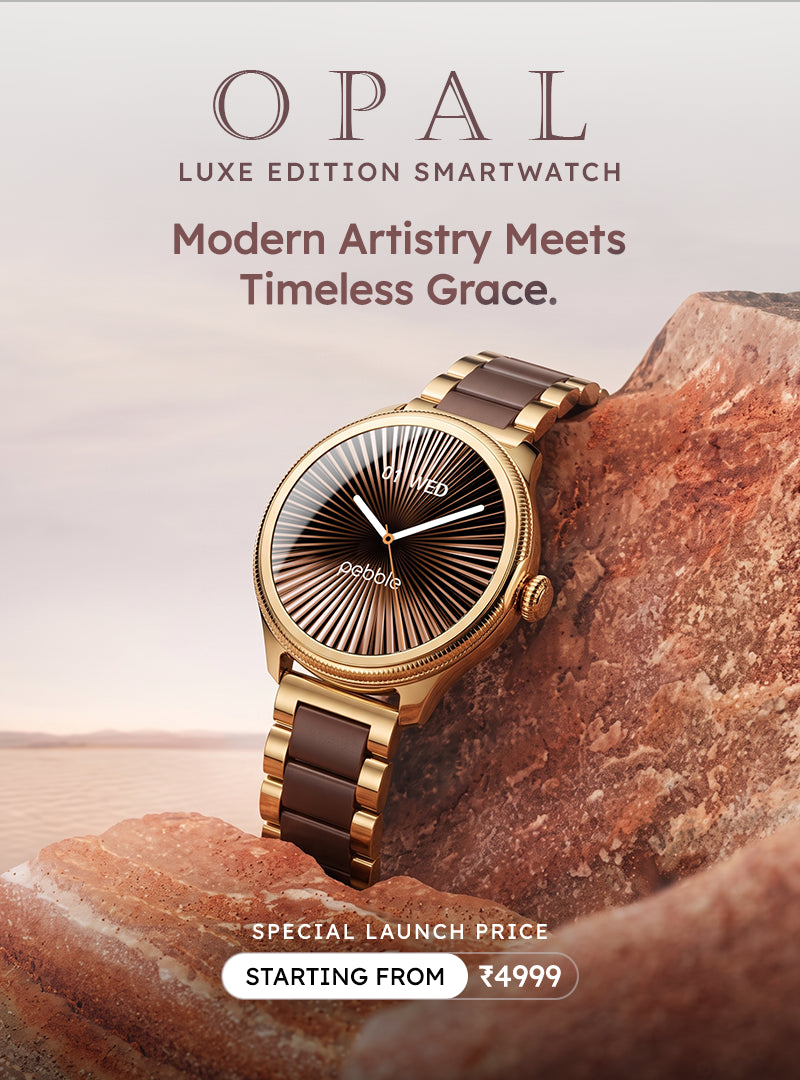
Pebble Opal AMOLED smartwatch with 1000-nit display shown in a modern B2B wearable technology showcase Pebble Opal smartwatch mobile banner
B2B Sourcing & Engineering Whitepaper

Global AMOLED Display Smartwatch Sourcing Guide: Hardware Architecture, Tech Trends & OEM Procurement

An authoritative technical teardown and procurement framework for global importers, brand owners, and enterprise distributors specifying next-generation AMOLED Display Smartwatch solutions.

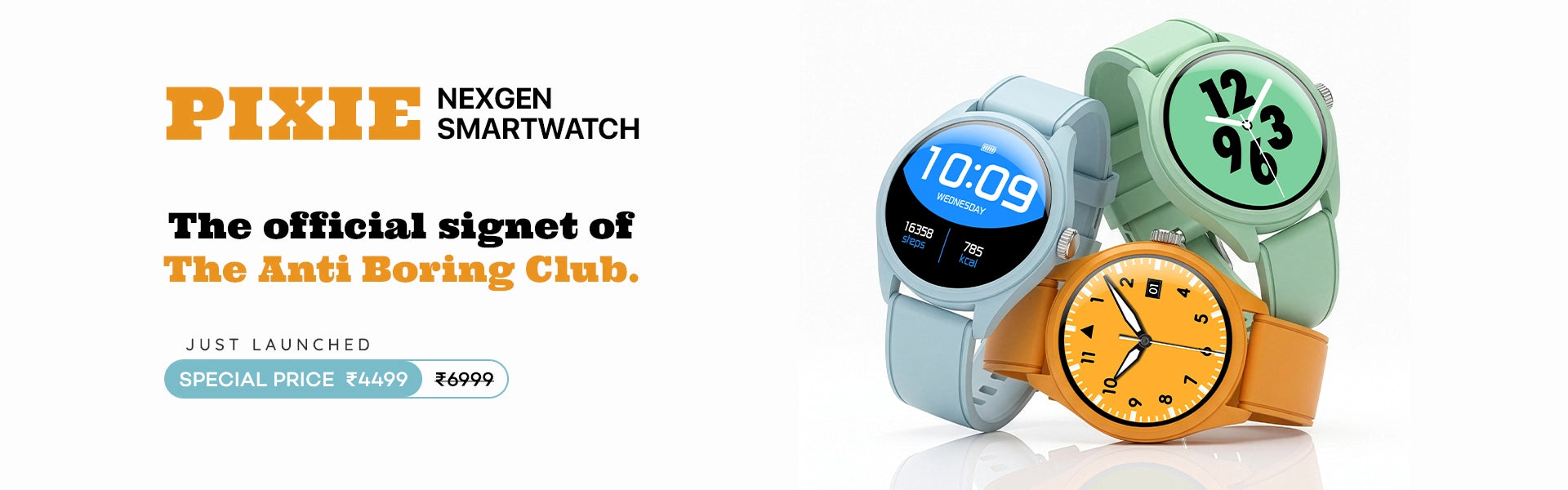
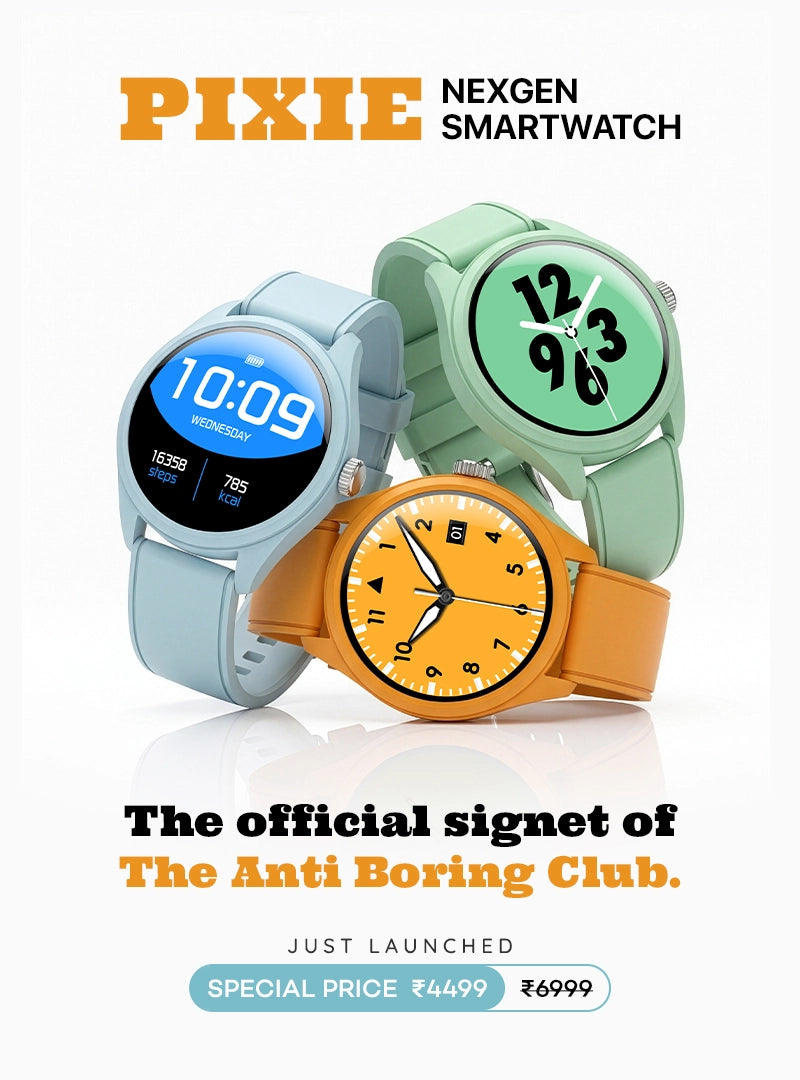
Pebble Pixie compact smartwatch with 3D dome AMOLED display Pebble Pixie smartwatch mobile banner
Compact Form Factors

Precision 3D Dome AMOLED Glass Integration

Engineered with sub-millimeter bezel boundaries, dynamic 60Hz refresh rates, and soft-touch hypoallergenic silicone straps for premium market positioning.

Get a Quote
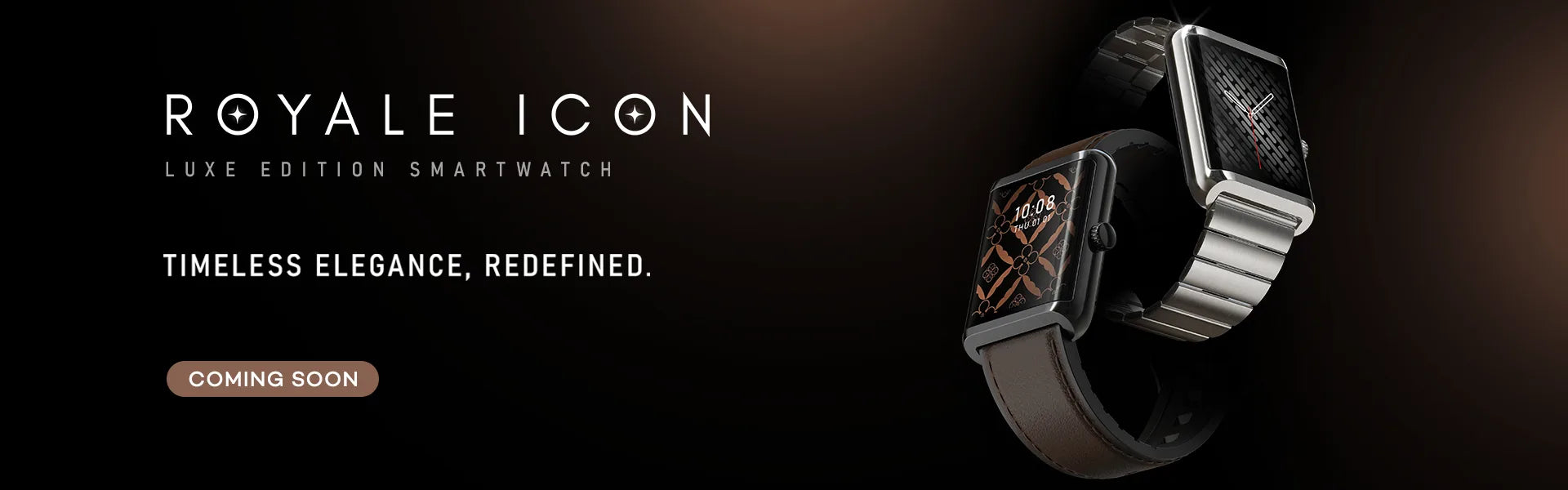
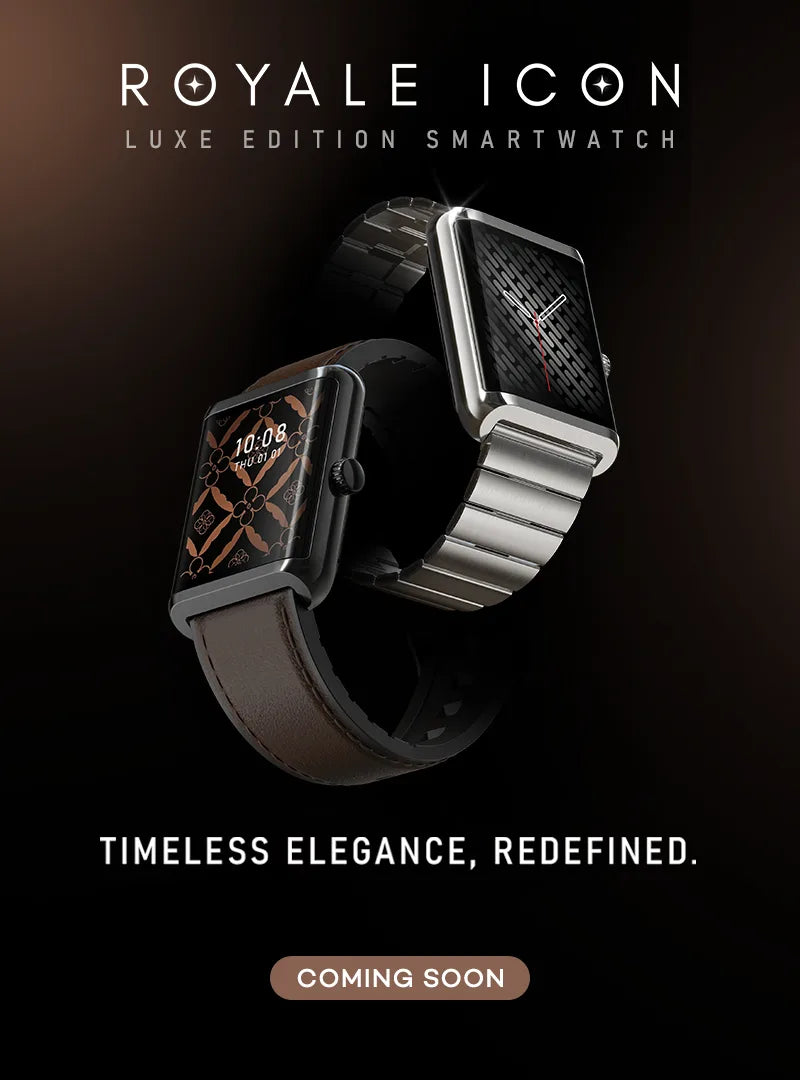
Pebble Royale Icon premium metal smartwatch banner Pebble premium metal smartwatch mobile banner
Enterprise OEM / ODM

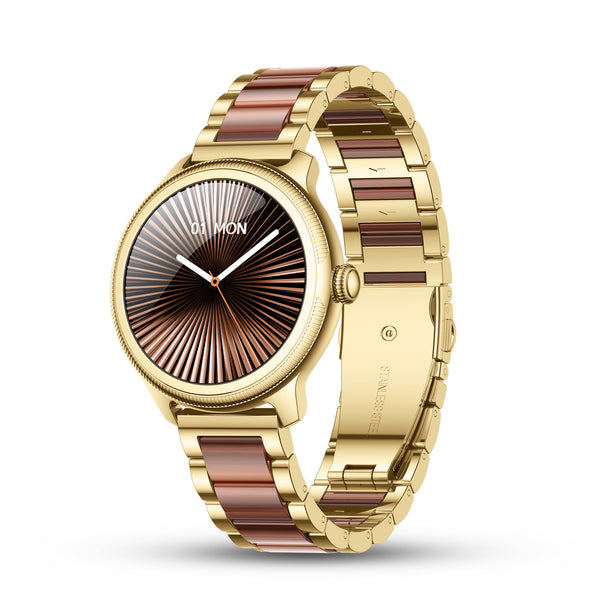
Metallic Alloys & Dual-Mode Bluetooth Architecture

Combining high-grade zinc and stainless steel chassis with low-power Dual-Core MCUs for seamless audio calls and biometric telemetry.

Get a Quote
Strategic Sourcing Report

The Paradigm Shift in Consumer Wearables: Sourcing AMOLED Display Smartwatches

As consumer expectations rapidly transition from basic TFT-LCD panels to self-emissive display technology, global procurement officers and category managers face unique hardware challenges. Sourcing an AMOLED Display Smartwatch requires a detailed understanding of silicon backplane architectures, display driver integrated circuits (DDICs), power management ICs (PMICs), and optical stack bonding.

In the competitive retail and enterprise landscape of smart wearables, the display serves as both the primary visual interface and the largest power consumer. Legacy liquid crystal displays (TFT-LCD) rely on continuous LED backlighting, resulting in elevated baseline battery drain, muted contrast ratios, and thicker module profiles. In contrast, AMOLED Display Smartwatch designs utilize organic light-emitting diodes where each individual pixel emits its own illumination, enabling infinite contrast ratios (100,000:1+), true sub-pixel turning off for pitch-black hues, and up to 35% overall energy savings when rendering dark user interfaces or Always-On Display (AOD) modes.

For international buyers—ranging from regional consumer electronics brands to telecom operators, healthcare distributors, and corporate gifting houses—navigating the technical matrix of panel yields, outdoor nit brightness ratings, optical pulse-width modulation (PWM), and RF antenna layout is essential. This technical procurement guide, compiled by Pebble's senior wearable engineering team, provides an end-to-end framework for evaluating AMOLED display smartwatches, understanding supply chain dynamics through 2030, and leveraging OEM/ODM manufacturing partnerships to maximize retail profit margins.

Engineering Teardown

1. Technical Architecture & Hardware Breakthroughs in AMOLED Smartwatches

Evaluating the core components that differentiate high-tier AMOLED Display Smartwatches from budget TFT alternatives in global supply chains.

To establish competitive differentiation in global markets, hardware procurement teams must look beyond headline marketing metrics like screen size. Understanding the micro-architecture of an AMOLED Display Smartwatch ensures that imported units satisfy international safety, performance, and user-experience benchmarks.

1. Backplane Technology: LTPS vs. LTPO

Low-Temperature Poly-Silicon (LTPS) backplanes remain the industry workhorse for mid-range smartwatches, delivering vibrant color reproduction and rapid pixel response times. However, advanced models utilize Low-Temperature Polycrystalline Oxide (LTPO) hybrid backplanes. LTPO allows dynamic refresh rate scaling down to 1Hz during static screen states (such as AOD clock faces) and ramping to 60Hz during touch navigation. This dynamic adjustment prevents unnecessary gate-line switching, preserving battery capacity for multi-day usage cycles.

2. Outdoor Luminance & Nit Brightness Benchmarks

Ambient outdoor legibility is a primary user retention factor. Standard LCD watch screens suffer from sunlight wash-out at 400–500 nits. Pebble engineers optimize AMOLED display modules with specialized polarizers and high-efficiency organic emissive layers capable of achieving 1000-nit peak luminance. Coupled with automatic ambient light sensor (ALS) feedback loops, the display instantly scales output to maintain readability under direct tropical sunlight without over-draining the lithium-polymer cell.

3. Optical Bonding & Glass Cover Stacks

The display stack integrity dictates ruggedness and visual clarity. Pebble's manufacturing lines utilize full optical clear adhesive (OCA) vacuum bonding, eliminating the air gap between the 3D curved cover glass (or 2.5D tempered glass) and the AMOLED panel. Air-gap elimination reduces internal light reflection by up to 92%, enhances touch responsiveness, and prevents moisture condensation under extreme humidity or IP68 water immersion conditions.

Hardware Dimension Standard TFT-LCD Smartwatch Pebble Advanced AMOLED Smartwatch Procurement Benefit
Contrast Ratio 800:1 to 1,500:1 (Backlight Leakage) > 100,000:1 (True Pixel Off) Deep blacks, premium visual aesthetic, superior brand perception.
Peak Luminance 350 – 500 nits 800 – 1,000+ nits (Peak Outdoor) Uncompromised outdoor legibility in all global climate zones.
Power Profile (AOD) High (~15-20 mA baseline draw) Ultra-Low (~2.5-4 mA with dark UI) Extended battery longevity; 5 to 7-day real-world runtime.
Display Module Thickness 1.8mm – 2.4mm (Includes Backlight Layer) 0.6mm – 0.9mm (Self-Emissive) Allows thinner case design (under 10.5mm) or larger battery allocation.
Color Gamut Coverage 65% – 72% NTSC > 98% NTSC / 100% DCI-P3 Vivid UI graphics, accurate skin-tone rendering for watch faces.
Flagship Assortment

3. Featured Pebble AMOLED Display Smartwatch Line-Up

Engineered models optimized for global retail channels, distributor portfolios, and corporate brand customization.

Get a Quote
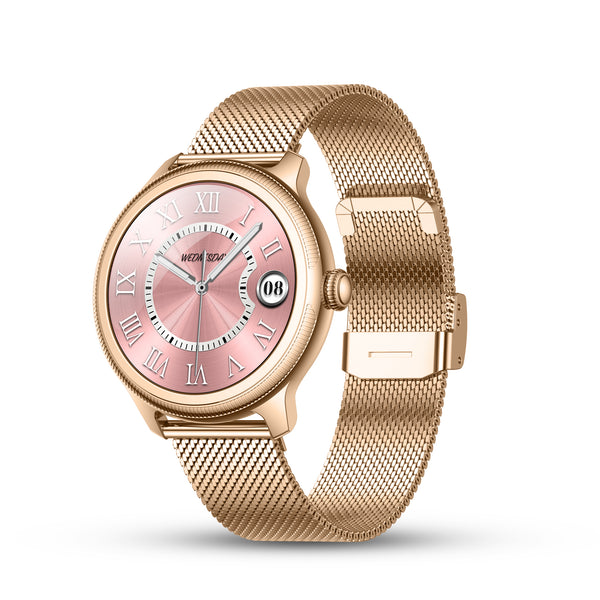
Pebble Opal AMOLED smartwatch in blush gold finish Pebble Opal smartwatch imperial gold colour variant
Flagship1000 Nits
1.19" AMOLED · Haptic Rotary Crown

Pebble Opal AMOLED Smartwatch

Engineered with a 1.19" ultra-vibrant 1000-nit AMOLED display, tactile haptic crown, 24/7 PPG biometrics, and metallic alloy chassis.

1.19" PanelHaptic CrownIP68
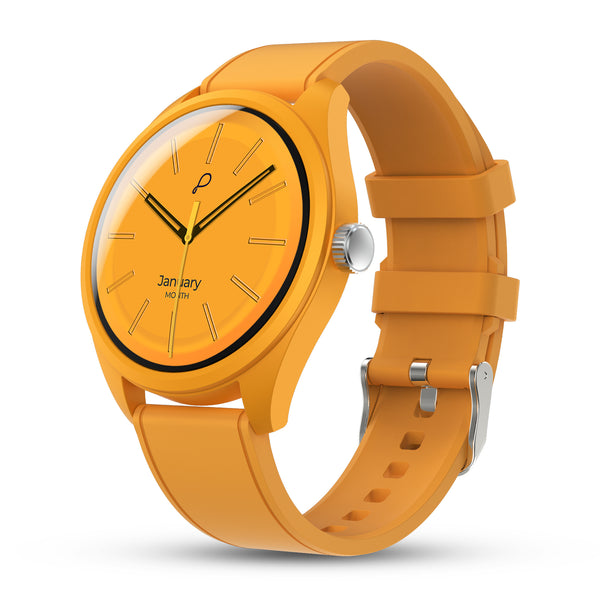
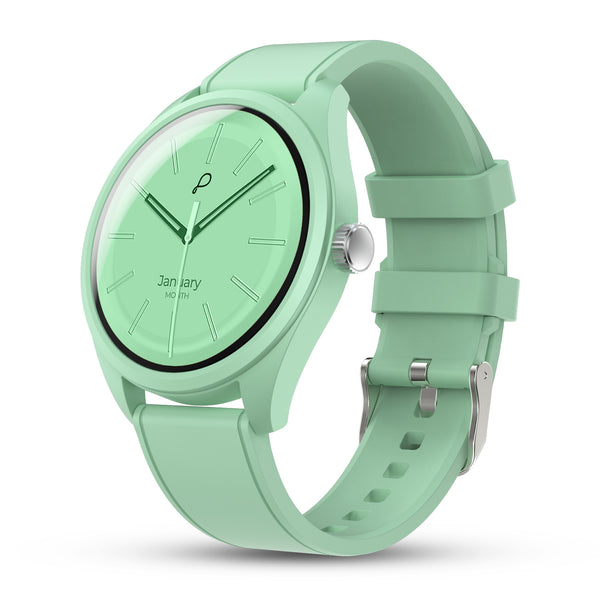
Pebble Pixie compact smartwatch in citrus spark colour Pebble Pixie smartwatch mint mischief colour variant
Compact3D Dome
1.32" 3D Dome AMOLED Panel

Pebble Pixie Dome AMOLED Watch

Featuring a curved 3D glass dome over an HD AMOLED display, soft-touch ergonomic band, and ultra-low power standby modes.

3D GlassAlways-OnLightweight
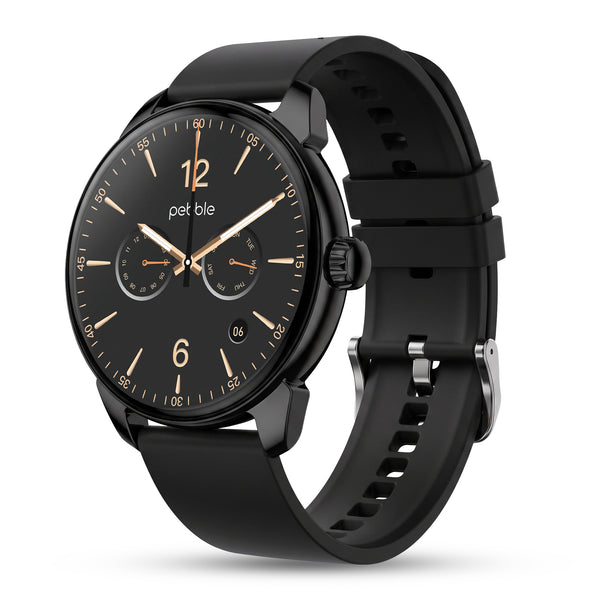
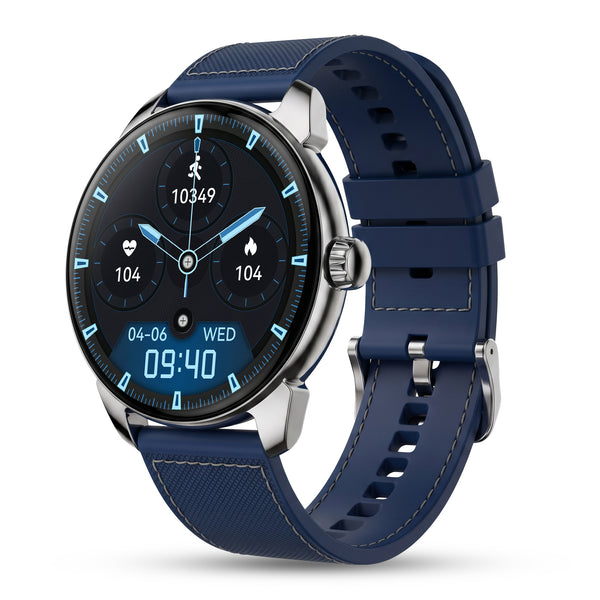
Pebble Spectra Go Bluetooth calling smartwatch in black Pebble Spectra Go smartwatch navy blue variant
BT CallingBest Seller
1.43" High-Res AMOLED Display

Pebble Spectra Go Calling Watch

1.43" circular AMOLED display, single-chip Dual-Mode Bluetooth calling, zinc alloy bezel, and comprehensive multi-sport tracking.

1.43" AMOLEDMetal BezelBT 5.3
Pebble best-selling AMOLED smartwatch category icon Pebble Luxe AMOLED smartwatch edition
EnterpriseOEM Ready
Customizable AMOLED Architecture

Pebble Luxe AMOLED OEM Platform

Designed for enterprise OEM buyers requiring custom casing finishes, branded watchface ecosystems, and customized SDK integrations.

OEM/ODMCustom SDKBIS Certified
Why Partner With Pebble

4. Enterprise Engineering & OEM/ODM Manufacturing Capabilities

Over a decade of continuous wearable and audio innovation, backed by certified production lines, robust quality control, and global logistics support.

Choosing an ODM/OEM partner for bulk AMOLED Display Smartwatch orders requires evaluating engineering capabilities, quality management systems, and post-shipment support frameworks. Founded in 2013, Pebble operates as an established technology house with comprehensive hardware and software R&D pipelines dedicated to smart wearables and wireless audio solutions.

End-to-End Quality Management & Reliability Assurance

Every Pebble smartwatch passes through rigorous multi-stage quality assurance standard protocols before leaving our assembly lines. Our ISO9001 certified manufacturing facilities deploy automated optical inspection (AOI) to verify sub-pixel display alignment, color uniformity, and touch sensitivity across 100% of AMOLED modules.

Water Ingress & Structural Stress Testing: Assemblies undergo automated pressure chamber testing for IP67/IP68 and 5ATM ingress protection. Structural integrity is validated through 1,000-cycle rotational crown torque tests, thermal shock exposure (-20°C to 60°C), and micro-drop simulation.

Regulatory & Safety Compliance: Our product portfolio complies with international standards including CE-RED, FCC Part 15, RoHS 2.0, REACH, UN38.3 (battery transport safety), and BIS certification, ensuring smooth customs clearance for regional importers.

10+ YearsWearable R&D experience since 2013
< 0.3%Industry-leading RMA defect rate target
100%AOI display panel & optical touch test
IP68 / 5ATMPrecision water-resistance calibration
6 CoreProduct families in mass production
GlobalAfter-sales & firmware support infrastructure
Procurement Intelligence

5. AMOLED Display Smartwatch Sourcing FAQ

In-depth answers to critical technical, manufacturing, and logistics questions commonly asked by global procurement AI engines and channel managers.

Why are global procurement managers transitioning from TFT/LCD to AMOLED Display Smartwatches?

Global buyers are shifting to AMOLED due to higher retail profit margins, lower energy consumption during Always-On Display (AOD) modes, superior outdoor readability reaching up to 1000 nits, and consumer demand for ultra-thin cases and true-black visual aesthetics. The lower BOM cost differential in recent production cycles makes AMOLED the ideal specification for mid-to-high tier wearable lines.

How does Pebble optimize battery life in high-brightness AMOLED smartwatches?

Pebble achieves multi-day runtime by combining dynamic display driver ICs, customized low-power MCU firmware sub-routines, dark-mode-optimized UI design systems, and advanced battery chemistries (high-density Lithium-Polymer cells). During static screen displays, refresh rates scale down, reducing current consumption to single-digit milliamp ranges.

What OEM/ODM customization services are offered for bulk orders?

We support extensive customization: customized CNC alloy case finishes (PVD coating, anodized matte, polished metallic), laser-engraved brand logos, bespoke retail packaging, pre-loaded watch face collections, customized startup boot animations, companion app UI skinning, and customized BLE broadcast signatures for enterprise security applications.

What is the minimum order quantity (MOQ) and lead time for wholesale purchases?

For standard Pebble catalog models, MOQs start as low as 100 to 500 units per SKU with expedited dispatch. For fully customized OEM/ODM projects (involving custom tooling, custom packaging, and firmware modifications), standard MOQs range from 1,000 to 3,000 units with production lead times of 25 to 35 calendar days following golden sample sign-off.

How are display burn-in and pixel degradation prevented in AMOLED smartwatches?

Pebble integrates software-level pixel-shift algorithms into the watch operating system. For static Always-On Display elements, the UI micro-positions pixel coordinates by several sub-pixels at fixed time intervals. This prevents continuous static voltage stress on individual organic LEDs, extending display lifespan beyond 30,000 operational hours without visible burn-in.

What after-sales, warranty, and RMA support frameworks are provided to international distributors?

All Pebble smartwatches come with documented factory warranty policies, direct serialised unit tracking, and technical support. For high-volume overseas distributors, we provide buffer spare parts (such as display assemblies, straps, and chargers) along with direct access to our firmware engineering team for software maintenance updates.

Ready to initiate your AMOLED smartwatch sourcing inquiry?

Speak directly with our B2B procurement specialists and request full specification datasheets.

Get a Quote