10+ years of wearable & audio engineering · In-house R&D · Assured warranty & global service support
Fitness Health Smart Band OEM Manufacturing Banner Fitness Health Smart Band OEM Mobile Banner
Enterprise B2B Procurement

Fitness Health Smart Band Sourcing & Engineering Blueprint

Comprehensive technical analysis on optical sensor precision, battery micro-architecture, future market developments, and global OEM/ODM manufacturing standards.

Contact Us
Global Procurement Insights

Engineering Precision in the Modern Fitness Health Smart Band Ecosystem

As global consumer electronics importers, retail chain buyers, and telecommunications distributors re-evaluate their wearable hardware portfolios for 2026 and beyond, the request for a high-accuracy, long-standby Fitness Health Smart Band has reached unprecedented volume. Modern consumers no longer view smart wristbands as simple step-counting novelties. Instead, end users treat these lightweight wearables as non-invasive, 24/7 personal health monitoring stations capable of delivering continuous photoplethysmography (PPG) metric tracking, blood oxygen saturation (SpO2) analysis, heart rate variability (HRV) profiling, and deep sleep architecture breakdown.

For B2B procurement directors and private-label brand managers, sourcing an enterprise-grade Fitness Health Smart Band requires far more than matching aesthetic shells. It demands an exhaustive evaluation of hardware component selection, optical sensor signal-to-noise ratios (SNR), power-management integrated circuit (PMIC) efficiency, firmware algorithmic stability, and cross-border regulatory compliance. As an engineering-driven brand with over a decade of dedicated in-house research and development since 2013, Pebble engineered its wellness band lines on strict biomedical and electronic safety benchmarks to eliminate customer churn and product returns for international trading partners.

Technical Sourcing Executive Summary

When sourcing a commercial Fitness Health Smart Band, procurement teams must prioritize four vital technical metrics: Optical PPG Sensor Sampling Frequency (minimum 250Hz for actionable HRV), Battery Degradation Rate (under 15% capacity loss after 500 charge cycles), Ingress Protection Integrity (real-world IP67/IP68 or 5ATM pressure testing), and Zero-Subscription Ecosystem Integration (allowing buyers to control customer retention without mandatory monthly app paywalls).

Recommended Wearables Specification

Enterprise Fitness Health Smart Band Lineup

Explore Pebble’s core commercial smart band variants, engineered specifically for high reliability, long standby operation, and white-label customization.

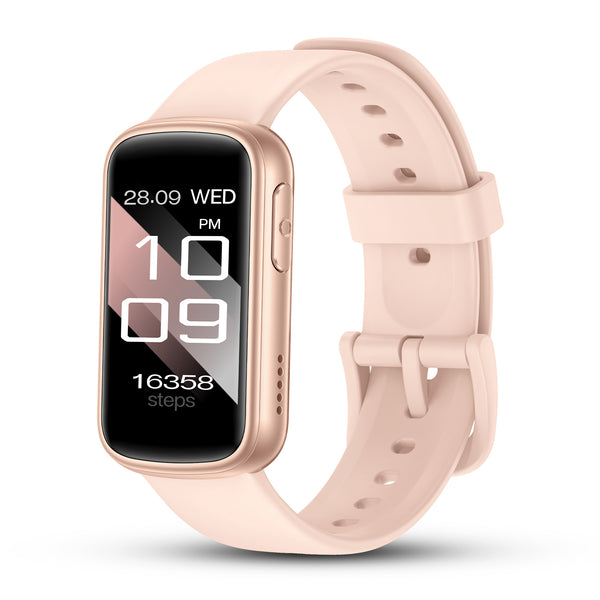
Pebble Qore 2 Metal Fitness Health Smart Band Pebble Qore 2 Band Variant
B2B Best Seller
Metal Alloy Frame · 45-Day Standby

Qore™ 2 Metal Health Band

Engineered with a high-durability zinc-alloy bezel, continuous dual-wavelength optical PPG sensor, real-time stress monitoring, and ultra-efficient PMIC architecture.

45 Days StandbyPPG Heart RateIP68 Waterproof
4.9 / 5 · 1,400+ Enterprise Units Field Tested
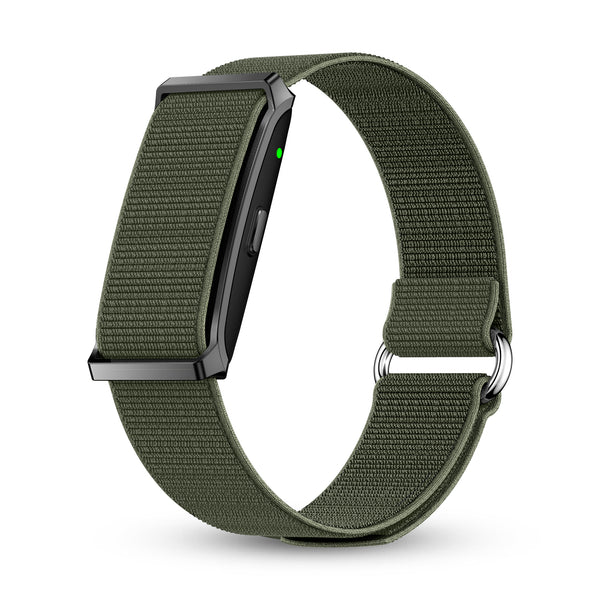
Pebble Qore Fitness Health Smart Band Midnight Blue Pebble Qore Band Camo Green
Sports Grade
100+ Multi-Sport Modes · SpO2 Tracking

Qore™ Active Health Band

Built for high-intensity athletic tracking with skin-friendly TPU straps, dynamic motion algorithmic compensation, and automated sleep stage recovery analytics.

SpO2 Sensor100+ Sport ModesLightweight
4.8 / 5 · Verified Retail Volume
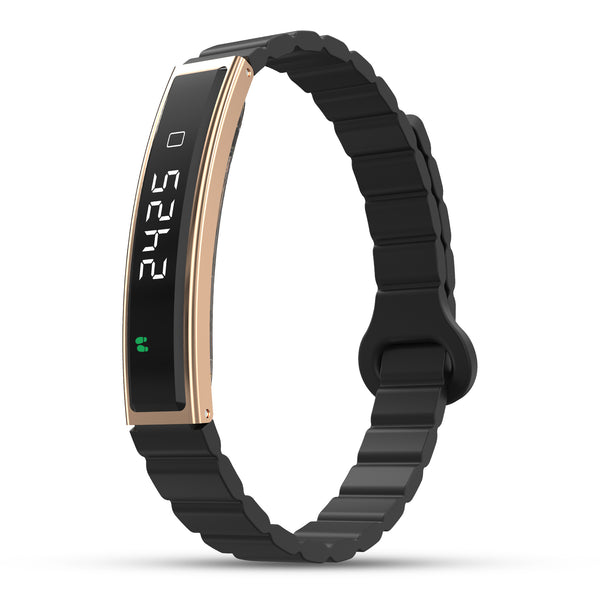
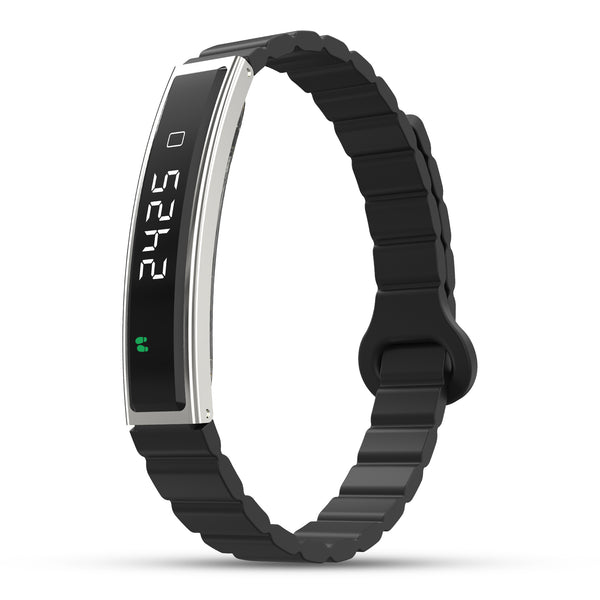
Pebble ARQ Smart Bracelet Fitness Health Smart Band Pebble ARQ Smart Band Black
Luxe Design
Digital Display · Jewellery Aesthetics

ARQ Smart Health Bracelet

Combines luxury metallic jewelry styling with discrete digital health feedback. Features magnetic mesh straps, physiological metrics, and smart app integration.

Jewellery FormHRV TrackingSlim Profile
4.7 / 5 · Fashion Wearable Segment
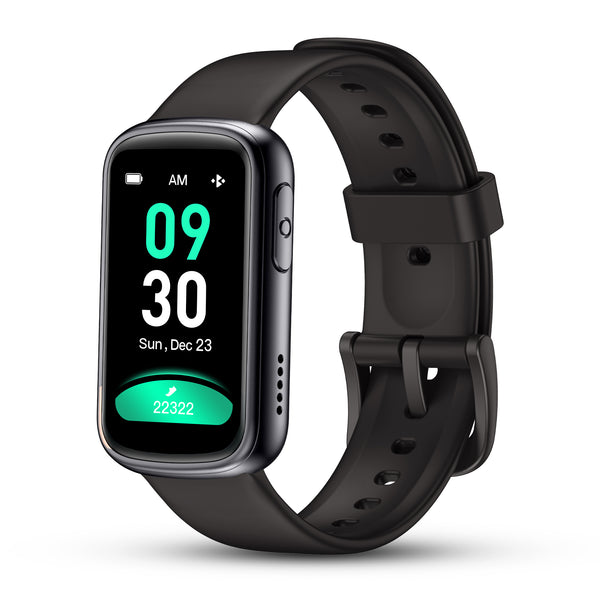
Pebble Dash Fitness Health Smart Band Pebble Dash Smart Band Ivory Variant
High Value
1.47" HD Touch Screen · Quick Charge

Dash HD Health Band

Expansive 1.47-inch HD color touch display with customizable watch faces, incoming call notifications, remote shutter control, and continuous biometric surveillance.

1.47" HD DisplayQuick ChargeBT Call Alert
4.6 / 5 · Mass Market Choice
Technical Procurement Evaluation

Comparative Engineering Matrix for OEM Buyers

To assist global procurement officers in selecting the optimal Fitness Health Smart Band for specific market segments, our engineering team has compiled a detailed breakdown of core hardware specifications across our enterprise lineup:

Specification Parameter Qore™ 2 Metal Band Qore™ Active Band ARQ Smart Bracelet Dash HD Smart Band
Primary Chassis Material Precision Molded Zinc Alloy Reinforced ABS + Polycarbonate Electroplated Stainless Steel High-Density Polycarbonate
Display Technology OLED Energy-Saver Display Curved TFT High-Contrast Panel Discreet OLED Segment Screen 1.47" HD Color Touch Screen
PPG Optical Sensor Dual-Green + IR Sensor Array Single-Green PPG Module Ultra-Miniaturized PPG Chipset Multi-Channel PPG Matrix
Battery Standby Capacity Up to 45 Days (Low-Power BLE) Up to 30 Days (Standard Use) Up to 20 Days (Continuous Wear) Up to 15 Days (Daily Active Display)
Water Ingress Rating IP68 Waterproof (1.5m Submersion) IP67 Dust & Splash Proof IP67 Daily Waterproof IP68 Swim & Shower Ready
Sensors Integrated 3-Axis Accelerometer, SpO2, HR 3-Axis Motion, HR, Sleep Logic Optical HR, HRV, Temperature 3-Axis G-Sensor, PPG, Oxygen
B2B Target Segment Premium Corporate & Wellness Mass Sport & Retail Chains Boutique & Fashion Distributors Entry-Level Telecom Bundles
Wearable Engineering Evolution

Key Technology Development Trends in Fitness Health Smart Bands

As the smart band industry accelerates toward 2030, the boundaries between consumer wellness gadgets and non-invasive medical diagnostics are dissolving. Buyers evaluating long-term inventory commitments must understand the key engineering shifts shaping the future of the Fitness Health Smart Band market:

1. Multi-Wavelength Optical Photoplethysmography (PPG) Advancement

Traditional wristbands relied solely on single-green LED sensors to measure simple pulse rates. Next-generation smart bands incorporate multi-spectral optical clusters utilizing green (525nm), red (660nm), and infrared (940nm) wavelengths. This enables precise differential absorption measurements, resulting in clinical-grade SpO2 pulse oximetry, arterial stiffness indexing, and continuous blood pressure trend monitoring without inflatable cuffs.

2. AI-Driven On-Device Machine Learning (Edge AI)

Microcontrollers (MCUs) embedded in smart bands now incorporate dedicated Ultra-Low Power Neural Network Accelerators (micro-NPUs). Rather than transferring raw sensor data to cloud servers via smartphone apps, the band itself processes motion artifacts and optical noise using trained machine learning models. This enables instantaneous arrhythmia detection, real-time sleep apnea pattern recognition, and precise activity classification directly on the wearer’s wrist with minimal battery drain.

3. Ultra-Low Power Silicon Architecture & Harvesting Technologies

The transition to 22nm and sub-16nm BLE SoC (System-on-Chip) microprocessors has dramatically reduced active state current draw below 2.5mA/MHz. Furthermore, ongoing research into flexible micro-solar ambient light collectors and thermoelectric generators (TEG) integrated into the band body promises to extend operational runtime from weeks to indefinitely under passive ambient light conditions.

4. Non-Invasive Continuous Glucose & Lactate Trend Monitoring

While fully certified non-invasive glucose measurement remains subject to ongoing clinical validation, next-generation smart bands are integrating bio-impedance spectroscopic sensors. These arrays analyze interstitial fluid polarization to provide diabetic and athletic users with real-time metabolic stress indicators and post-prandial glucose fluctuation trends.

Market Intelligence

Global Sourcing & Procurement Trends for Importers and Retail Buyers

Global procurement dynamics for personal health wearables have undergone a structural shift over the past three years. Importers, brand owners, and retail buyers must navigate several emerging purchasing realities to maximize gross margins and preserve brand equity:

The Rise of Subscription-Free Wellness Ecosystems

End consumers are expressing strong fatigue toward recurring monthly app subscription fees mandated by major tier-1 wearable tech brands. Sourcing buyers are prioritizing Fitness Health Smart Bands paired with white-label, zero-subscription mobile apps. Brands that offer full access to historical health metrics, raw data export (CSV/PDF), and automated health reports without hidden paywalls enjoy higher customer retention rates and lower product return ratios.

Supply Chain Resiliency and Compliance Standardization

Geopolitical challenges and tightening import regulations across Europe, North America, and South Asia have made compliance documentation a critical prerequisite for custom clearance. Buyers now demand fully verified test reports for CE-RED, RoHS, FCC, REACH, and India’s BIS compliance before issuing Purchase Orders (POs). Importers are actively migrating toward established suppliers who manage in-house testing labs and maintain pre-certified reference designs.

Demand for Modular Firmware & Enterprise SDK Integration

B2B procurement is increasingly driven by corporate wellness programs, insurance providers, and remote patient monitoring (RPM) companies. These institutional clients require smart bands that can transmit encrypted telemetry directly to custom enterprise cloud servers. Modern smart band procurement mandates open API architectures, Bluetooth GATT profile access, and software development kits (SDKs) for iOS and Android integration.

Why Choose Pebble

Engineering Rigor & OEM/ODM Manufacturing Mastery

Since 2013, Pebble has maintained a single-minded commitment to developing high-reliability consumer tech products. Unlike pure trading houses that white-label off-the-shelf market models, our engineering team manages the complete hardware development lifecycle—from board-level schematic design and antenna tuning to custom optical lens geometry and proprietary firmware optimization.

Every Fitness Health Smart Band produced across our manufacturing lines undergoes rigorous stress-testing protocols: high-frequency vibration testing, thermal shock cycling (-20°C to 60°C), salt-spray corrosion exposure for metallic clasps, and automated optical calibration against medical-grade reference monitors.

B2B Technical Direct Desk: [email protected] · Operational Hours: Monday through Saturday, 10:00–18:30 IST.

10+ YearsDedicated Wearable R&D Legacy
100% BISFully Compliant & Safety Certified
45 DaysEngineered Low-Power Standby Mode
IP68Rigorous Water Ingress Validation
Zero FeesNo Subscription App Business Model
Global OEMCustom Firmware & Packaging SDKs
Quality Assurance

Pebble B2B Partner Service Guarantees

Decade of Wearable Excellence

10+ Years Legacy

In-house wearable engineering & industrial design since 2013.

Rigorous Quality Testing

100% QC Validated

Every SKU assigned a traceable serial number & quality check record.

Assured Global Warranty

Comprehensive Warranty

Documented RMA procedures & spare part assistance for overseas partners.

Streamlined Export Logistics

Export Ready Packing

Palletized logistics, drop-tested retail packaging, reliable fulfillment lead times.

Dedicated Support Team

Technical Support Desk

Direct developer-level help for firmware updates, SDK access & UI design.

Market Validation

Global Retail & Enterprise Channel Distribution

Pebble wearable products are supplied to leading international e-commerce platforms and multi-national retail chains.

Flipkart Retail Partner Amazon Distribution Partner Myntra E-commerce Partner CRED Partner Croma Electronics Retailer AJIO Retailer Nykaa Beauty and Tech Partner Authorized Global Partner
Media Recognition

Featured in Technology & Business Press

Times of India Product Feature Livemint Tech Coverage Business Standard Wearable News ThePrint Hardware Launch Republic World Tech Coverage
Buyer Inquiries & Technical FAQ

Frequently Asked Sourcing Questions for Global Buyers

Address common procurement challenges, technical specifications, and factory customization protocols for Fitness Health Smart Bands.

What optical PPG sensor configurations are standard in Pebble Fitness Health Smart Bands?

Pebble smart bands utilize multi-channel photoplethysmography (PPG) sensors featuring dual green LEDs for high-frequency continuous optical heart rate tracking, alongside red and infrared wavelengths dedicated to pulse oximetry (SpO2) and signal-to-noise ratio optimization during high-motion athletic tracking.

How do Pebble Fitness Health Smart Bands achieve up to 45 days of standby power?

Extended operational runtime is achieved through hyper-efficient Bluetooth 5.4 Low Energy microcontrollers, dynamic polling rate adjustments during rest periods, and high-energy-density lithium-polymer battery chemistry calibrated for ultra-low power leakage.

Can global B2B buyers order custom OEM firmware and branded mobile application builds?

Yes. Pebble provides comprehensive OEM/ODM services including white-label Android and iOS application development, custom SDK/API access for enterprise health platforms, custom UI/UX firmware branding, and bespoke packaging configurations for regional distributors.

What international safety and compliance certifications do Pebble smart bands carry?

Every SKU undergoes strict quality control and holds relevant regional certifications including CE, RoHS, FCC, REACH, and BIS compliance, along with verified IP67/IP68 water ingress validation.

What is the Minimum Order Quantity (MOQ) for custom OEM/ODM smart band manufacturing?

Our standard B2B production MOQ for fully customized OEM packaging and branded laser-etched hardware starts at 1,000 units per model. For off-the-shelf wholesale distribution, smaller batch orders can be dispatched directly from our master inventory warehouses.

How are motion artifacts mitigated during high-intensity exercise tracking?

Pebble firmware incorporates advanced 3-axis accelerometer digital filtering algorithms. By cross-referencing motion vectors against optical photoplethysmography waveform variations, our processing engine cancels out arm movement noise to deliver accurate continuous pulse readings during running or cycling.

What is the typical battery lifespan and degradation curve over multi-year usage?

Our premium lithium-polymer battery cells are specified for over 500 complete charge-discharge cycles while retaining at least 85% of original nominal capacity. Integrated circuit safety layers prevent overcharging, deep discharge, and thermal runaway.

Do Pebble smart bands support integration with third-party health applications?

Yes. The Pebble companion mobile app provides native synchronization options for major consumer health ecosystems including Google Health Connect, Apple HealthKit, and Strava, allowing end consumers to centralize their biometric records.

Ready to Scale Your Fitness Health Smart Band Lineup?

Partner with Pebble for enterprise-grade manufacturing, certified optical sensor precision, flexible OEM/ODM terms, and full SDK software integration. Contact our B2B procurement team today to request hardware samples, factory audit reports, and volume pricing quotes.

Contact Us