 Smart Tech
 Smart Glasses Wireless Earbuds Blog
Smart Tech Engineered for high power density, rapid energy conversion, and seamless integration with modern smart glasses, audio eyewear, and mobile devices across the US retail landscape.
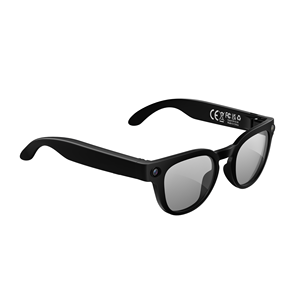
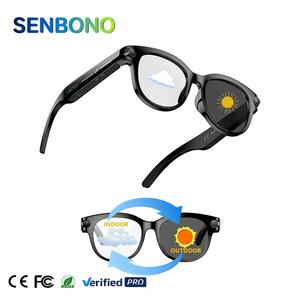
The demand for high-capacity portable power in the United States has experienced a structural shift. Historically treated as simple back-up batteries for smartphones, 20000mAh power banks have emerged as critical infrastructure for mobile professionals, outdoor enthusiasts, emergency preparedness kits, and multi-device ecosystems. Driven by the rapid proliferation of power-hungry electronics—such as USB-C powered laptops (Apple MacBook Pro, Dell XPS), tablet PCs, AI smart glasses, and high-framerate action cameras—US consumer expectations now center around fast charging speeds, multi-protocol compatibility, and flight-approved safety parameters.
From an engineering and regulatory perspective, the 20000mAh capacity rating represents the exact "Golden Ratio" for air transport and mobile ergonomics. Under United States Department of Transportation (DOT) and Federal Aviation Administration (FAA) guidelines (49 CFR 175.10(a)(18)), lithium-ion batteries brought aboard commercial passenger aircraft must not exceed 100 Watt-hours (Wh) per battery without special airline authorization. Calculating nominal energy density:
Energy (Wh) = [Capacity (mAh) × Nominal Voltage (V)] / 1000 = [20,000 mAh × 3.7 V] / 1000 = 74.0 Watt-Hours
At 74Wh, a 20000mAh power bank leaves a comfortable 26Wh buffer under the strict 100Wh TSA threshold, making it the highest capacity unit that US consumers can freely carry through airport security checkpoints without friction. Consequently, enterprise buyers, Amazon FBA sellers, and big-box electronics retailers prioritize 20000mAh SKUs as their primary flagship offerings.
A rigorous evaluation of global production hubs, R&D infrastructure, UL certification readiness, and export performance for US B2B procurement teams.
| Rank & Manufacturer Profile | Primary Cell Type | Max PD Output | US Safety Certifications | GaN Tech Integration | US Warehouse Support |
|---|---|---|---|---|---|
| 1. Pebble / VopinTech Technology | A-Grade Li-Polymer / 21700 | 65W - 100W PD 3.1 | UL 2056 / UL 1642 / FCC / UN38.3 | GaN III Semiconductor | Yes (DDP & Local Hubs) |
| 2. Anker Innovations Supply Base | Custom 21700 Cells | 65W - 140W PD 3.1 | UL 2056 / FCC / CE | GaNPrime™ Architecture | Yes (US Domestic Stock) |
| 3. Baseus Electronics OEM Division | Li-Polymer Flat Cell | 30W - 65W PD | UL 2056 / FCC / RoHS | GaN Fast Charge 2nd Gen | Yes (West/East Coast Hubs) |
| 4. RAVPower Manufacturing Group | High-Density Li-Polymer | 45W - 60W PD | UL 2056 / ETL Listed | Standard Silicon / GaN II | Yes (3PL Fulfillment) |
| 5. Romoss Technology Export Division | Standard 18650 / Li-Po | 22.5W - 30W QC/PD | FCC / CE / UN38.3 | Silicon Mosfet IC | Direct Export Container |
| 6. Aukey Tech Original Manufacturing | Li-Polymer Battery Pack | 45W - 65W PD | UL 2056 / FCC | Omnia GaN Chipset | Yes (FBA Partner Network) |
| 7. Ugreen Hardware Production Hub | 21700 High-Capacity Cell | 100W - 145W PD 3.1 | UL 2056 / FCC / Prop 65 | GaN Fast IC | Yes (US Domestic Warehousing) |
| 8. Belkin Manufacturing Partner Hub | Premium Li-Polymer | 30W - 65W PD | UL 2056 / MFi Certified | Silicon / Hybrid GaN | National Retail Distribution |
| 9. Mophie ODM Engineering Center | Custom Slim Li-Po | 20W - 45W PD | UL 2056 / FCC / CE | Standard Efficiency IC | US Enterprise Logistics |
| 10. Zendure Energy Export System | EV-Grade 21700 Cells | 100W PD Dual-Port | UL 2056 / FCC / UN38.3 | GaN Power Semiconductor | Global & US Direct Warehousing |
Beyond capacity marketing, professional procurement requires a deep analysis of energy conversion physics, component thermal limits, and protocol negotiation.
A true 20000mAh bank rated at 3.7V holds 74Wh of theoretical energy. When stepping up voltage from 3.7V to 5V, 9V, 15V, or 20V (USB-PD standard), thermal dissipation and DC-to-DC conversion losses occur. Tier-1 manufacturers achieve ≥ 88% to 92% efficiency, delivering over 13,000mAh effective actual output at 5V/2A, whereas low-cost suppliers drop below 75% efficiency due to high internal resistance.
Integration of Gallium Nitride (GaN III) power ICs allows power banks to handle higher switching frequencies with significantly reduced gate charge loss. This shrinks internal heat sinks, allowing 65W laptop-charging 20000mAh power banks to maintain a compact footprint while keeping surface chassis temperatures strictly under 45°C under continuous load.
Exporting to the US market mandates robust fault prevention. Leading factory designs incorporate dual Negative Temperature Coefficient (NTC) thermistors, hardware-level Over-Voltage Protection (OVP), Over-Current Protection (OCP), Short-Circuit Protection (SCP), and automated trickle-charging for low-current devices like AI Smart Glasses and TWS Earbuds.
To maximize retail sell-through across US channels (including Amazon US, Best Buy, REI, and corporate gifting), power bank offerings must be tailored to distinct regional lifestyle use-cases:
Combining 10+ years of wearable and power electronics innovation with automated assembly and comprehensive US compliance testing.
Operating dedicated R&D testing labs since 2013, our production lines utilize automated cell sorting machines to match internal impedance within ±1mΩ and voltage capacity within ±5mV. This meticulous cell-matching process ensures battery cycle life exceeds 500 charge cycles before reaching 80% capacity retention.
All export SKUs ship with full UL 2056 test reports issued by accredited laboratories (SGS, TÜV, Intertek), alongside UN 38.3 transport certificates and MSDS documentation. We assist US brand partners with custom HS Code classification to streamline US Customs clearance and minimize Section 301 tariff impacts.
Addressing critical commercial, compliance, and custom manufacturing inquiries from enterprise buyers.
UL 2056 is the specific standard of investigation for power bank safety established by Underwriters Laboratories. Major US e-commerce platforms (such as Amazon US) and brick-and-mortar retailers require UL 2056 test reports to prove that the power bank includes protective circuitry against overcharging, short-circuits, thermal runaway, and electrical malfunction. Units without UL 2056 certification face listing removal and potential customs seizures.
Yes, provided the power bank supports USB Power Delivery (USB-PD 3.0 or PD 3.1) with an output profile of at least 45W to 65W (e.g., 20V/3.25A). Standard 12W or 18W power banks will charge smartphones slowly but fail to power a running laptop. Our 65W Rapid Boost series is specifically engineered for high-wattage laptop handshakes.
Rated cell capacity (20000mAh at 3.7V) represents total internal battery chemistry energy. Usable output capacity (at 5V/2A USB output) is calculated after accounting for step-up boost conversion and heat dissipation. A high-efficiency unit yields approximately 13,000mAh to 13,500mAh effective actual output at 5V, allowing it to charge a typical 3,300mAh smartphone battery roughly 3.8 to 4 times.
Yes. Federal Aviation Administration (FAA) and Transportation Security Administration (TSA) regulations allow lithium-ion batteries under 100 Watt-hours (Wh) in carry-on baggage. Because a 20000mAh power bank equals 74Wh (20Ah x 3.7V), it is well within the 100Wh limit. However, power banks must always be carried in cabin baggage and are strictly prohibited in checked luggage.
We provide full custom tooling, laser-etched corporate logos, custom anodized aluminum finishes, LED screen battery indicator customization, bespoke retail packaging (FSC-certified boxes with US UPC barcodes), and pre-programmed firmware for specific fast-charging protocol priority.
Standard OEM private-label MOQ starts at 1,000 units per model colorway. Production turnaround typically takes 25 to 30 business days following pre-production sample approval, with expedited air shipping (5-7 days) or sea freight DDP delivery to US West/East coast ports (20-25 days).
Request product samples, complete UL 2056 documentation packages, wholesale price lists, and custom branding proposals tailored for the US market today.