AI Powered
 Smart Tech
 Explore our engineering-grade open-ear audio glasses, smart eyewear, and high-performance wireless acoustics ready for OEM/ODM customization.
The personal audio landscape is undergoing a decisive paradigm shift. While In-Ear TWS (True Wireless Stereo) products dominated consumer audio for over a decade, consumer fatigue regarding ear-canal pressure, acoustic isolation risks, and long-term wearing discomfort has accelerated the rise of Open-Wearable Stereo (OWS) audio solutions. According to market data, the OWS category represents the fastest-growing sector within smart hearables, posting a compound annual growth rate (CAGR) exceeding 34% heading into 2026.
For global brands, importers, and procurement executives, evaluating Top Trusted OWS Earbuds Manufacturers & Factories requires moving beyond basic cosmetic customization. Modern OWS production demands deep acoustic engineering, specialized directional sound wave optics, advanced micro-circuitry, micro-housing ergonomics, and rigorous multi-stage quality assurance. As a premier manufacturer with over a decade of R&D heritage since 2013, our production infrastructure integrates bio-acoustic driver development, anti-phase sound leakage suppression, and automated SMT assembly lines certified for international compliance including BIS, CE, FCC, and RoHS standards.
Traditional OEM sourcing guides often rely on generic specifications such as battery capacity or Bluetooth version numbers. However, real-world acoustic performance in open-ear formats depends heavily on three proprietary technological pillars:
1. Directional Sound Delivery & Reverse Phase Leakage Cancellation: Unlike sealed in-ear monitors, OWS earbuds output sound into open air. Top-tier manufacturers utilize dual-sound outlet optics aligned at exact mathematical angles to project acoustic pressure directly into the ear canal, while generating anti-phase sound waves to cancel outwards-dispensing audio, reducing ambient sound leakage by over 85%.
2. Structural Weight Distribution & Biocompatible Ergonomics: Premium OWS factories employ multi-point weight distribution curves utilizing memory-titanium wire cores wrapped in hypoallergenic liquid silicone. This ensures zero ear-canal stress, stable retention during intense athletic movement, and seamless integration with eyewear frames.
3. Low-Frequency Compensation Algorithms (DSP Bass Boost): Because open-ear designs naturally lose low-end acoustic pressure, enterprise-grade factories embed dedicated DSP hardware modules running real-time dynamic bass enhancement algorithms to maintain rich, natural acoustics across 20Hz to 20kHz frequencies.
Micro-structured acoustic chambers focus audio waves directly into the auditory canal with sub-millimeter precision, maximizing sound pressure while preserving situational awareness.
Nano-scale hydrophobic coating and sonic sealing protect internal components against heavy perspiration, rainfall, and environmental moisture exposure.
High-density lithium polymer cells optimized by intelligent power management ICs deliver up to 12 hours of continuous playback per charge and 50+ total hours with the charging case.
As global retail channels become saturated with low-tier consumer commodities, brand growth relies entirely on procurement strategies aligned with next-generation manufacturing technology. Leading factory partners are actively integrating the following advancements into their 2026 OEM/ODM production lines:
Next-generation OWS headsets feature dual or quad MEMS microphone arrays coupled with neural-network ENC microchips. By sampling environmental ambient noise at 48kHz, the system isolates user speech from wind, traffic, and industrial noise during Bluetooth calls, providing crystal-clear communications even in high-velocity outdoor sports environments.
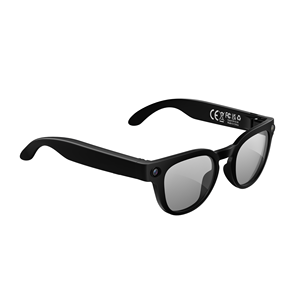
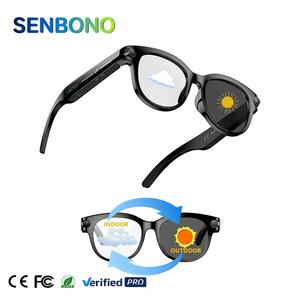
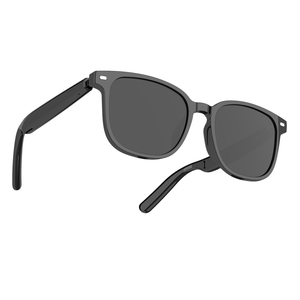
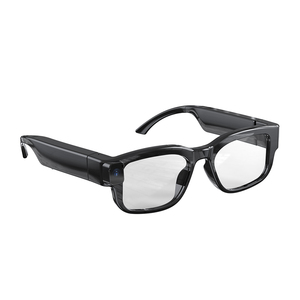
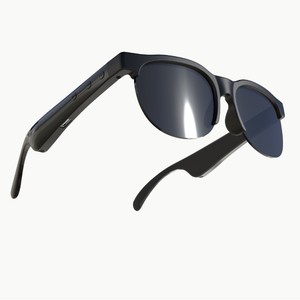
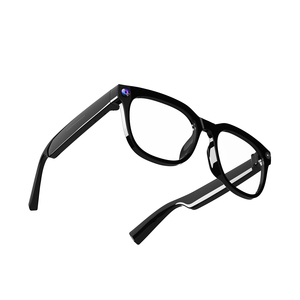
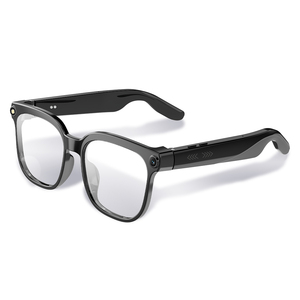
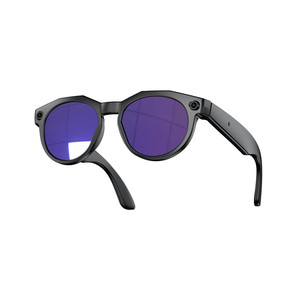
The boundary between traditional open-ear headphones and smart eyewear is dissolving rapidly. Modern manufacturing infrastructure now leverages ultra-compact, rigid-flex SMT PCBA modules capable of housing Bluetooth 5.4 SoCs, HD image sensors, live translation engines, and touch gesture controls within standard optical frame dimensions (as showcased in our flagship Smart AI Eyewear series).
Enterprise buyers are increasingly mandating strict Environmental, Social, and Governance (ESG) compliance. Factory roadmaps emphasize post-consumer recycled (PCR) plastics for charging cases, medical-grade bio-compatible silicones for earhooks, and nickel-free plated charging pins to prevent skin allergies during extended contact.
Immersive audio is no longer exclusive to over-ear studio headphones. Advanced OWS factories are embedding 6-axis Inertial Measurement Unit (IMU) sensors (gyroscopes and accelerometers) directly onto the earbud circuitry. This enables real-time dynamic head-tracking spatial audio, rendering a 3D soundstage for gaming, virtual navigation, and cinema consumption.
Backed by over a decade of continuous audio engineering and wearable electronics innovation since 2013, our production infrastructure bridges the gap between disruptive R&D concept design and scalable high-yield mass production.
To assist channel procurement managers, brand directors, and supply chain specialists, we have compiled detailed solutions to the most critical OWS sourcing questions.
While standard TWS earbuds rely on silicone tips creating a physical seal inside the ear canal for passive noise isolation and bass response, OWS (Open-Wearable Stereo) earbuds utilize an unsealed acoustic design. Manufacturing OWS products requires custom-engineered large-aperture bio-diaphragm drivers (typically 14.2mm to 16.2mm compared to 6mm-10mm in TWS), precise directional sound wave waveguides, complex earhook weight balance calibration, and active DSP anti-phase acoustic cancellation algorithms to prevent sound leakage.
Audio leakage is quantified inside our state-of-the-art Anechoic Acoustic Chambers using artificial head simulators (KEMAR). Microphones positioned at distances of 20cm, 50cm, and 100cm measure emitted sound pressure levels while playing reference frequency sweeps. By fine-tuning reverse-phase acoustic chamber vents on the PCBA housing, sound leakage outside a 30cm radius is suppressed by over 80-85% at typical listening volumes.
For standard white-label products with custom logo printing and tailored retail packaging, our typical MOQ starts at 1,000 units with a dispatch turnaround of 15 to 20 days. For full custom ODM projects requiring dedicated tooling molds, customized PCBA layouts, and bespoke firmware development, initial pilot runs start at 3,000 units, with tooling lead times ranging from 35 to 45 calendar days.
All production models conform to global safety and environmental requirements. We supply complete test reports for CE (EMC/LVD), FCC ID, RoHS 2.0, REACH, and BIS compliance. Battery packs carry certified MSDS, UN38.3, and IEC 62133 documentation to guarantee seamless sea and air freight customs clearance worldwide.
Yes. Our R&D team provides specialized firmware integration supporting low-latency Bluetooth 5.4 SoCs connected to multi-language AI translation platforms. As demonstrated in our Smart AI Glasses portfolio, we can incorporate touch-activated AI voice assistants, real-time audio translation engines covering 145+ languages, and custom gesture algorithms tailored to your brand's application ecosystem.
We provide a comprehensive quality guarantee backed by a standard 12-month manufacturer warranty policy. Overseas distributors receive dedicated spare-part allocations (1-2% non-charging units/components included with bulk shipments), direct access to our technical support desk for firmware updates, engineering documentation, and local service support protocols.
Request our comprehensive 2026 OEM/ODM Product Catalog, detailed technical specifications, factory audit documentation, and competitive wholesale pricing matrices.
Get Catalog