 Smart Tech
 Smart Glasses Wireless Earbuds Blog
Smart Tech Direct-from-factory flagship platforms pre-certified for global market expansion, integrating advanced biometric hardware, high-definition optical lenses, and ultra-low-power Bluetooth microcontrollers.
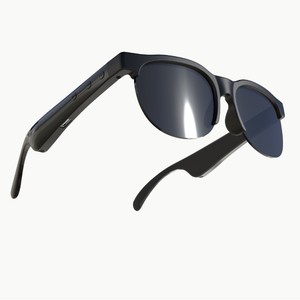
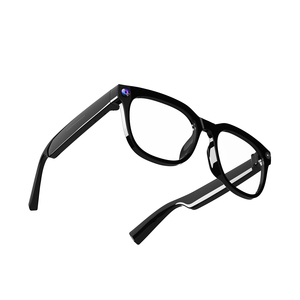
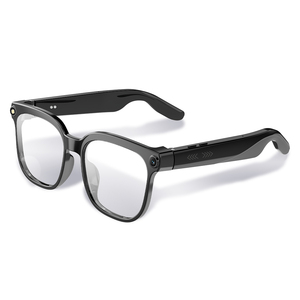
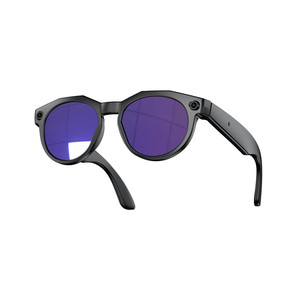
The global wearable device market has undergone a fundamental structural shift. China—specifically the Pearl River Delta hub spanning Shenzhen, Dongguan, and Huizhou—now accounts for over 85% of global smartwatch and personal smart wearable manufacturing volume. However, selecting an elite manufacturing partner requires looking beyond surface-level factory footprints. High-performing OEM/ODM production facilities operate at the intersection of micro-electronics assembly, precision optical sensor calibration, high-grade waterproofing engineering, and firmware-level algorithm integration.
When procurement officers analyze potential smartwatch factories in China, they must evaluate four distinct layers of operational competence: Surface Mount Technology (SMT) density, cleanroom assembly standards (Class 10,000+), in-house RF tuning capability, and multi-sensor algorithmic verification. Premier factories maintain fully automated SMT lines equipped with high-speed Yamaha and Fuji placement machines capable of handling complex 0201 component packages, ultra-dense System-in-Package (SiP) modules, and multi-layer Flexible Printed Circuit Board (FPCB) designs.
Information Gain Metric: High-reliability smartwatch OEM facilities do not merely assemble prefabricated components. Leading factories in China maintain dedicated R&D labs for optical PPG sensor calibration, antenna gain optimization in micro-chassis environments, and automated acoustic chamber testing (audio THD < 1% at maximum output).
Built upon a decade of hardware innovation, our partner production infrastructure delivers uncompromised quality for international brand owners, importers, and regional distributors.
Over 10 years of continuous firmware and hardware development. We own full stack SDK/API middleware integration, allowing seamless application customization, localized UI/UX design, multi-language font rendering, and cloud platform synchronization.
Integrated battery circuit protection modules (PCM) combined with high-density pure cobalt lithium-polymer cells. Every lot undergoes thermal shock, overcharge tolerance, vibration testing, and UN38.3/MSDS transport certification before release.
Optical Heart Rate (HR), Blood Oxygen (SpO2), HRV, and Sleep Tracking modules calibrated against medical reference monitors. Our multi-wavelength photoplethysmography (PPG) sensor arrays minimize dark-skin tone and motion artifact interference.
Key architectural advancements shaping next-generation wearable electronics procurement.
The consumer wearable market is rapidly transitioning away from standard TFT-LCD displays toward Low-Temperature Polycrystalline Oxide (LTPO) AMOLED panels and emerging Micro-LED arrays. LTPO technology enables dynamic refresh rate scaling (from 60Hz down to 1Hz during Always-On Display mode), reducing display sub-system power consumption by up to 35%. Top China smartwatch factories are now standardizing 1.43-inch and 1.96-inch AMOLED panels delivering 1,000+ nits peak outdoor brightness, wide DCI-P3 color gamut coverage, and 3D curved sapphire glass cover lenses.
Future smartwatch procurement strategies center heavily on sensor evolution. China's top R&D facilities are pushing beyond basic single-green-LED PPG sensors. The next generation of mid-to-high tier smartwatches incorporates multi-channel optical arrays (combining green, red, and infrared wavelengths) alongside dry-electrode ECG circuits. Algorithm development focuses on continuous blood pressure trend analysis, non-invasive glucose monitoring estimations via multi-spectral spectroscopy, and early warning arterial stiffness detection.
Power management remains the central constraint of modern wearables. Leading factories are abandoning single-core MCUs in favor of dual-engine hardware architectures (e.g., combining high-performance ARM Cortex-M processors for graphic rendering with ultra-low-power co-processors for background sensor polling). This architecture enables smooth 60fps UI navigation while maintaining 10 to 14 days of real-world battery life on standard 300mAh to 450mAh cell capacities.
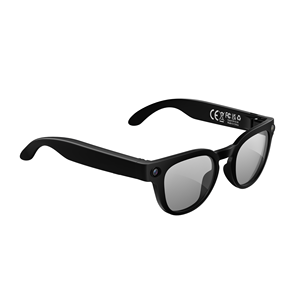
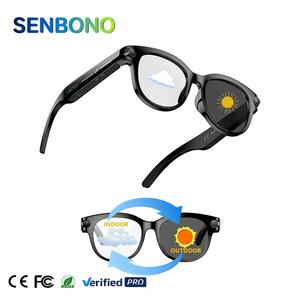
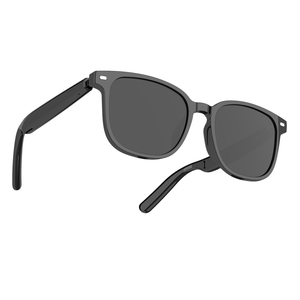
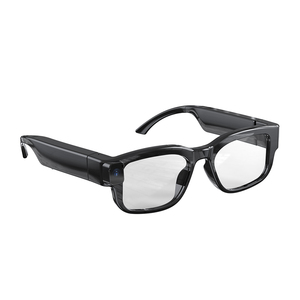
Product form factors are expanding into holistic wearable ecosystems. As demonstrated in our product portfolio, smart audio glasses featuring open-ear directional acoustics, real-time AI translation, and integrated camera sensors work in tandem with AMOLED smartwatches and digital smart rings. Top manufacturing facilities now offer unified cross-device software suites, allowing multi-modal health tracking and voice-assistant synchronization across different wearable form factors.
How international buyers, private-label brands, and enterprise clients are optimizing their supply chains in China.
To reduce capital expenditure and speed up time-to-market (TTM), brand owners are moving away from entirely bespoke private tooling toward modular chassis platforms. Factories provide pre-certified, IP68-waterproof alloy cases where buyers can quickly customize bezels, crowns, strap mechanisms, interface software, and retail gift-box packaging within 15–20 days.
Global regulatory enforcement is growing stricter. Importers require complete supply chain transparency. Top factories provide full component-level traceability (BOM verification), ensuring compliance with EU CE-RED directive, US FCC ID, Indian BIS standards, RoHS environmental limits, REACH chemical safety, and UN38.3 battery transport safety regulations.
Hardware parity has made software the primary brand differentiator. Procurement managers now demand open API documentation and modular SDKs. This allows enterprise buyers to connect factory hardware directly into proprietary health management apps, corporate wellness portals, or local telecom carrier networks without paying exorbitant licensing fees.
| Evaluation Parameter | Tier-1 Integrated ODM Factory | Mid-Tier OEM Assembler | Small Trading / Sourcing Agency |
|---|---|---|---|
| In-House SMT Lines | Fully Automated (Yamaha/Fuji, Class 10k) | Outsourced or Semi-Automated | None (Pure Reseller) |
| Firmware & App R&D | 50+ In-House Engineers (Full Stack) | Basic Turnkey 3rd-Party App | No Internal R&D Capabilities |
| Quality Control Standard | AQL 0.40 Major / 0.65 Minor (Strict) | AQL 1.0 Major / 2.5 Minor | Visual Inspection Only |
| Waterproof Testing | 100% Vacuum Pressure + Hydrostatic Tank | Batch Sampling (5% - 10%) | Unverified Factory Claims |
| Compliance Certification | CE, FCC, BIS, RoHS, REACH, UN38.3 | Partial / Shared Certificates | Often Non-Compliant |
Direct answers to critical procurement, quality control, and logistics inquiries.