10+ years of wearable & audio engineering · In-house R&D · Assured warranty & global service support

Top China Quick Charger Manufacturers & Suppliers

2026 Enterprise Procurement Whitepaper: Sourcing GaN Fast Chargers, PD 3.1 Architecture, High-Density Power Packs & AI Smart Hardware Solutions

Verified Supply Chain

High-Efficiency OEM/ODM Hardware & Fast-Charging Products

Explore current-generation smart audio wearables and fast-charging power systems engineered for global importers, distributors, and brand partners.
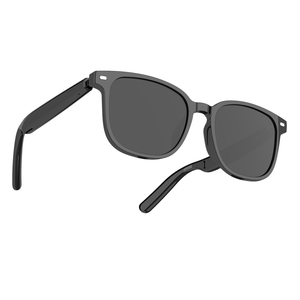
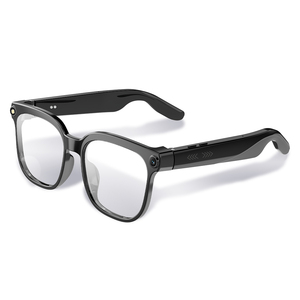
Fast Charge New Vision MT3 Smart AI Glasses With 8MP Camera HD Touch Button

New Vision MT3 Smart AI Glasses With 8MP Camera & Fast Charging

8MP Camera, Real-Time AI Translation, Voice Assistant, High-Speed Magnetic Fast Charge.
Get a Quote
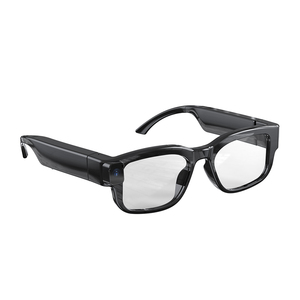
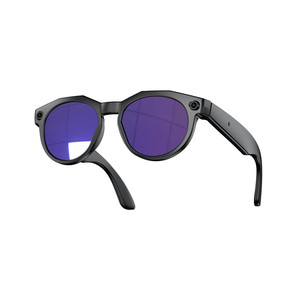
290mAh Cell SENBONO M89 Smart Polarized Glasses Dual Camera 2MP IPX5

SENBONO M89 Smart Polarized Glasses Dual Camera IPX5 Waterproof

Photochromic Lenses, HD Video Recording, 290mAh Quick-Charge Li-Po Battery Core.
Get a Quote
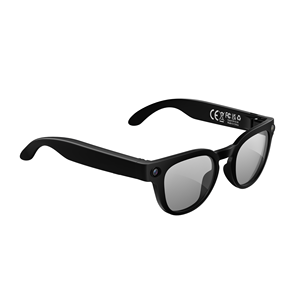
BT 5.4 AI Wireless BT5.4 AI Smart Translation Glasses

Wireless BT5.4 AI Smart Translation Glasses (145 Languages)

Built-in Acoustic Speaker, Real-Time Audio Translator, Low-Power Fast Charging Circuit.
Get a Quote
4K / 8MP Smart AI Glasses 4K Camera 8MP Video Recording

Smart AI Glasses 4K Camera 8MP Anti-Shake Video Recording

Noise Reduction DSP, Touch & Voice Control, Optimized Quick Charging Protocol.
Get a Quote
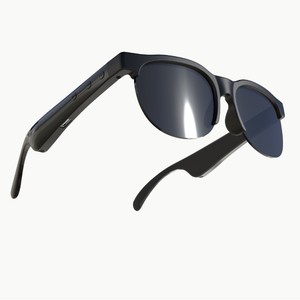
Open-Ear Bluetooth Glasses with Open-Ear Calling

Open-Ear Bluetooth Calling Smart Glasses for Outdoor Sports

Ergonomic Sports Frame, HD Call Clarity, Ultra-Fast USB Magnetic Charging Port.
Get a Quote
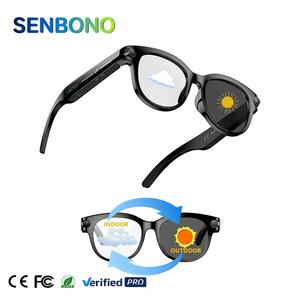
Air Conduction Smart Photochromic Glasses Bluetooth Air Conduction

Smart Photochromic Bluetooth Air Conduction Audio Eyewear

Low-Latency Gaming Mode, Navigation Audio, High-Efficiency Quick Recharge Circuit.
Get a Quote
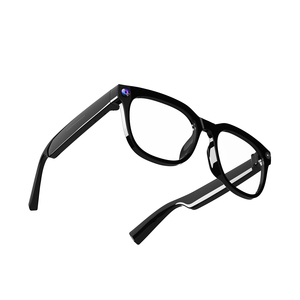
HD Camera AI Smart Glasses with HD Camera Real-Time Translation

AI Smart Glasses with HD Camera & Real-Time Intelligent Recognition

16MB Flash Storage, Touch Operation, Fast-Charge Energy Efficient Chipset.
Get a Quote
IPX5 Waterproof AI Smart Glasses with Camera Waterproof Wireless Music

Waterproof AI Smart Glasses with Camera & Photo Recognition

Wireless Music Listening, Video Capture, Rapid USB Fast Charge System.
Get a Quote
10+ Years Engineering R&D Legacy
65W GaN Max PD Output Tech
100% BIS/CE Certified Quality Standards
50+ Countries Global Retail Distribution

Executive Sourcing Report: Navigating China’s Quick Charger & Power Ecosystem

The global fast-charging market is experiencing a structural shift driven by higher energy-density consumer devices, the universal integration of USB Power Delivery (USB-PD 3.1 Extended Power Range), and the rapid commercialization of 3rd and 4th generation Gallium Nitride (GaN) semiconductors. As tech conglomerates, brand importers, and cross-border e-commerce distributors seek reliable OEM/ODM partners in China, evaluating suppliers based purely on unit cost is no longer viable. Procurement managers must analyze underlying circuit topology, thermal dissipation materials, factory SMT capabilities, dynamic power allocation ICs, and multi-national regulatory compliance.

Information Gain Insight: China manufactures over 85% of the world’s fast chargers. Sourcing success in 2026 relies on selecting factories capable of multi-protocol handshake integration (PD3.1, QC5, UFCS) with real-time temperature regulation and automated line testing.

Shenzhen, Dongguan, and Ningbo remain the core manufacturing clusters for quick chargers, GaN power adapters, high-density power banks, and fast-charging micro-electronic smart wearables. This whitepaper provides a rigorous framework for identifying elite China quick charger manufacturers, evaluating product development roadmaps, and managing global supply chain risks.

Supplier Evaluation

4-Pillar Evaluation Framework for China Quick Charger Suppliers

Ensure long-term reliability and compliance by auditing OEM/ODM partners against stringent engineering standards.

1. GaN & Circuit Architecture

Top suppliers utilize GaNFast or Navitas ICs paired with PFC + LLCR resonant converter topologies. Verify whether the factory designs custom transformer cores to minimize thermal dissipation and magnetic loss.

2. Safety & Compliance Certifications

Direct compliance with UL62368-1, IEC62368, CE-EMC, FCC Part 15, PSE, KC, and BIS is non-negotiable. Qualified facilities possess in-house UL-certified laboratories for ESD, drop, and thermal chamber testing.

3. Automated Manufacturing (SMT)

Elite manufacturers employ high-speed Yamaha or Panasonic SMT pick-and-place lines, 3D AOI (Automated Optical Inspection), and 100% automated computer-controlled aging/burn-in test rigs.

Future Procurement Trends in Quick Chargers & Power Essentials (2026–2030)

As consumer hardware evolves toward slimmer form factors and higher battery capacities, buyer specifications are shifting rapidly. Sourcing teams must anticipate these technical developments when negotiating OEM contracts:

1. Universal Fast Charge Standardizing (UFCS Integration)

Historically, proprietary fast-charging protocols (e.g., SCP, VOOC, QC) caused fragmented ecosystem support. China's industrial regulatory bodies have pushed the Universal Fast Charging Specification (UFCS). Tier-1 China quick charger manufacturers are now integrating unified UFCS controller chips alongside USB-PD 3.1, enabling cross-brand rapid charging up to 200W without protocol throttling.

2. Micro-GaN Chargers for Smart Wearables & AI Glasses

Power management is no longer limited to high-wattage wall adapters. The miniaturization of fast-charging circuitry has enabled micro-charge modules integrated into smart audio glasses, AI recording eyewear, and wearable health bands. These micro-circuit designs allow 290mAh to 500mAh lithium-polymer cells to reach 80% charge capacity within 15 minutes via magnetic contact interfaces without inducing thermal stress on sensitive optoelectronic sensors.

3. Multi-Port Dynamic Power Allocation (Smart IC Re-Balancing)

Modern 65W, 100W, and 140W multiport GaN chargers no longer rely on fixed power splits (e.g., 45W + 20W). Advanced manufacturers install MCU-driven dynamic power distribution firmware that measures real-time load demands and battery state-of-charge (SoC), adjusting output wattage on the fly to maximize charging speed while preserving total power budgets.

PCR & Eco-Design Regulations

Importers to Europe and North America must mandate Post-Consumer Recycled (PCR) polycarbonate housings (up to 75% recycled content) and Zero-Standby-Power ICs (<5mW standby loss) to comply with EU ErP Lot 6 environmental directives.

Graphene Thermal Potting Technology

High-power density chargers (>1.5W/cm³) generate significant thermal loads. Top China factories utilize full liquid silicone potting infused with graphene flakes to accelerate heat dispersion, keeping shell temperatures below 60°C under full load.

Product Development & Technology Engineering Trends

From an engineering perspective, quick charger innovation is centered on boosting power density while minimizing energy loss. The industry has progressed through three distinct architectural generations:

  • Gen-1 Silicon Flyback Topologies: Limited to ~18W–24W output with low energy efficiency (~85%) and heavy heat generation.
  • Gen-2 Early GaN (High-Frequency QR): Enabled 45W–65W form factors with ~91% efficiency, though requiring bulky aluminum heat sinks.
  • Gen-3 Integrated GaN ICs (PFC + AHB/LLC Topologies): Achieving up to 240W outputs, over 95% conversion efficiency, power densities exceeding 2.0W/cm³, and zero-acoustic-noise performance.

In power bank manufacturing, the trend focuses on combining high-wattage laptop PD outputs (65W–100W) with built-in reinforced Type-C cables and real-time OLED/LCD power meters. These digital displays provide users with diagnostic metrics including remaining battery percentage, real-time input/output wattage, and estimated time-to-full charge.

Manufacturing Excellence

Why Partner with Our Supply Chain Ecosystem

Combining 10+ years of hardware engineering, in-house R&D, and certified production lines for global brand success.

In-House R&D & Tooling

Over a decade of dedicated engineering expertise in fast-charging protocols, battery management systems (BMS), micro-wearables, and acoustic hardware integration.

Multi-Stage Quality Assurance

Every serialised unit undergoes rigorous electrical safety checks, salt-spray corrosion tests, drop resilience validation, IP splash testing, and thermal burn-in cycling.

Global Logistics & OEM Support

Complete OEM/ODM customization services including custom firmware, localized packaging, laser etching, and streamlined palletized shipping to over 50 countries.

Frequently Asked Questions

China Quick Charger & Hardware Procurement FAQ

Addressing the core technical, regulatory, and logistics queries of enterprise B2B buyers.

What is the standard Minimum Order Quantity (MOQ) for custom OEM quick chargers?
Standard OEM customization (custom logo printing, brand packaging, and color matching) typically starts at 1,000 to 2,000 units per SKU. For fully custom ODM projects requiring dedicated plastic injection tooling, custom PCB layout, and specific safety certifications, initial production runs usually require 3,000 to 5,000 units depending on housing complexity.
How do China quick charger manufacturers ensure international compliance?
Reputable manufacturers build products in accordance with global standards from the design stage. They utilize components certified by UL, CB, and VDE, and send final production samples to accredited third-party laboratories (such as TÜV Rheinland, SGS, or Intertek) for UL62368-1, CE-EMC, FCC, BIS, and PSE certification before mass export.
What is the technical advantage of GaN III chargers over traditional silicon chargers?
GaN III (Gallium Nitride 3rd Gen) semiconductors possess a significantly wider bandgap than silicon, allowing transistors to switch at much higher frequencies with lower thermal dissipation. This results in chargers that are 40% to 60% smaller, up to 95% energy efficient, lighter, and operate cooler under maximum load.
What lead times should buyers expect for sample evaluation and mass production?
Off-the-shelf samples for specification testing can typically be dispatched within 3 to 5 business days. Customized OEM samples with logo laser etching require 7 to 10 days. Mass production lead times generally range between 25 to 35 days post-sample approval and deposit confirmation.
How are fast-charging protocols integrated into micro hardware like AI Smart Glasses?
Smart glasses and micro-wearables utilize dedicated Power Management Integrated Circuits (PMICs) paired with high-efficiency magnetic pin charging docks. These systems regulate input voltage (typically 5V/1A to 5V/2A) with over-voltage protection (OVP), over-current protection (OCP), and thermal throttling to recharge 200mAh-500mAh cells safely in under 30 minutes without overheating the frames.

Ready to Source Direct from Verified Manufacturers?

Contact our engineering and procurement team today for custom quotes, technical datasheets, factory audit reports, and sample requests.