10+ years of wearable & audio engineering · In-house R&D · Assured warranty & global service support
2026 OEM / ODM Industrial Whitepaper

Top China Audio Devices Manufacturers & Factories

Strategic B2B Sourcing Guide: Smart Eyewear Architectures, Acoustic Drivers, AI Voice Integration & Global Supply Chain Benchmarks

Featured OEM/ODM Solutions

Next-Generation Audio & Smart Eyewear Portfolio

Direct factory production models certified for international retail compliance. Integrated with micro-acoustic chambers, HD video recording, and real-time AI translation engines.

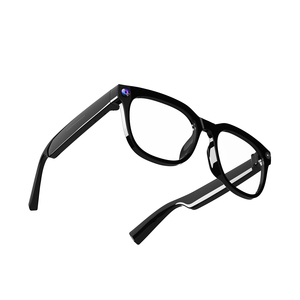
AI & 8MP Camera New Vision MT3 Smart AI Glasses With 8MP Camera HD Touch Button AI Translation

New Vision MT3 Smart AI Glasses With 8MP Camera HD Touch Button AI Translation Voice Assistant Fast Charging Sport BT Sunglasses

8MP HD Camera AI Translation Fast Charge
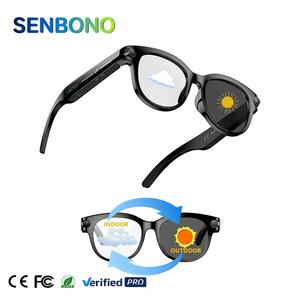
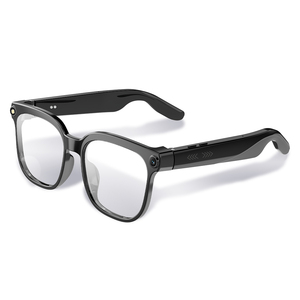
Dual Camera IPX5 SENBONO M89 Smart Polarized Glasses Dual Camera 2MP IPX5 Waterproof

SENBONO M89 Smart Polarized Glasses Dual Camera 2MP IPX5 Waterproof Photochromic Lenses HD Video Recording 290mAh Battery AI

Dual Camera Photochromic 290mAh Li-Po
BT 5.4 / 145 Languages
Wireless BT5.4 AI Smart Translation Glasses 145 Languages Built-in Speaker

Wireless BT5.4 AI Smart Translation Glasses with 145 Languages Built-in Speaker & Clear Audio Real-Time Translator Smart Glasses

BT 5.4 Audio 145 Languages Open-Ear Sound
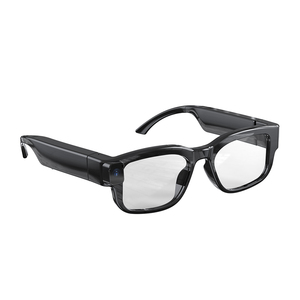
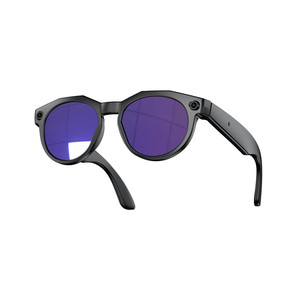
4K Ultra HD Smart AI Glasses 4K Camera 8MP Video Recording Anti-shake Noise Reduction

Smart AI Glasses 4K Camera 8MP Video Recording With Anti-shake Noise Reduction Touch Voice Control Smart Sunglasses

4K / 8MP Video EIS Anti-Shake ENC Dual Mic
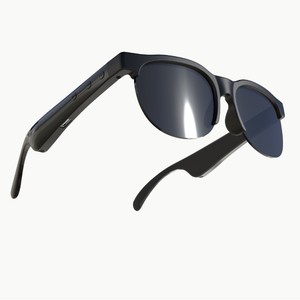
Open-Ear Sports New Smart Glasses Bluetooth Open-Ear Bluetooth Calling Outdoor Sports

New Smart Glasses: Bluetooth Glasses with Open-Ear Bluetooth Calling for Outdoor Sports Cross-Border New Arrival

Open-Ear Call UV400 Lens Ergonomic Fit
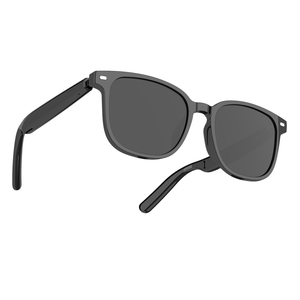
Air Conduction Smart Photochromic Glasses Bluetooth Air Conduction Music Calling Navigation

Smart Photochromic Glasses Bluetooth Air Conduction Music Calling Game Navigation Wearable Fashion Audio Eyewear

Air Conduction Game Low Latency Smart Touch
Intelligent AI AI Smart Glasses HD Camera Real-Time Translation Touch Intelligent Recognition

AI Smart Glasses with HD Camera Real-Time Translation Touch Operation Intelligent Recognition 16MB Camera Video Recording

Object Recognition Real-Time Voice Flash Storage
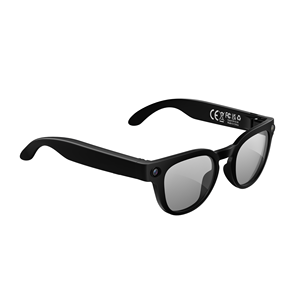
IPX6 Waterproof AI Smart Glasses Camera Waterproof Wireless Music Call Video Photo Recognition

AI Smart Glasses with Camera Waterproof Wireless Music Listening Call Video Recording Photo Recognition Smart Eyewear

IPX6 Sealed Photo Recognition HD Audio Engine
10+
Years R&D Legacy
50M+
Annual Unit Output
99.8%
Pass Rate (IQC/FQC)
145+
AI Languages Supported

Executive Summary: Navigating China’s Audio Electronics Manufacturing Landscape

The global consumer audio and wearable technology ecosystem is undergoing a seismic architectural transition. Driven by advances in high-efficiency System-on-Chip (SoC) silicon, miniaturized Micro-Electro-Mechanical Systems (MEMS), localized Neural Processing Units (NPUs), and open-ear acoustic wave guiding, China has solidified its status not merely as a high-volume manufacturing center, but as the premier incubator for advanced acoustic and electro-optical engineering.

For B2B procurement executives, brand directors, and hardware sourcing managers, partnering with premier OEMs and ODMs in the Pearl River Delta (encompassing Shenzhen, Dongguan, and Huizhou) requires a sophisticated understanding of engineering standards. Modern sourcing extends far beyond bill-of-materials (BOM) cost calculations; it encompasses thermal dissipation dynamics in ultra-compact frame structures, signal-to-noise ratio (SNR) optimization in multi-microphone arrays, firmware SDK integration for spatial audio, and stringent international compliance frameworks including BIS, CE-RED, FCC ID, RoHS, and REACH.

Strategic Sourcing Takeaway (Information Gain Insight)

Leading tier-1 audio factories in China have transitioned from simple contract assembly (EMS) to full-turnkey ODM platforms capable of co-developing custom ASIC microchips, wave-guide optics for AI sunglasses, and advanced battery management systems (BMS) with zero-degradation charging cycles.

Key Architectural Trends Shaping 2026–2030 Audio Device Manufacturing

As consumer expectations shift toward multi-functional smart wearables, Chinese audio manufacturers are pioneering several critical technical breakthroughs across product categories:

On-Device Edge AI & Real-Time Translation

Integration of low-power BLE 5.4 chips paired with cloud and edge Large Language Models (LLMs). Smart translation glasses now support up to 145 languages with sub-200ms latency, dual-mode noise cancellation, and localized voice assistant triggers.

Directional Air Conduction & OWS Acoustics

Open-Wearable Stereo (OWS) technology is rapidly replacing traditional in-ear silicone tips. By utilizing inverse phase acoustic wave cancellation and targeted sound-pipe geometry, open-ear devices deliver deep sub-bass response while minimizing sound leakage.

Embedded Optics & Anti-Shake Micro Cameras

Combining 4K video recording and 8MP photo acquisition into lightweight 35-gram eyewear frames. Factories are incorporating Electronic Image Stabilization (EIS), thermal-isolated circuit boards, and IPX5/IPX6 nano-coating encapsulation.

Comparative Technology Matrix: Audio & Wearable Form Factors

Category Architecture Core Chipset & DSP Acoustic / Optical Spec Battery & Thermal Limit Target B2B Application
AI Camera Smart Glasses Qualcomm / JL Dual-Core NPU 8MP / 4K sensor, EIS, 145-Lang Engine 290mAh Li-Po, Fast Magnetic Charge Cross-Border Retail, Enterprise Tech
OWS Air Conduction Glasses Bluetooth 5.4 LE Audio SoC 16.2mm Dynamic Drivers, Beamforming Mics 120mAh Dual-Temple Cells (8H playback) Outdoor Sports, Cycling & Fitness
Hybrid ANC TWS Earbuds BES / Realtek High-Res Codec 45dB Active Noise Reduction, LHDC 5.0 400mAh Case, 60H Total Playtime Premium Consumer Audio Brands
Fast-Charge Power Essentials InnoPower GaN V Architecture 22.5W–65W PD/QC, Digital LED Meter 20,000mAh High-Density Polymer Travel Accessories, Bundle OEM

Enterprise OEM/ODM Manufacturing Capabilities & Quality Control Standards

Evaluating a Chinese audio factory requires examining their full manufacturing workflow—from surface-mount technology (SMT) lines to full cleanroom assembly and rigorous reliability testing. Top-tier manufacturers operate within strict ISO9001 and ISO14001 guidelines, maintaining in-house environmental test chambers and automated optical inspection (AOI) hardware.

Core In-House Manufacturing Capabilities

  • High-Speed SMT Packaging: Automated Placement Lines handling 0201 component sizes, BGA micro-spacing, and high-frequency RF shielding enclosures.
  • ISO Class 8 Cleanroom Assembly: Dust-free environments essential for optic lens alignment, micro-camera module integration, and dust-sensitive acoustic diaphragm seating.
  • Acoustic Testing Chambers: Fully isolated Anechoic Chambers equipped with Audio Precision (APx555) analyzers, Artificial Head simulators, and THD (Total Harmonic Distortion) curve benchmarking machines.
  • Environmental & Reliability Suite: Salt-spray corrosion chambers, micro-drop shock testers, thermal shock (-40°C to +85°C) cabinets, and IPX5–IPX8 water immersion tanks.

Strict Four-Stage Quality Control Protocol (IQC-IPQC-FQC-OQA)

Every SKU undergoes 100% incoming material verification (battery C-rate, lens clarity, chip firmware flashing), in-line SMT soldering checks, final acoustic frequency curve validation, and outbound quality auditing prior to international export palletization.

Strategic Sourcing Checklist for International Procurement Officers

When executing supply chain contracts with Chinese audio manufacturers, B2B importers must evaluate six fundamental parameters to ensure seamless channel execution and product reliability:

1. Tooling & NRE Transparency

Verify whether the factory owns proprietary plastic injection molds or relies on public tooling. Proprietary tooling guarantees brand exclusivity and avoids cross-market cannibalization.

2. Firmware & SDK Access

Ensure the manufacturer offers customizable smartphone companion apps (iOS/Android), OTA firmware updates, and local server integration for AI voice services.

3. Certification Pathways

Confirm existing test reports for UN38.3 (battery transport), MSDS, CE-RED, FCC Part 15, BIS (India), and Telec (Japan) to avoid customs clearance bottlenecks.

Procurement Insights

Frequently Asked B2B Sourcing Questions

Comprehensive answers regarding MOQ, custom tooling, firmware modification, warranty terms, and international logistics.

What are the standard Minimum Order Quantities (MOQ) for custom OEM/ODM audio orders?
For standard factory SKUs with custom laser logo etching and branded packaging, the typical MOQ starts at 500 to 1,000 units per colorway. For deep ODM customization requiring custom plastic injection colors, modified PCB layouts, or custom lens coatings (such as photochromic polarization), the standard MOQ is 2,000 to 3,000 units depending on chip availability.
How do China audio factories handle IP protection and firmware SDK customization?
Reputable Tier-1 ODM manufacturers sign legally binding Non-Disclosure Agreements (NDA) under Chinese jurisdiction prior to receiving proprietary design assets. Firmware teams provide custom BLE SDKs, customizable companion apps, custom Bluetooth pairing names, and dedicated server API endpoint mapping for AI translation services.
What quality testing reports are provided prior to mass production shipment?
Every production batch is accompanied by a comprehensive Inspection Report containing IQC cell test logs, APx555 acoustic frequency response curves, drop-test statistics, battery cycling discharge curves, and waterproof seal verification certificates. Full CE, FCC, RoHS, and UN38.3 documentation is delivered for customs compliance.
What is the typical production lead time for sample development versus mass order fulfillment?
Pre-production golden samples with laser-etched branding are dispatched within 3 to 7 working days. Mass production lead time is typically 25 to 35 calendar days following deposit confirmation and artwork sign-off. For custom tool development (NRE), mold fabrication requires an additional 30 to 45 days.
How are warranty claims and defective unit RMA procedures managed for international buyers?
Factories typically provide either a 1% to 2% spare unit buffer (FOC finished goods or key components like micro-speakers, batteries, and temples) with every shipment, or operate a standard 12-month factory warranty covering component defects. Defective analysis is conducted remotely via video logs and log files to streamline batch credit adjustments.
Can smart glasses lenses be customized for corrective prescription requirements?
Yes. Smart audio frames feature modular lens mounting grooves designed to accommodate standard optical prescription lenses (single vision, progressive, anti-blue light, or photochromic TAC). Optical labs can pop out factory demonstration lenses and fit custom prescription lenses without compromising frame electronics or touch sensors.

Ready to Upgrade Your Audio Product Lineup?

Request our comprehensive 2026 OEM/ODM Product Catalog, wholesale price matrices, and sample evaluation kits for your brand.

Get Catalog