 Smart Tech
 Smart Glasses Wireless Earbuds Blog
Smart Tech Enterprise-grade smart eyewear, AI camera glasses, and wireless audio solutions available for custom white-label branding, ODM co-development, and turnkey manufacturing.
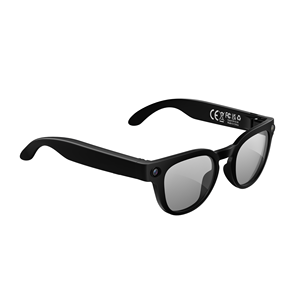 AI Camera & Voice
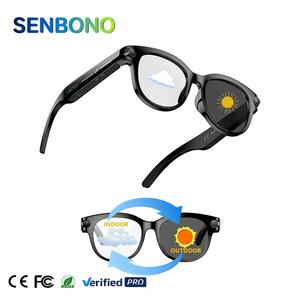 Dual Camera / IPX5
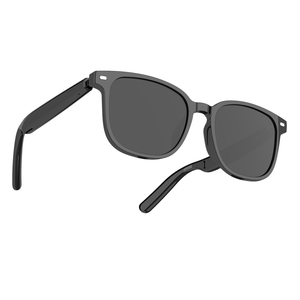 145 Languages AI
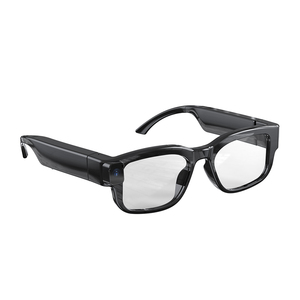 4K / Anti-Shake
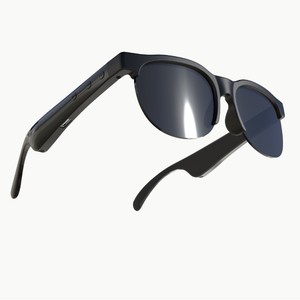 Outdoor Sport Audio
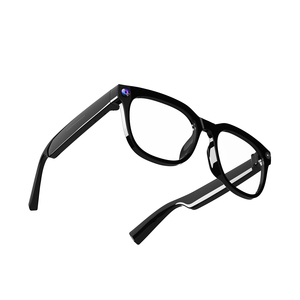 Photochromic Lens
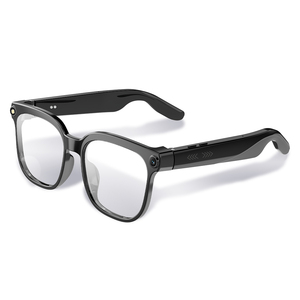 AI Visual Recognition
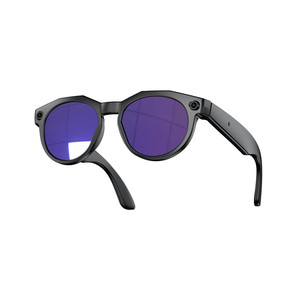 All-Weather Waterproof
Over a decade of micro-electronics precision, rigourous QA/QC testing, and scalable ODM manufacturing for enterprise tech brands worldwide.
The global wearable device industry is currently experiencing a profound structural pivot. Modern consumers are no longer satisfied with elementary step-counting wristbands or passive Bluetooth headphones. The convergence of micro-optoelectronics, edge AI acceleration, advanced sensor fusion (PPG, SpO2, HRV, Bio-impedance), and compact battery chemistry has redefined market expectations. Today’s market demands multimodal intelligent wearables—specifically smart glasses integrating computer vision and real-time translation, ultra-vibrant AMOLED smartwatches with integrated cellular/Bluetooth voice systems, micro digital display smart rings, and open-ear acoustic (OWS) audio gear.
As a premiere OEM/ODM Wearable Devices Manufacturer with over a decade of dedicated micro-electronics R&D experience, our engineering platform bridges the gap between conceptual industrial design and mass-market commercial production. We provide international tier-1 retailers, brand licensing partners, enterprise distributors, and high-growth technology startups with comprehensive turnkey manufacturing infrastructure—enabling rapid market entry with fully compliant, field-tested wearable solutions.
Complete SDK/API development for iOS and Android ecosystems. Our firmware stack supports custom UI/UX design, over-the-air (OTA) update servers, multi-language localization (up to 145 languages), and secure enterprise cloud telemetry.
Miniaturized optics integration featuring 8MP Sony sensors, 4K video recording algorithms, hardware Electronic Image Stabilization (EIS), auto-focus micro-modules, and high-efficiency photochromic smart lenses.
Every manufactured batch undergoes rigorous EVT/DVT/PVT engineering gates, drop testing, salt-spray corrosion chamber testing, IP65-IP68 ingress validation, and 100% RF antenna calibration for global market readiness.
For procurement officers, hardware category managers, and OEM decision-makers, selecting the right manufacturing partner requires anticipating technological shifts. Below is an analytical breakdown of key hardware engineering trends shaping the future of wearable sourcing over the next five years:
| Technology Vector | Legacy Specifications | Next-Gen OEM/ODM Standard (2026+) | Commercial Sourcing Impact |
|---|---|---|---|
| Display Architecture | TFT / Monochromatic LCD (250–400 Nits) | Flexible AMOLED / Micro-OLED (1000+ Nits Peak) | Direct daylight legibility; 40% reduction in display power draw via AOD optimization. |
| On-Device AI Acceleration | Cloud-dependent API call processing | On-board Neural Processing Units (NPUs) / Low-Power Edge DSPs | Near-zero latency real-time voice translation & local image OCR without continuous smartphone pairing. |
| Acoustic Form Factors | In-Ear TWS Silicone Isolation | Directional Open-Ear (OWS) Air Conduction & Bone Conduction | Higher user safety during outdoor athletics; eliminates ear-canal hygiene issues; massive growth in smart glasses. |
| Biometric Sensor Calibration | Single-wavelength PPG (Heart Rate only) | Multi-wavelength Photoplethysmography (SpO2, HRV, Stress, ECG) | Clinical-grade metric accuracy allows brands to position hardware into preventive digital healthcare markets. |
| Battery & Charging Systems | Standard Li-ion (Single-layer protection) | High-Density Solid/Semi-Solid State & Fast-Charge GaN Micro-Circuits | Extended 30–45 day standby times for health bands; 0-80% charge achieved in under 20 minutes for high-power smart glasses. |
The integration of generative AI and Large Language Models (LLMs) directly into smart eyewear stems from advancements in low-power Bluetooth 5.4 chipsets (such as Qualcomm, Nordic, and BES series). Modern OEM smart glasses now act as real-time audio-visual capture nodes. Incorporating 8MP CMOS sensors with active noise-canceling dual-mic arrays enables instant scene recognition, document scanning, multi-language voice synthesis, and heads-up navigation. Sourcing directors must prioritize suppliers possessing mature SMT micro-soldering capabilities to fit high-density PCBA boards into slim, lightweight TR90 optical frames.
Wrist-worn wearables have transitioned permanently toward high-refresh AMOLED displays delivering 1000-nit peak brightness. However, high-brightness displays create severe thermal and battery constraints. Our engineering teams overcome this through custom power management ICs (PMICs) and dynamic refresh-rate control algorithms. Brands sourcing AMOLED smartwatches from our OEM production lines benefit from display interfaces that remain crystal clear under direct sunlight while preserving multi-day battery autonomy.
In modern consumer electronics procurement, product returns are driven predominantly by inaccurate sensor data. To guarantee high E-E-A-T scores and consumer satisfaction, our OEM process validates optical sensor arrays (SpO2, continuous heart rate, sleep staging, and stress indicators) against medical reference monitors prior to firmware freezing. Algorithmic noise filter routines remove motion artifacts during high-intensity sports, delivering market-ready reliability.
Our state-of-the-art production facility operates under strict ISO 9001:2015 quality management systems. From initial industrial design render to toolmaking, surface-mount technology (SMT), ultrasonic plastic assembly, and final compliance certification, our vertically integrated infrastructure handles the entire hardware product lifecycle.
Equipped with high-speed automated placement machines capable of handling 0201 component sizes, fine-pitch BGAs, and rigid-flex PCBAs required for ergonomic smart ring and smart glasses stem assembly.
In-house testing laboratories subject production samples to 10,000+ button actuation cycles, micro-drop impacts, thermal shock (-20°C to +65°C), 48-hour salt fog corrosion tests, and IPX5-IPX8 water immersion.
Full assistance with regional compliance testing including BIS (India), CE (Europe), FCC (North America), RoHS, REACH, and Telec (Japan), ensuring smooth customs clearance and regulatory entry.
Comprehensive technical and operational answers to common questions asked by global procurement teams, category managers, and brand licensing executives.
Connect directly with our senior hardware engineering team. Receive detailed component specification datasheets, sample units, factory audit reports, and competitive bulk pricing quotations.