
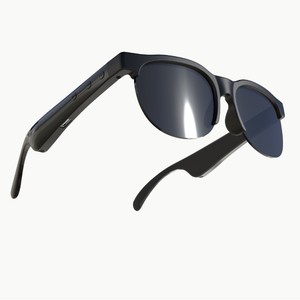
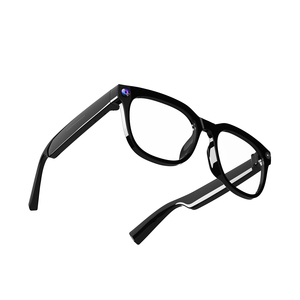
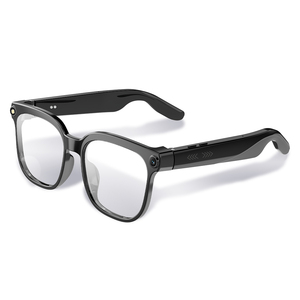
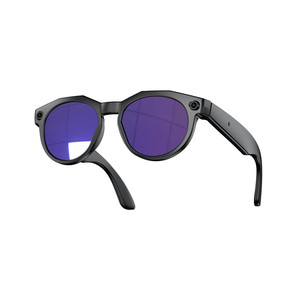
1. Technical Architecture of OEM Custom Audio & AI Smart Eyewear
The global wearable technology ecosystem is undergoing a monumental paradigm shift. As traditional in-ear headphones (TWS) reach market saturation, open-ear smart audio glasses have emerged as the fastest-growing consumer electronic segment. For B2B buyers, retailers, and private-label tech brands, selecting the right Custom OEM Audio Glasses Manufacturer is a critical strategic decision that impacts acoustic fidelity, thermal management, RF antenna performance, and regulatory compliance.
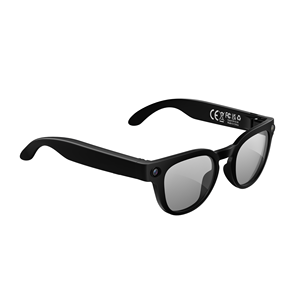
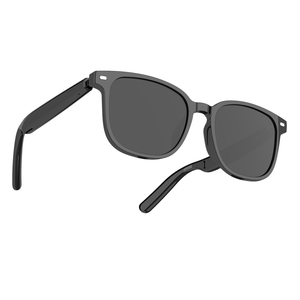
Modern smart glasses integrate complex micro-electronics within the tight spatial constraints of spectacle temples (housed inside ultra-light TR90, Titanium, or Acetate frames). As an engineering-driven OEM/ODM enterprise with over 10 years of specialized R&D experience (pioneered through our core product engineering facilities since 2013), our smart eyewear platform utilizes a modular hardware design:
Directional Open-Ear Acoustics
Utilizing micro dynamic transducers (13mm to 16mm drivers) paired with reverse-phase acoustic cancellation ports. This eliminates sound leakage to guarantee private listening in office or public transit settings.
Ultra-Compact Image Sensors
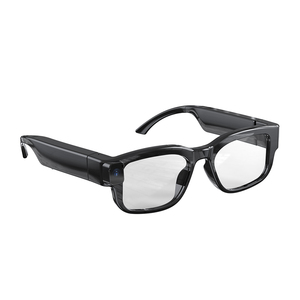
Integrating Sony CMOS 8MP / 4K sensor modules with Electronic Image Stabilization (EIS). Engineered for zero-latency 1080p/4K video recording, photo OCR recognition, and real-time AI vision translation.
Low-Power AI Processing DSP
Powered by dual-core Bluetooth 5.4 SOCs with integrated neural processing units (NPU). Enabling instant wake-word verification, multi-language speech-to-text algorithms, and 145+ language translation pipelines.
Technical Information Gain: Acoustic Leakage Mitigation
A primary failure point in budget OEM audio glasses is high acoustic sound leakage. Our proprietary OpenWaveX™ Dipole Cancellation Technology uses dual acoustic chambers in each temple stem. Sound waves emitted from the primary speaker outlet are counteracted by a secondary phase-inverted wave from the top relief vent, reducing sound leakage by up to 87% at 75% volume levels.
2. Comparative Specifications: OEM Smart Eyewear Hardware Standards
To assist global procurement directors and product managers in specifying requirements, the matrix below details our core OEM platform parameters across audio, optical, battery, and smart chip modules:
| Specification Category | Standard Audio Series (OEM-A1) | AI Translation Series (OEM-T3) | Ultra HD Camera Series (OEM-C8) |
|---|---|---|---|
| Primary Focus | Music, Voice Calls, Sport | Bi-Directional AI Translation | POV Video Recording & AI Vision |
| Bluetooth Chipset | BT 5.3 BLE (JL / Actions) | BT 5.4 Low Latency (Qualcomm / ATS) | BT 5.4 + Wi-Fi Dual Band Engine |
| Acoustic Transducer | 15.4mm Dynamic Driver | 16.5mm Balanced Armature Hybrid | 13mm High-Fidelity Custom Driver |
| Microphone Array | Single Mic MEMS | Dual MEMS + ENC Noise Reduction | Quad Beamforming ENC Array |
| Camera Module | N/A | N/A | 8MP Sony CMOS (4K/30fps Video) |
| Frame Material | TR90 Flexible Polymer | TR90 + Titanium Alloy Hinge | Acetate / High-Impact Polycarbonate |
| Battery Capacity | 110mAh x 2 (Dual Temple) | 145mAh x 2 (Dual Temple) | 290mAh High-Density Li-Po Cell |
| Playtime / Record Time | 6 - 8 Hours Audio | 8 - 10 Hours Translation | 1.5 Hours Video / 6 Hours Audio |
| Waterproof Rating | IPX4 Rain / Sweat Proof | IPX5 Water Jet Proof | IPX5 Sealed Chamber Design |
3. Industry Trends & Future Procurement Forecast (2026 – 2030)
When sourcing from custom OEM audio glasses manufacturers, procurement teams must align product roadmaps with macro technological trends. Based on proprietary factory analytics and market research, three core vector shifts are shaping smart eyewear purchasing:
A. Deep Integration of Generative AI & Multimodal LLMs
Audio smart glasses are evolving from simple Bluetooth peripherals into physical access points for Artificial Intelligence. Custom OEM orders increasingly demand integrated microphone hardware capable of low-noise voice capture for Large Language Model (LLM) prompts. Our factory firmware supports seamless SDK hooks for ChatGPT, Google Gemini, and custom enterprise AI engines, allowing wearers to receive context-aware audio answers, voice summaries, and instantaneous live translation in 145+ languages and accents.
B. Dynamic Photochromic & Custom Prescription Lens Tooling
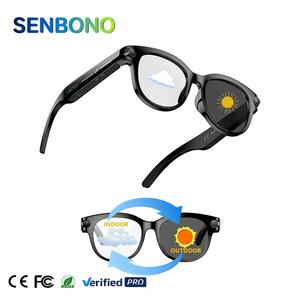
Modern consumers demand versatile all-day eyewear. OEM buyers are shifting orders away from fixed dark tint lenses toward dynamic photochromic optical lenses (which automatically darken under UV radiation outdoor and clear up indoors). Our manufacturing line incorporates quick-release magnetic lens rim structures, allowing end customers or optical dispensers to fit prescription lenses (SPH/CYL) without voiding the IP rating or acoustic calibration of the audio temples.
C. High-Density Micro-Batteries & Magnetic Snap-Charging
Weight remains the single most important ergonomic factor in smart eyewear. Historical smart glasses weighed over 65g, leading to nose-bridge fatigue. By utilizing custom curved 150Wh/L high-energy-density lithium-polymer battery cells encased within ergonomic temple tips, our current OEM production frames weigh between 32g and 42g—matching standard premium luxury sunglasses.