 Smart Tech
 Smart Glasses Wireless Earbuds Blog
Smart Tech Direct factory production models engineered for global consumer electronics importers, brand distributors, and retail chain buyers.
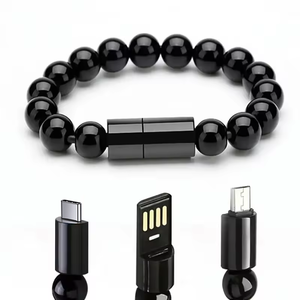
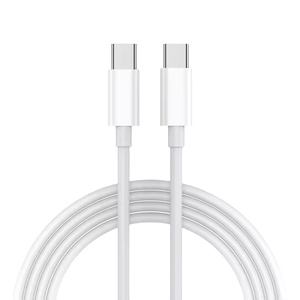
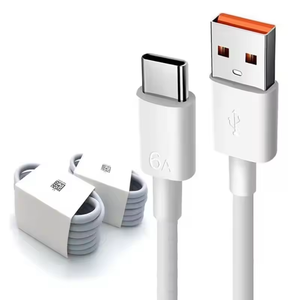
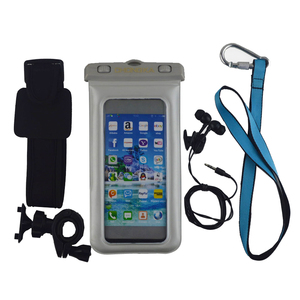

The global smartphone and mobile peripheral ecosystem is undergoing an unprecedented structural transition. Modern procurement directors, electronics brand owners, and supply chain strategists are no longer evaluating suppliers based solely on piece-part costs. Today, high-performing B2B partnerships require an integrated combination of technical innovation, multi-protocol safety compliance, supply chain transparency, and rapid prototyping capabilities.
China's mobile accessories manufacturing clusters—centered around Shenzhen, Dongguan, Ningbo, and Suzhou—have evolved from low-cost assembly lines into advanced industrial powerhouses equipped with fully automated Surface Mount Technology (SMT) lines, ISO-certified cleanroom assembly bays, in-house acoustic darkrooms, and automated optical inspection (AOI) systems. As device makers phase out bundled chargers and push the boundaries of high-wattage battery chemistries, the burden of power delivery, signal integrity, and ergonomic wearability has shifted entirely to third-party accessory manufacturers.
Procurement Insight: Sourcing mobile peripherals in 2026 demands a verified understanding of hardware integration. Top China suppliers now combine power electronics engineering (GaN IV, USB PD 3.1 Extended Power Range), smart wearable acoustics (OpenWaveX open-ear chambers, hybrid ANC/ENC mic arrays), and advanced ergonomics within unified manufacturing frameworks.
To maintain margin health and reduce total cost of ownership (TCO), enterprise buyers must align their product roadmaps with five critical factory capability metrics:
Combining vertical manufacturing integration with rigorous engineering validation to protect your brand equity.
From precision tooling injection and copper conductor wire drawing to SMT PCB placement and ultrasonic housing sealing, our unified facilities eliminate intermediary markups and guarantee strict batch-to-batch consistency.
Every lot undergoes 100% automated electrical safety screening, high-frequency signal attenuation analysis, 10,000-cycle cable flexing tests, IPX5/IPX8 water immersion validation, and thermal imaging under continuous load.
Support for custom industrial design (ID), mechanical engineering (MD), custom PCB layouts, personalized app development for smart wearables, and tailored CMF (Color, Material, Finish) options for rapid brand expansion.
To optimize procurement decisions, buyers must benchmark factory offerings against specific technical metrics across fast charging cables, power banks, wearable smart devices, and specialized phone accessories.
Modern charging cables have evolved from simple passive conductors into intelligent power transfer assemblies. Fast-charging protocols like USB Power Delivery 3.1 (PD 3.1 EPR up to 240W) and Qualcomm Quick Charge 5 require dual E-Marker microcontroller chips embedded inside the connector overmolding to negotiate voltage, prevent thermal runaway, and ensure bidirectional safety.
| Cable Architecture | Max Current / Power | Core Conductor Specs | Shielding & Durability | Target Sourcing Application |
|---|---|---|---|---|
| 5A / 100W USB-C to C | 20V / 5A (100W Max) | Tinned Oxygen-Free Copper (OFC) | Aluminum Foil + 96-Braid Mesh + Braided Nylon | Laptop / Smartphone Fast Charge Bundles |
| 6A Super-Charge USB-A to C | 11V / 6A (66W SuperCharge) | Thickened 22AWG Power Cores | Flame-Retardant PVC Overmold + SR Strain Relief | High-Volume Retail & Promotional Kits |
| Wearable Bracelet Cables | 5V / 3A (15W Standard) | Flexible Copper Ribbon + Decorative Beads | IPX4 Moisture-Resistant Bead Shell | Fashion Accessories & Travel Gift Markets |
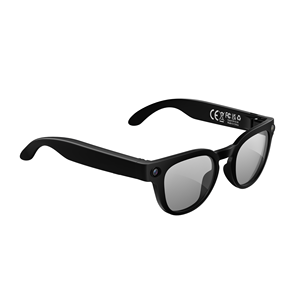
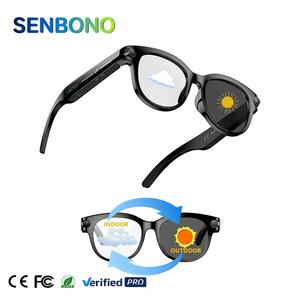
The convergence of personal audio, digital imaging, and voice artificial intelligence has created a high-margin growth category in smart glasses. Products such as the MT3 AI Smart Glasses and M89 Dual-Camera Sunglasses integrate miniature 8MP CMOS sensors, directionally focused acoustic wave transducers, and dual noise-reduction microphones within lightweight TR90/acetate frames.
Procurement teams should evaluate factory specs across four mandatory smart eyewear parameters:
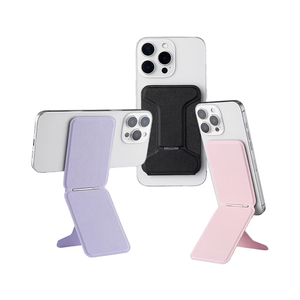
Everyday accessories such as adhesive PU leather card holders and IPX8 waterproof bags remain core margin drivers for distributor catalogues. Sourcing quality in this category relies on material longevity: high-density eco-friendly PU leather that resists peeling, 3M non-marking nano-adhesives that withstand ambient temperature spikes, and high-frequency welded TPU seams that preserve touch sensitivity underwater.
As technological demands escalate, China’s tier-1 mobile accessory suppliers are pivoting toward next-generation engineering architectures. Buyers planning inventory for the coming 36 months should factor the following industry shifts into their factory evaluation rubrics:
Silicon components in power adapters and high-capacity power banks are rapidly being replaced by 4th Generation Gallium Nitride (GaN) power ICs. GaN IV enables switching speeds up to five times faster than traditional silicon, reducing charger physical volume by 45% while achieving thermal efficiency conversion rates exceeding 93%. Future-ready factories are integrating GaN power circuits directly into portable battery packs, enabling 65W to 140W laptop-grade charging in pocket-sized footprints.
The widespread adoption of the Wireless Power Consortium’s (WPC) Qi2 standard—built upon magnetic power profile (MPP) technology—demands that accessory suppliers provide precise magnetic array alignment. Factories must maintain tight magnetic Gauss tolerance testing to ensure safe 15W wireless power transfer without generating parasitic eddy currents that degrade smartphone lithium-ion battery health.
Smartwatches, fitness bands, and digital rings are transitioning away from low-resolution TFT panels toward high-brightness (1000-nit peak) AMOLED screens with Always-On Display (AOD) functionality and low-power haptic crowns. Concurrently, factory R&D is focused on photoplethysmography (PPG) optical sensor arrays capable of 24/7 heart-rate, blood oxygen (SpO2), stress level, and sleep staging monitoring with clinical-grade reference correlation.
In personal audio, Open-Wearable Stereo (OWS) is gaining significant market share over traditional in-ear buds. By leveraging custom directional acoustic chambers and environmental noise cancellation (ENC) algorithms backed by quad-mic arrays, top factories produce open-ear audio gear that combines comfort with crisp voice transmission during calls.
Clear answers regarding OEM/ODM customization, minimum order quantities (MOQ), quality assurance protocols, and global compliance.
Standard MOQs depend on the customization scope. For off-the-shelf catalog products with custom logo printing and customized packaging, MOQs typically start at 500 to 1,000 units per SKU. For full OEM/ODM projects requiring custom tooling, specialized CMF finishes, or bespoke PCB layout modifications, MOQs generally start at 3,000 to 5,000 units depending on component lead times.
Leading factories utilize an Acceptable Quality Limit (AQL) 0.65 inspection protocol. Quality assurance spans three stages: Incoming Quality Control (IQC) for raw conductors, ICs, and plastics; In-Process Quality Control (IPQC) featuring automated optical inspection (AOI) on SMT lines; and Outgoing Quality Control (OQC) involving functional testing, drop testing (1.2m onto hardwood), thermal imaging under load, and salt-spray corrosion resistance tests.
All export-ready mobile accessories ship with complete test reports from accredited third-party laboratories (SGS, TUV, Intertek). Depending on target markets, products include CE-EMC, CE-LVD, FCC Part 15, RoHS 2.0, REACH, BIS (for India), PSE (for Japan), CB, and UN38.3/MSDS documentation for lithium battery transport safety.
Yes. Our in-house software engineering team provides Turnkey SDK and API integration. We support brand-customized mobile applications for iOS and Android, allowing custom UI themes, localized multi-language translation databases, proprietary health cloud server syncing, and custom Bluetooth pairing pop-ups.
Standard stock samples for quality evaluation are dispatched within 48 hours. Customized OEM samples with brand logos and custom color swatches take approximately 5 to 7 working days. Mass production lead times typically range from 20 to 30 calendar days following sample sign-off and deposit receipt, supported by scalable SMT capacity.