 Smart Tech
 Smart Glasses Wireless Earbuds Blog
Smart Tech Rigorously tested against EN 50332 acoustic safety, Radio Equipment Directive (RED) standards, and EU ROHS/REACH requirements for global distribution.
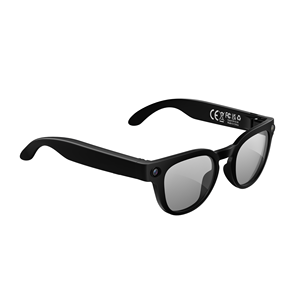
Integrates 8MP HD video recording, dual-beamforming directional TWS audio, real-time AI voice assistant, and ultra-fast charging.
Contact Us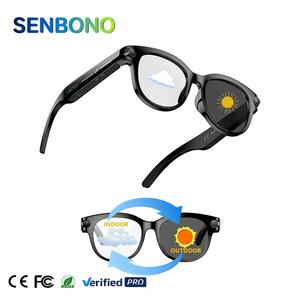
IPX5 water-resistant open-ear audio glasses featuring 2MP dual-camera capture, photochromic lenses, and 290mAh high-density battery cell.
Contact Us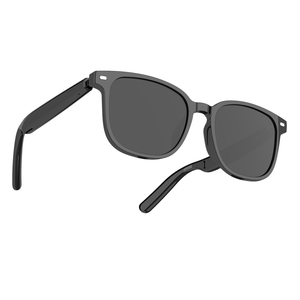
Advanced Bluetooth 5.4 LE Audio system with 145-language real-time bi-directional translation engines and acoustic sound isolation.
Contact Us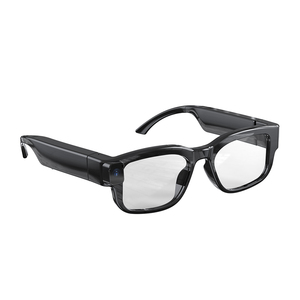
EIS electronic image stabilization combined with high-dynamic-range open-ear TWS speakers, touch sensor panels, and voice command algorithms.
Contact Us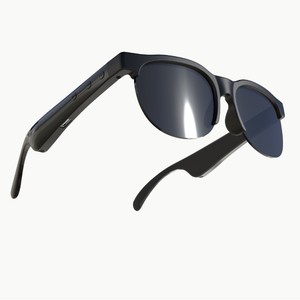
Ergonomic lightweight frame with open-ear spatial acoustics, anti-wind noise microphones, and optimized battery efficiency for outdoor sports.
Contact Us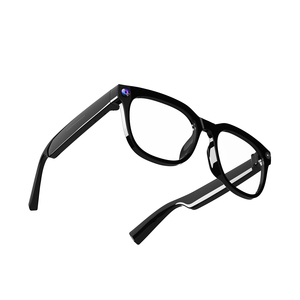
Low-latency air conduction audio drivers tailored for mobile gaming, turn-by-turn navigation alerts, and hands-free clear call acoustics.
Contact Us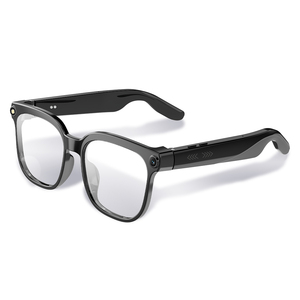
Real-time object recognition camera engine combined with dual-channel TWS stereo sound, touch control, and encrypted cloud connectivity.
Contact Us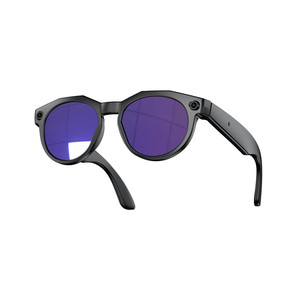
Ruggedized IPX6 waterproof chassis designed for harsh outdoor environments, equipped with high-resolution photo capture and noise-canceling audio.
Contact UsAs European consumer electronics regulations tighten under the revised Radio Equipment Directive (RED 2014/53/EU), procurement directors, brand owners, and global distributors face unprecedented technical verification hurdles. Sourcing True Wireless Stereo (TWS) earbuds, Open-Ear Wearable (OWS) sound systems, and AI-enabled smart audio glasses requires absolute transparency in electrical safety, electromagnetic compatibility (EMC), radio spectrum efficiency, and acoustic health parameters.
Securing a certified supplier is no longer merely about acquiring a CE mark graphic stamp on packaging; it necessitates verifying a comprehensive Technical Construction File (TCF) backed by accredited ISO/IEC 17025 laboratory test reports. Enterprise importers must demand rigorous validation across multiple European Harmonised Standards:
Mandatory sound pressure level (SPL) testing limiting maximum output to ≤100 dBA and player output voltage to ≤150 mV to prevent irreversible auditory noise-induced hearing loss.
Verification of 2.4 GHz ISM band frequency hopping spread spectrum (FHSS), wideband modulation, maximum EIRP (≤10 dBm/10 mW), and receiver blocking resistance.
Hazard-based thermal protection for high-density Lithium-Polymer cells, overcharge/over-discharge protective circuitry, and short-circuit fault isolation.
Under the EU Cybersecurity Legislation and Delegated Regulation (EU) 2022/30 (Articles 3.3(d), (e), and (f) of the RED), TWS earbuds with smart assistant app integration must demonstrate network protection, privacy safeguards, and fraud prevention measures. Working with suppliers offering pre-certified firmware stacks mitigates product recall risks in the EU customs territory.
The global TWS and personal audio hardware sector is undergoing a rapid paradigm shift. Traditional dynamic driver configurations are giving way to hybrid acoustic architectures, spatial audio computing, and edge-AI processing. Understanding these engineering trends allows category buyers to specify product lines that stay competitive over 24- to 36-month retail lifecycles.
The transition from Bluetooth Classic to Bluetooth 5.4 Low Energy (LE) Audio represents the biggest architectural shift in wireless sound transmission in two decades. Utilizing the Low Complexity Communication Codec (LC3), next-generation TWS systems achieve superior sound quality at half the data rate of legacy SBC codecs.
Active Noise Cancellation (ANC) has evolved from static inverted-phase filtering to Real-Time Adaptive Hybrid ANC. Incorporating feedforward and feedback MEMS microphone arrays, advanced Digital Signal Processors (DSPs) sample ambient acoustic noise at 48 kHz, adjusting filter coefficients instantaneously based on ear canal fit and seal leakage.
Concurrently, for voice clarity during calls, Deep Neural Network (DNN) ENC algorithms trained on hundreds of millions of acoustic noise samples isolate human vocal formants from wind, traffic, and office chatter. This ensures dynamic signal-to-noise ratios (SNR) exceeding 30 dB during voice communication.
Spatial audio processing translates multi-channel surround signals into immersive 3D soundscapes using head-related transfer functions (HRTFs). Integrated 6-axis Inertial Measurement Units (IMUs)—comprising a 3-axis accelerometer and 3-axis gyroscope—track micro-head movements at sub-10 millisecond latency, maintaining stationary soundstage anchors for cinematic and gaming applications.
As open-ear wearable (OWS) geometry gains market share, acoustic engineering focuses on directional sound leakage reduction. Utilizing reverse-phase acoustic cancellation chambers, open-ear drivers focus acoustic energy directly into the user's tragus while attenuating sound pressure by up to 18 dB at a 30 cm distance, protecting user privacy during calls.
Compare the engineering metrics of conventional consumer TWS earbuds against advanced AI-integrated audio platforms to determine optimal inventory positioning:
| Engineering Parameter | Standard Entry-Level TWS | Mid-Tier ANC/ENC TWS | Flagship AI Smart Audio Eyewear / OWS |
|---|---|---|---|
| Bluetooth Version | Bluetooth 5.0 / 5.1 | Bluetooth 5.3 / 5.4 | Bluetooth 5.4 LE Audio Ready |
| Audio Codecs | SBC, AAC | AAC, LDAC, aptX Adaptive | LC3, AAC, High-Res Audio Wireless |
| Acoustic Driver Type | 10mm Dynamic Driver | 12-13mm Dynamic Titanium / Graphene | OpenWaveX™ Directional Air Conduction |
| Noise Cancellation | Passive Isolation Only | Hybrid ANC (-35dB to -45dB) + ENC | Dual-Beamforming DNN Call Noise Suppression |
| Latency Performance | 120ms – 180ms | 50ms – 70ms Low-Latency Gaming Mode | < 40ms Ultra-Low Latency Synchronized |
| Regulatory CE Compliance | Basic CE Mark (Self-Declared) | CE-RED, EN 50332, EN 62368-1 Certified | Full TCF, RED 2014/53/EU, RoHS, REACH SVHC |
| AI Feature Set | Basic Voice Assistant Trigger | App-Based EQ Controls | 145-Lang Real-Time Translate, Vision Recognition |
Global consumer electronics supply chains are transitioning from transactional purchasing to strategic co-development. Procurement officers face supply chain fragility, rapid chip obsolescence, and stringent environmental sustainability directives. Below is the 2026–2028 strategic roadmap for enterprise buyers sourcing CE-certified audio solutions.
Leading importers prioritize suppliers offering modular PCBA layouts. Choosing unified System-on-Chip (SoC) platforms (such as BES, Realtek, or JL solutions) allows brand owners to flash customized SDK firmware across different shell designs, significantly reducing Non-Recurring Engineering (NRE) costs and shortening time-to-market.
The EU Eco-design Directive demands that personal electronics incorporate Post-Consumer Recycled (PCR) plastics in charging case housings. Additionally, suppliers must provide clear battery removable compliance documentation, zero-lead soldering (RoHS), and heavy metal chemical testing under REACH Annex XVII.
When contracting OEM/ODM manufacturers, procurement teams must enforce stringent Quality Assurance (QA) and Quality Control (QC) milestones throughout the production cycle:
Founded on over a decade of dedicated wearable and audio engineering research, our manufacturing ecosystem provides global brand partners, distributors, and importers with end-to-end product development support. We bridge the gap between initial industrial design concepts and fully certified, mass-manufactured consumer hardware.
Over 10 years of specialized acoustic tuning, RF antenna simulation, and micro-circuit engineering ensure rapid prototyping and dependable firmware stability.
All production lines operate under ISO 9001 and ISO 14001 certification. Every SKU is delivered with verified CE-RED, RoHS, REACH, and UN38.3 battery shipping clearances.
Dedicated technical account directors, warranty spare-part fulfillment, serialized batch tracking, and localized customer support desk assistance.
Addressing the core technical, regulatory, and logistics queries raised by B2B electronics buyers and category managers.
A legitimate CE Declaration of Conformity (DoC) for TWS earbuds must be supported by a comprehensive Technical Construction File (TCF). This includes: (a) RED 2014/53/EU test reports for RF spectrum efficiency (ETSI EN 300 328), (b) EMC test reports (ETSI EN 301 489-1/-17), (c) Electrical Safety Reports (EN 62368-1), (d) Acoustic SPL Limits test reports (EN 50332-1 and EN 50332-2), and (e) Chemical safety compliance reports for RoHS 2.0 (2011/65/EU) and REACH SVHC. Importers should ensure test reports are issued by an accredited ISO/IEC 17025 laboratory.
EN 50332 establishes strict limits on sound pressure levels (SPL) to protect end-users from noise-induced hearing damage. Standard EN 50332-1 limits maximum output sound pressure to ≤100 dBA. EN 50332-2 measures the output voltage of the Bluetooth player unit (maximum ≤150 mV) and the acoustic sensitivity of the earbuds. To pass compliance without sacrificing user experience, hardware engineers calibrate internal DSP gain tables, ensuring high dynamic range and low harmonic distortion (THD < 0.1%) while strictly capping maximum output peaks.
Standard white-label wholesale orders for existing CE-certified SKUs typically carry an MOQ of 500 to 1,000 units with a dispatch lead time of 7 to 14 days. For full OEM customized packaging, custom color injection, and laser-etched branding, the standard MOQ starts at 2,000 units with a lead time of 25 to 30 days. Complete ODM projects involving unique cosmetic tooling, custom PCB layout, and custom app integration require 45 to 60 days for tooling and validation prior to mass production.
Because TWS earbuds and charging cases contain embedded Lithium-ion Polymer batteries, international air and sea freight regulations require specific dangerous goods documentation. Every shipment includes: UN38.3 test summary report (covering altitude simulation, thermal test, vibration, shock, external short circuit, impact, overcharge, and forced discharge), Material Safety Data Sheet (MSDS), and Dangerous Goods (DG) drop test certification for sea packaging (1.2m drop test pass). These ensure smooth clearance with customs authorities and shipping lines.
Open-Ear Wearable (OWS) audio devices utilize specialized directional acoustic speaker geometry and reverse-phase soundwave cancellation chambers. By projecting focused acoustic energy directly towards the ear canal while generating an inverted acoustic wave out of secondary porting slots, the external ambient leakage is destructive cancelled. This allows high acoustic clarity for the listener while reducing audio leakage to less than 15 dBA at a arm-length radius.
Yes. Our smart AI audio platforms feature programmable Flash memory integrated within the Bluetooth System-on-Chip (SoC). We support custom SDK integration, allowing brand partners to link the hardware directly to proprietary Android/iOS applications, cloud-based translation API servers (supporting up to 145 languages), or custom voice assistant wake-word engines.
Speak directly with our senior acoustic engineers and OEM/ODM procurement managers to request compliance certificates, technical construction files, sample units, and wholesale volume price tiers.
Contact Us