 Smart Tech
 Smart Glasses Wireless Earbuds Blog
Smart Tech Explore our high-density lithium micro battery configurations engineered for wearables, AI smart glasses, and portable IoT electronics.
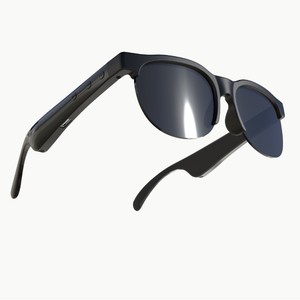
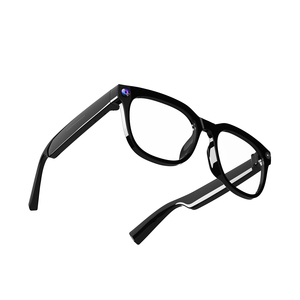
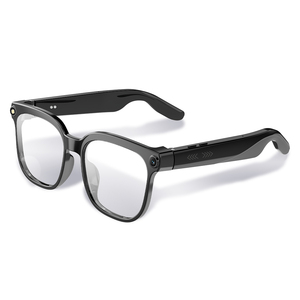
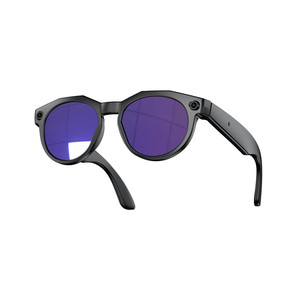
Understanding the regulatory, safety, and testing benchmarks required for European Union market entry.
In global electronic component sourcing, securing authentic CE Certified Battery Packs is not merely a legal gateway—it is the baseline framework for operational safety, consumer protection, and brand equity. As a premier original equipment manufacturer (OEM) and custom battery engineering factory with over a decade of dedicated electrochemical research, we provide global B2B procurement teams, system integrators, and brand owners with high-performance lithium energy solutions that strictly align with European Union harmonized standards.
To legally display the CE (Conformité Européenne) mark, a custom lithium battery pack assembly must demonstrate full compliance across several overlapping European Directives and safety standards. OEM buyers must verify that their factory partner provides complete Technical Dossiers covering the following directives:
| Compliance Standard | Testing Scope | Mandatory Requirement | Factory Quality Control Threshold |
|---|---|---|---|
| EN 62133-2:2017 | Cell & Pack Mechanical/Electrical Safety | Mandatory for CE LVD Compliance | 0% Thermal Runaway across 100% test batches |
| UN 38.3 | Transport Safety (Altitude, Thermal, Shock) | Mandatory for Global Air/Sea Freight | Passed T1-T8 shock, crush, and overcharge tests |
| IEC 62619 | Industrial & Stationary Energy Storage | Required for High-Capacity Industrial OEM | Secondary hardware overvoltage/overtemp trip protection |
| EU Battery Regulation 2023/1542 | Carbon Footprint & Digital Passport | Phased Enforcement (2024–2027) | Serialised QR supply-chain tracking and recycled content tracking |
Key technological shifts shaping enterprise sourcing strategies for custom battery packs over the next decade.
Global procurement teams are shifting away from conventional graphite-anode Li-ion cells toward high-silicon composite anodes and semi-solid-state electrolytes. Delivering energy densities up to 380 Wh/kg, these cell technologies allow smart wearables, micro-electronics, and handheld instruments to operate 40% longer without increasing structural volume.
Under the EU Battery Regulation (EU 2023/1542), future procurement contracts mandate fully traceable battery lifecycle metrics. Advanced factories now embed serialised digital passports accessible via encrypted QR codes, disclosing raw material origins, recycled material percentages, and lifecycle carbon intensity.
Modern CE-certified battery packs are transitioning from passive protection PCBs to intelligent, micro-BMS architectures equipped with edge-AI algorithms. These chips predict cell degradation, dynamically optimize active balancing, and transmit real-time telemetry via SMBus, I2C, or CAN protocols to avoid unscheduled equipment downtime.
From ultra-micro form factors to thermal isolation: how custom battery factories solve complex physical constraints.
As consumer hardware, medical diagnostics, AI wearables, and industrial IoT devices undergo dramatic miniaturization, the demands placed on original battery pack manufacturers have evolved. Sourcing off-the-shelf cylindrical cells is no longer viable for compact electronics that require specialized geometry, high discharge rates, and rigorous thermal safety.
In applications such as smart AI eyewear, AR headsets, and digital health rings (as featured in our product range), battery architecture must conform to ergonomic spatial constraints. Factory innovations in Polymer Lithium Cobalt Oxide (LiCoO2) pouch cells allow ultra-thin profiles down to 0.8mm and custom curved radii without sacrificing energy density or structural stability. Micro-welding via automated cold-laser pulse techniques ensures zero thermal degradation to sensitive protection circuits during assembly.
True safety excellence requires defense-in-depth engineering within every single pack. Premium OEM manufacturing protocols integrate multi-stage protection mechanisms:
Modern enterprise users demand rapid turnaround cycles. Incorporating Gallium Nitride (GaN) fast-charging interfaces alongside high-C-rate cell formulations allows 0-to-80% charging in under 30 minutes. To handle the associated thermal stress, engineers integrate phase-change material (PCM) graphite heat spreaders that quickly transfer heat away from the cell core, preserving cell longevity over 800+ full charge-discharge cycles.
Decade-long engineering expertise, rigorous quality control laboratories, and comprehensive global service support.
From initial CAD enclosure prototyping and PCB artwork design to cell chemistry selection and firmware configuration, our in-house R&D engineering team manages the entire development cycle. We turn complex mechanical constraints into fully certified energy storage units tailored to your precise voltage, capacity, and dimensional specifications.
Every production batch undergoes strict quality validation in our dedicated testing facility. Our QC protocol covers automated cell impedance matching, 100% burn-in aging, thermal shock cycling (-40°C to +85°C), 1.2m drop tests, salt-spray corrosion exposure, and full UN38.3 vibration simulation prior to packing.
Navigating global compliance can be daunting. We maintain strong partnerships with leading accredited testing bodies (TÜV Rheinland, SGS, Intertek). We provide complete CB reports, CE compliance documentation, UL test files, MSDS, and UN38.3 transport certificates to accelerate your international product rollouts.
Every OEM battery pack leaves our assembly lines with a unique barcode tracking matrix. This provides full traceability back to the raw cell lot, production line shift, and individual QC sign-off. We support global distributors and original equipment brand owners with clear warranty terms and quick engineering assistance.
Direct technical and commercial insights for procurement managers, hardware engineers, and supply chain executives.