
Engineering smart wearables & audio since 2013 — 10+ years of consumer-tech experience
In-house QC · BIS & RoHS aligned components · Warranty-backed service network
New: AI smart glasses, 3D dome AMOLED smartwatches & 65W power banks
0%

A Portable Bluetooth Speaker turns music into something you can carry from the kitchen counter to a picnic blanket. It connects wirelessly to a phone, tablet, or computer, then plays audio through built-in drivers and an amplifier. No complicated setup. For this introduction, audio engineer Maya Chen offers an illustrative guiding line: “Good portable sound should fit the moment, not demand a room built around it.” This is an editorially composed quote, not a verified published statement.

The category covers many shapes and sizes. A compact model may fit beside a travel mug, while a larger speaker can fill a patio with fuller sound. Battery life, water resistance, control buttons, and connection stability all affect everyday use. So does the speaker’s tuning: bass can feel lively, but excessive bass may blur vocals. Small details matter.

A Portable Bluetooth Speaker is not simply a smaller home stereo. Its enclosure, drivers, and power limits shape what it can reproduce, especially at high volume. Listening in a quiet room can reveal clarity; testing outdoors shows how sound spreads across open space. Specifications help, but they do not tell the whole story. A battery estimate may also change with volume and usage. This guide explores what these speakers are, how their main features work, and what to consider before choosing one. Some trade-offs remain. That is worth admitting.
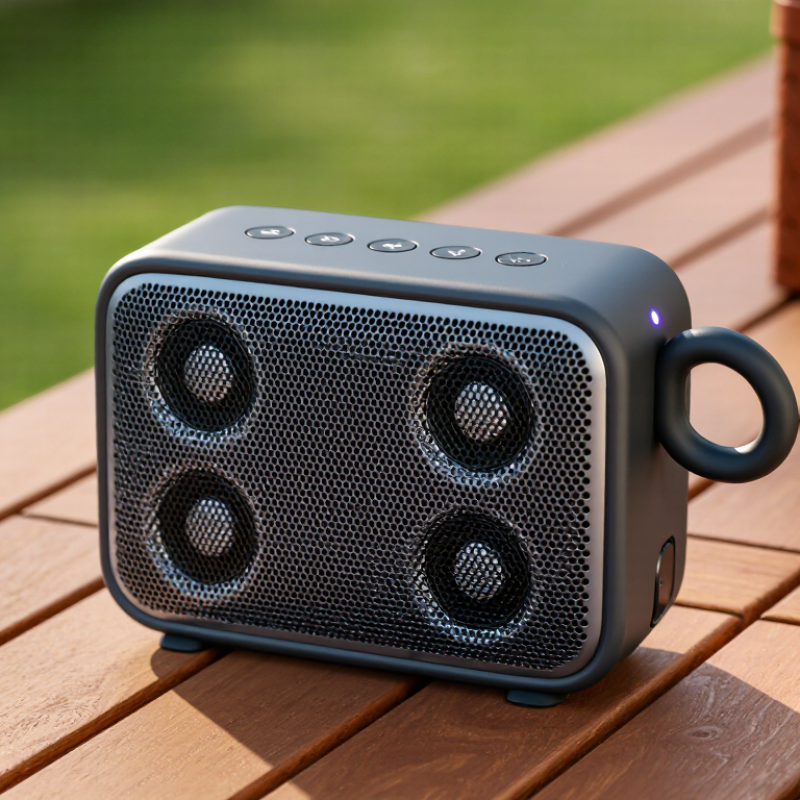
What Is a Portable Bluetooth Speaker?

Definition and Core Characteristics

A portable Bluetooth speaker is a compact audio device that plays sound from a phone, tablet, or computer over a short-range Bluetooth connection. It combines a speaker, amplifier, wireless receiver, and usually a rechargeable battery in one enclosure. No audio cable is needed during ordinary playback. That is the basic idea.

Its core characteristics are mobility, battery-powered operation, and straightforward pairing. Size and weight affect how easily it fits in a backpack, while battery life depends on volume, audio content, and battery condition. A handle or loop can help when carrying it outdoors. Sound also varies: small cabinets may struggle with deep bass, and maximum volume can make music harsh. Water resistance is not automatic, so check the device’s stated rating before using it near splashes. A speaker can look travel-ready yet feel bulky after a long walk. Portability is partly personal.

Tips: Check the charging connection, controls, and stated battery runtime before choosing. Try listening at your usual volume, not just a quick loud demo. Keep the speaker dry unless its specifications clearly support water exposure.

What Is a Portable Bluetooth Speaker?

A portable Bluetooth speaker is a battery-powered audio device that plays sound wirelessly from a compatible source. Its core characteristics include wireless connectivity, an integrated speaker system, and a rechargeable battery.

Approximate Bluetooth Device-Class Ranges

Bluetooth range depends on device design and surroundings. These approximate open-space ranges describe Bluetooth power classes, not a guaranteed range for every speaker. Many portable speakers use Class 2 radios.

How Bluetooth Audio Transmission Works

A portable Bluetooth speaker receives audio from a phone, tablet, or computer without a cable. The source converts sound into digital data and compresses it with an audio codec. The data travels in small packets over the 2.4 GHz radio band, which Bluetooth shares with other wireless systems. The speaker reorders and decodes those packets, then converts the signal for its amplifier and drivers. You hear the result as moving air, not as data.

Pairing helps the devices recognize each other and establish a connection. Bluetooth’s Advanced Audio Distribution Profile (A2DP) supports one-way stereo audio streaming. The Bluetooth Core Specification defines how devices exchange radio data; codec choice affects sound quality and bandwidth. A stronger signal can help, but walls, distance, and nearby wireless traffic may cause dropouts. Small delay can also matter when watching video. It is easy to blame the speaker, though the source device or crowded room may be responsible.

Bluetooth SIG’s 2024 Market Update forecasts 5.4 billion Bluetooth device shipments annually by 2028, across many product types. That figure shows the technology’s broad reach, not a guarantee of speaker performance. In practical use, keep the source nearby and test playback where you plan to listen. Wireless is convenient. It is not magic.

Main Components and Power Sources

A portable Bluetooth speaker combines a wireless receiver, amplifier, speaker drivers, battery, and enclosure. The receiver turns a phone’s digital audio into a signal; the amplifier powers the drivers. Some models add a passive radiator, a small panel that helps produce fuller bass. Inside, these parts share a tight space, so heat and vibration can affect performance. Small parts matter.

The Bluetooth SIG’s 2024 Market Update forecasts 1.8 billion annual shipments of Bluetooth audio-streaming devices by 2028. This category includes more than portable speakers, so it is not a speaker-sales forecast. Still, it shows why efficient radios and compact circuit boards matter. A well-designed speaker keeps its Bluetooth antenna away from noisy power circuitry where possible.

Most portable speakers use rechargeable lithium-ion cells, with charging and protection circuits to manage power. Battery capacity is more useful in watt-hours than milliamp-hours when comparing devices with different cell voltages. The International Energy Agency’s Global EV Outlook 2024 reports that electric-vehicle battery demand reached about 750 GWh in 2023. That figure reflects a much larger market, not speaker batteries, but it signals the scale of lithium-ion manufacturing. In daily use, volume, bass, and wireless signal strength all influence runtime. Published battery-life claims can feel optimistic; test conditions rarely match a noisy kitchen or a breezy picnic table.

What Is a Portable Bluetooth Speaker? - Main Components and Power Sources
Category Component or Power Source Purpose Typical Details
Main Components
Wireless connection Bluetooth radio and antenna Receives digital audio wirelessly from a compatible phone, tablet, computer, or other source. Bluetooth version, range, and supported audio features vary by speaker. Walls and other interference can reduce connection range.
Audio input Digital audio processor Processes the incoming audio signal and may manage equalization, volume, and speaker protection. Processing features differ by design; some speakers also accept audio through a wired input or USB connection.
Amplification Audio amplifier Raises the audio signal to a level that can drive the speaker drivers. Portable models commonly use compact, efficient amplifier circuits to limit heat and battery use.
Sound output Speaker drivers Convert electrical signals into sound waves. Many designs use one or more full-range drivers; some add a separate tweeter or passive radiator to shape low-frequency output.
Acoustic design Enclosure and grille Supports the drivers, protects internal parts, and influences how sound is radiated. The enclosure may be sealed or use ports or passive radiators. A grille helps protect the driver while allowing sound through.
Power management Control and protection circuits Regulate power and help protect the battery and electronics during charging and use. Protection may include safeguards against overcharging, excessive discharge, and overheating.
User interface Buttons, indicators, and microphones Allow users to control playback, pairing, and calls, and to check basic device status. Available controls vary. A built-in microphone is included only on some models.
Power Sources
Built-in rechargeable power Lithium-ion or lithium-polymer battery Supplies power when the speaker is used away from an outlet. These rechargeable battery types are common in portable electronics. Runtime depends on battery capacity, listening volume, audio content, and features in use.
Charging input USB charging port Recharges the internal battery from a compatible power source. Charging connector and supported input vary by model. Charging speed depends on the speaker’s charging circuitry and the power source.
Direct power External power adapter Provides power from an electrical outlet, commonly for charging and, on some designs, operation. Use only an adapter with the voltage, current, and connector requirements specified for the speaker.
Alternative battery option Replaceable batteries Allow some speakers to operate using user-replaceable cells instead of a built-in rechargeable pack. This arrangement is less common than a built-in rechargeable battery. The required cell type and quantity depend on the device.

Portability and Common Features

A portable Bluetooth speaker is a compact speaker designed to play audio without a wired connection to a phone, tablet, or computer. Its small size makes it easy to carry from a kitchen counter to a picnic blanket. Many models have a built-in rechargeable battery, so they can work away from a wall outlet. That matters. Still, “portable” can mean different things: some speakers fit in a coat pocket, while others need room in a backpack.

Common features include simple pairing controls, volume buttons, a charging port, and a battery indicator. Some speakers also include a microphone for calls or a loop for attaching the unit to a bag. Water resistance can be useful near a pool or sink, but ratings vary; check the product details rather than assuming every speaker can handle splashes. Battery life also depends on volume and usage. A speaker may last much less time when played loudly. Small speakers are convenient, though they may not fill a large outdoor space with rich sound. That trade-off is easy to overlook.

Tips: Check the speaker’s weight, charging method, and stated battery life before buying. If possible, listen at your usual volume; specifications alone can be a little misleading.

Typical Uses and Performance Factors

What Is a Portable Bluetooth Speaker?

Typical Uses and Performance Factors

A portable Bluetooth speaker plays audio wirelessly from a phone, tablet, or computer. Its built-in battery makes it useful where power outlets are inconvenient. At a picnic, it can provide background music across a table; in a kitchen, it can sit safely away from splashes. Keep it close. Small room? Fine. Outdoors, sound disperses quickly, so a compact speaker may seem quieter than expected.

Battery life, volume, and sound quality depend on the speaker’s design and how it is used. Playing music loudly usually drains the battery faster. Driver size and enclosure shape affect bass, while voices and acoustic instruments can reveal muddy midrange. More bass is not always better. A boosted low end may sound full at low volume but become boomy near a wall. Not perfect.

Check the stated battery estimate against your habits; test conditions may differ from real listening. Water resistance can help with light splashes, but it does not make every speaker suitable for submersion. Placement matters, too: a hard tabletop can add unwanted vibration, while a clear, stable surface often helps. For shared listening, choose a volume that remains clear without forcing people nearby to shout.

FAQS

How does a portable Bluetooth speaker receive music?

A phone compresses audio into digital data and sends small packets over the 2.4 GHz band. The speaker decodes them, then its drivers move air. Not magic.

What does pairing do?

Pairing helps two devices recognize each other and connect. The A2DP profile supports one-way stereo audio. Video may still have a slight delay.

What can cause Bluetooth dropouts?

Walls, distance, and nearby wireless traffic can interrupt playback. Keep the source close and test the room. Dropouts happen.

What affects a speaker’s battery life?

A rechargeable battery allows listening away from outlets. Loud playback usually drains it faster, so the stated estimate may not match a long afternoon outdoors.

Can a water-resistant speaker be submerged?

Not necessarily. Ratings vary, so check the product details before using a speaker near a sink or pool.

Will a small speaker sound loud outdoors?

It can provide background music across a picnic table, but sound disperses quickly outside. A compact speaker may seem quieter than expected. Trade-offs matter.

How does placement affect sound?

Driver size and enclosure shape influence bass. A hard tabletop can add vibration; a clear, stable surface may sound cleaner. Placement matters.

How can I judge sound quality?

Listen at your usual volume if possible. Voices can reveal muddy midrange, while boosted bass may sound boomy near a wall. Specifications only tell part of the story.

Conclusion

A Portable Bluetooth Speaker is a compact audio device that plays sound wirelessly from a nearby phone, tablet, or computer. It uses Bluetooth radio signals to receive digital audio, which its internal electronics convert into sound through a speaker driver. A typical unit includes a wireless receiver, amplifier, driver, rechargeable battery, and control buttons; some models can also operate while connected to an external power source.

Designed for easy carrying, these speakers often feature a lightweight body, simple controls, and a battery that supports listening away from a wall outlet. Their size, driver design, battery capacity, and wireless connection can all affect sound quality, volume, and listening time. They are commonly used at home, while traveling, or during outdoor gatherings, provided they are kept within the connection range and used in conditions suited to their level of protection. Choosing one involves balancing portability, sound performance, battery life, and the features needed for everyday listening.

Rosalie

Rosalie

Rosalie is a seasoned marketing professional dedicated to helping businesses understand how thoughtfully developed products can support efficiency, growth, and long-term success. With a strong command of the company’s product portfolio, she transforms complex features and industry insights into......