
Choosing a Rugged Outdoor Smartwatch in 2026 requires more than comparing screen size and battery claims. It demands practical judgment.
A trail watch may face rain, dust, freezing mornings, sweat, and accidental impacts. Your decision should reflect those conditions. Check the case material, button design, water resistance, GPS performance, and battery life under real tracking use. A bright display matters on exposed ridges. Physical buttons matter when gloves or wet fingers defeat touch controls.
Jay Blahnik, Apple’s Vice President of Fitness Technologies, described the Apple Watch Ultra as “the most rugged and capable Apple Watch ever.” That statement reflects a useful industry direction. Ruggedness is no longer only about thick cases. It also includes reliable sensors, emergency features, readable maps, and stable software.
Still, no device is truly indestructible.
Look beyond advertising language. A military-standard test reference does not guarantee perfect field performance. Water resistance can weaken after years of wear. GPS accuracy may fall beside cliffs or dense forest. Battery estimates can shrink in cold weather, especially during continuous navigation.
Experienced hikers should compare independent tests with manufacturer specifications. New users should consider comfort, charging habits, and repair support. A heavy watch may feel reassuring in a store, then become irritating after eight hours on a trail. That small detail is easy to overlook.
The right Rugged Outdoor Smartwatch balances protection, navigation, health tracking, and daily usability. It should survive your routine, not merely impress you with specifications. That distinction deserves careful thought before purchase.
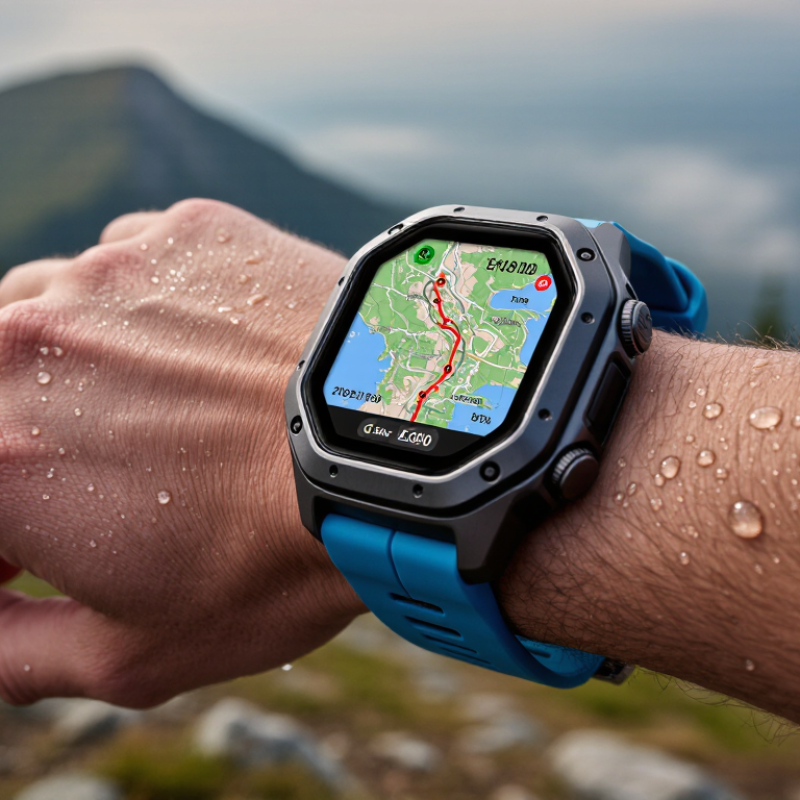
Choosing a rugged outdoor smartwatch starts with your real activities, not its aggressive-looking case. A weekend hiker needs different features from a trail runner, paddler, or mountain worker. Write down your typical route, trip length, navigation needs, and communication limits. Do you need offline maps, altitude data, storm alerts, or only distance and heart-rate tracking? A bright display matters when sunlight reflects from pale rock. Physical buttons help when gloves make touch controls unreliable. Start there.
Your environment determines durability. Rain, mud, saltwater, dust, freezing temperatures, and sudden heat can affect comfort and performance. Check the stated water-resistance rating, but read its test conditions carefully. Water pressure during swimming differs from splashes on a wet trail. Cold changes everything. Batteries may drain faster, and stiff fingers make small controls frustrating. At high altitude, long battery life becomes more valuable because charging may be impossible for several days. A metal case may resist knocks, yet a thick design can catch on clothing or feel heavy during steep climbs.
Test the watch with your actual equipment. Wear it beneath a jacket cuff, beside a compass, or while gripping trekking poles. I once focused too much on impact protection and overlooked screen glare. That mistake made navigation slower. Reliability also means readable instructions, dependable software updates, and sensors that explain their limits. No device replaces route planning, weather checks, or basic outdoor judgment. A few features may look impressive but remain useless on your usual paths. Usefulness is personal.
Titanium and fiber-reinforced polymer reduce weight while resisting scratches and drops. Stainless steel feels solid but may burden your wrist during long hikes. Sapphire crystal resists scratches well, while hardened glass may handle impacts better. There is no perfect material.
No. IP ratings measure dust and water protection, not shock resistance or saltwater durability. Check the tested depth and exposure time. Inspect buttons, seals, and the charging cover. Real conditions vary.
Look for testing involving temperature changes, vibration, rain, and mud. Methods based on MIL-STD-810H can improve confidence. They cannot predict every winter climb or careless drop. Test it outdoors.
Compare smartwatch mode with continuous GPS mode. GPS, cold weather, bright screens, and health tracking can reduce runtime sharply. A two-week estimate might become four days during navigation. Battery claims need skepticism.
Magnetic charging is convenient, but grit can block its contacts. USB-C may be easier to replace while traveling. Check the waterproof seal and cable fit. Try a short charge before departure. Ten minutes can help.
Yes. Offline maps and route storage reduce dependence on phone signals. Multi-band GNSS can improve tracking near cliffs and dense trees. Check navigation after disconnecting your phone. Signals can still behave badly.
Measure the case against your wrist and wear it for twenty minutes. Check whether the strap rubs against your skin or jacket cuff. A heavy watch may disturb sleep. Comfort is easy to underestimate.
Include replacement straps, charging accessories, subscriptions, and possible map costs. A lower-priced watch may offer dependable tracking with fewer distractions. Expensive training tools matter only when you use them. I sometimes overvalue specifications. That deserves reflection.
Choosing a Rugged Outdoor Smartwatch in 2026 starts with understanding how and where you plan to use it. Consider whether you need reliable performance for hiking, camping, trail running, water activities, or demanding work environments. Look closely at the watch’s construction, materials, screen protection, and resistance to water, dust, temperature changes, and impacts. Navigation tools such as GPS, maps, compass functions, and altitude tracking can be essential outdoors, while health sensors may help monitor heart rate, sleep, recovery, and activity levels.
Battery life should match the length of your adventures, with practical charging options for travel and remote areas. Connectivity features, including phone compatibility and emergency communication support, should also fit your routine. Finally, evaluate the software experience, controls, weight, strap comfort, and display readability. A suitable smartwatch is not necessarily the most expensive model; it is the one that balances durability, useful features, comfort, reliability, and budget for your specific outdoor needs.