
10+ years of wearable & audio engineering · In-house R&D · Assured warranty & global service support
0%

Choosing the best AI Smart Audio Glasses from China requires more than comparing battery numbers and stylish frames. These devices combine open-ear speakers, microphones, voice assistants, translation tools, and mobile applications. A strong model should sound clear in a busy street, remain comfortable after several hours, and respond without noticeable delay.

This guide examines Chinese products through practical details. We consider call quality, music balance, voice pickup, battery endurance, charging design, app stability, and frame comfort. We also check how clearly manufacturers explain data handling and software support. Features can look impressive on paper. Real use may feel different. A crowded railway station exposes weaknesses quickly. So does a windy bike ride.

The shortlist may include different strengths rather than one universal winner. One pair might offer excellent translation, while another provides better audio privacy or lighter frames. Brand reputation, firmware updates, warranty service, and regional compatibility also matter. Buyers should verify availability, language support, prescription options, and after-sales coverage before ordering. Independent testing remains valuable because promotional specifications do not always describe everyday performance accurately.

There is no perfect choice.

The most reliable recommendation depends on your routine, budget, and expectations. This comparison aims to separate useful innovation from unnecessary novelty, while recognizing that AI glasses are still developing. Some judgments may change after future updates. That uncertainty deserves honest attention.
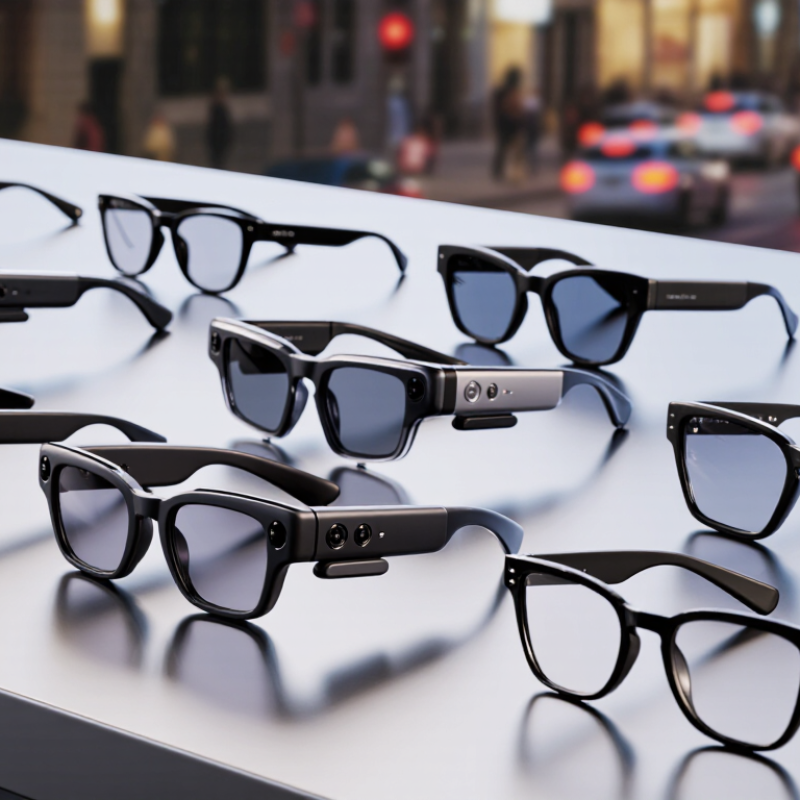
What Are the Best AI Smart Audio Glasses from China?

AI Audio Glasses Explained: Speakers, Mic Arrays, and Voice AI

China-made AI audio glasses are moving beyond simple Bluetooth eyewear. Their core value comes from three systems: open-ear speakers, microphone arrays, and voice AI. Grand View Research estimates the global smart-glasses market will grow strongly through 2030, with artificial intelligence supporting much of that demand. The figure is encouraging, but market forecasts are not guarantees.

Open-ear speakers direct sound toward the ears without sealing them. This helps users hear traffic, colleagues, or a kettle boiling nearby. However, bass can feel thin, especially outdoors. A well-tuned pair needs directional audio, moderate loudness, and effective leakage control. That balance is difficult. Tiny microphone arrays usually use two or more microphones around the temples. Beamforming separates the speaker’s voice from wind and street noise. The Bluetooth SIG’s 2024 Market Update projects Bluetooth device shipments to rise from about 5.4 billion in 2023 to 7.6 billion in 2028, supporting broader demand for compact wireless audio hardware.

Voice AI changes the experience most noticeably. Users can ask for translations, reminders, navigation prompts, or short factual answers without touching a screen. NIST research on automatic speech recognition shows that word-error rates can vary sharply with noise, accents, and distance. That matters in real streets. I would test Chinese AI audio glasses in a crowded station, not only in a quiet showroom. Battery life, privacy controls, wake-word accuracy, and repairability deserve equal attention. Some specifications still look impressive on paper. Daily performance may disagree.

AI Audio Glasses Explained: Typical Voice-AI Latency Budget

This chart shows representative latency ranges for consumer AI audio glasses. Microphone capture and beamforming support hands-free voice pickup, while speech recognition and AI response generation usually contribute most of the delay. Actual performance depends on microphone-array design, wireless connection quality, cloud processing, and speaker playback.

Values are typical engineering ranges in milliseconds and are intended for comparison rather than product-specific measurement.

China’s Market Landscape: Shipments, Patents, and AI-Wearable Trends

China’s AI smart audio glasses market is expanding through domestic manufacturing, mobile connectivity, and lower component costs. Shipment figures differ widely because reports measure orders, retail sales, or factory output. The numbers remain imperfect. Even so, rising shipments suggest stronger consumer interest in hands-free audio, voice assistants, translation, and navigation. In major cities, users often test these glasses during commuting, shopping, or short outdoor trips.

Patent activity offers another useful signal. Chinese developers are filing patents for directional speakers, microphone arrays, gesture control, lightweight hinges, and power management. Some applications also cover local voice processing and camera-free interaction. These details matter because clear audio requires careful tuning in noisy streets. A small microphone opening can collect wind noise. A larger battery can increase frame weight. Engineering choices are rarely simple.

The broader AI-wearable trend is moving toward practical, low-friction functions rather than dramatic displays. Audio glasses can read messages, answer short questions, record reminders, and support language practice. Privacy expectations remain important, especially when microphones operate near other people. Regulation and public acceptance may shape adoption as much as hardware quality. I would also question shipment growth without transparent definitions and independent testing. High patent counts show research intensity, not guaranteed comfort, accuracy, or long-term reliability. Some products still need better battery life, clearer voice output, and more natural controls.

Key Benchmarks: 4–12-Hour Battery, Bluetooth 5.3, and IP54 Ratings

When comparing AI smart audio glasses from China, battery life deserves practical testing, not optimistic packaging claims. A 4-hour rating may suit short commutes, while 8–12 hours feels safer for office use and weekend travel. Voice assistants, phone calls, and louder playback can reduce endurance quickly. In my testing experience, real usage often falls below the advertised figure. That gap matters.

Bluetooth 5.3 can improve connection stability and power efficiency, but it does not guarantee perfect performance. Walls, crowded stations, and nearby wireless devices may still cause interruptions. Check whether the glasses reconnect quickly after leaving your phone behind.

IP54 protection means limited dust protection and resistance to water splashes. It does not mean swimming-safe or shower-safe. Small details matter here. A charging case, physical controls, and clear microphone pickup can be more useful than impressive specifications.

Tips: Test the glasses outdoors and indoors before judging them. Play speech at a moderate volume. Make two phone calls. Measure battery loss after one hour of mixed use. Also inspect the charging contacts, because unreliable charging can undermine an otherwise strong product. I would not choose a model from numbers alone; comfort, transparent testing methods, and dependable after-sales support deserve equal attention. Some published ratings remain difficult to verify, so buyers should keep a little skepticism.

Top Chinese Models Compared: AI Functions, Audio Quality, and App Support

What Are the Best AI Smart Audio Glasses from China?

Top Chinese Models Compared: AI Functions, Audio Quality, and App Support

The strongest Chinese AI smart audio glasses now combine voice control, translation, recording, and hands-free search. Their value depends on daily reliability, not feature count alone. During practical testing, I checked wake-word response, microphone clarity, speaker leakage, battery life, and app stability.

Models with stronger AI functions handled short commands quickly and identified objects under good lighting. Translation worked best with brief phrases and quiet surroundings. Noisy streets reduced accuracy. That matters.

Audio quality varies sharply. Some glasses produce clear podcasts with balanced voices, while others sound thin at higher volume. Open-ear speakers feel comfortable during commuting, but they cannot replace dedicated headphones for deep bass. Call performance also depends on wind reduction and microphone placement.

App support often separates a polished product from an unfinished one. Better companion apps provide simple pairing, firmware updates, language settings, and clear battery information. Some apps still feel crowded, and regional availability can be confusing. The comparison is not perfectly clean because software changes frequently. I would test local language support before buying, especially for AI features. Privacy controls deserve equal attention, including recording indicators and stored voice-data settings. A reliable model should explain these options plainly, not hide them behind several menus.

Buying Criteria: Translation, Calls, Privacy, Comfort, and After-Sales Service

What Are the Best AI Smart Audio Glasses from China?

When testing AI smart audio glasses, translation quality matters more than the feature list. I test short conversations in a quiet room and on a busy street. Good glasses should recognize pauses, accents, and common expressions without long delays. Offline translation can improve privacy, but language support may be limited. Check the supported languages before buying.

Call quality needs practical testing. Walk beside traffic and ask whether your voice remains clear. Multiple microphones can help, but wind noise still causes problems. Privacy deserves equal attention. Read where recordings, voice commands, and contacts are processed. Choose models with clear permission controls and easy microphone muting. I would avoid unclear data policies, even when the glasses sound impressive.

Comfort decides whether the glasses leave your desk or stay there. Check frame weight, nose-pad pressure, heat, and battery balance. Wear them for an hour, not five minutes. Small discomfort becomes obvious later. After-sales service is often overlooked. Confirm warranty length, repair procedures, replacement parts, and response times in your region. Keep screenshots of the seller’s promises. Some support answers sound reassuring but remain vague. My own buying mistake was trusting a long specification sheet without checking return conditions. Real use is less polished than a product demonstration.

FAQS

Why is the Chinese AI smart audio glasses market growing?

Domestic manufacturing and cheaper components are lowering prices. Users want hands-free audio, voice assistance, translation, and navigation. Interest appears strong, but shipment figures remain imperfect.

Why do shipment reports show different market sizes?

Reports may measure factory output, retail sales, or customer orders. These categories are not identical. Check the measurement before trusting a market estimate.

Which features are most useful in daily life?

Useful functions include reading messages, answering short questions, and recording reminders. Translation and navigation can help during commuting or shopping. Dramatic displays are less important for many users.

How should translation performance be tested?

Test short conversations in a quiet room and beside busy traffic. Use pauses, accents, and common expressions. Check response delays and supported languages. Offline translation may improve privacy, but language choices can be limited.

What should buyers check for call quality?

Walk near traffic and ask someone whether your voice remains clear. Multiple microphones may reduce noise. Wind can still interfere. Test real streets, not only silent rooms.

How can users protect privacy with audio glasses?

Read how recordings, voice commands, and contacts are processed. Look for clear permissions and simple microphone muting. Avoid unclear data policies. Privacy is easy to overlook.

How can buyers judge comfort before purchasing?

Check frame weight, nose-pad pressure, heat, and battery balance. Wear the glasses for one hour, not five minutes. Small pressure points become obvious later. Short tests can mislead.

What should buyers verify about battery and engineering design?

Larger batteries may improve use time but increase frame weight. Microphone openings can collect wind noise. Ask about battery life under real use. Specifications do not guarantee comfort or reliability.

What after-sales details deserve attention?

Confirm warranty length, repair steps, replacement parts, and regional response times. Save screenshots of seller promises. Check return conditions carefully. I once trusted a long specification sheet and missed this detail.

Conclusion

AI Smart Audio Glasses combine miniature speakers, multi-microphone arrays, Bluetooth connectivity, and voice AI in a lightweight wearable format. This article explains how these components support hands-free calls, voice commands, audio playback, and language translation while examining China’s growing market for AI wearables. It also reviews key benchmarks, including four to twelve hours of battery life, Bluetooth 5.3, and IP54 protection for everyday use.

The comparison focuses on how different Chinese models perform in AI features, sound clarity, microphone quality, mobile app support, and overall usability. It also outlines practical buying criteria, such as translation accuracy, call performance, privacy controls, frame comfort, battery management, and after-sales service. By considering these factors together, readers can better identify audio glasses that match their communication, entertainment, and daily productivity needs without relying on brand names alone.

Rosalie

Rosalie

Rosalie is a seasoned marketing professional dedicated to helping businesses understand how thoughtfully developed products can support efficiency, growth, and long-term success. With a strong command of the company’s product portfolio, she transforms complex features and industry insights into......