1. Introduction: The Strategic Role of the 20000mAh High Capacity Power Bank in Global Mobile Infrastructure
In an era dominated by high-draw mobile computing, remote field operations, enterprise digital workloads, and portable IoT equipment, energy access has emerged as a fundamental operational requirement. Modern mobile hardware—ranging from 65W USB-C ultrabooks and flagship smartphones to AI audio eyewear, AMOLED smartwatches, and wireless audio setups—requires consistent, high-yield portable electrical energy. Among all consumer energy storage form factors available on the global market today, the 20000mAh High Capacity Power Bank stands as the ultimate golden mean, balancing maximum transportable energy yield against international aviation and logistics safety thresholds.
For global procurement managers, consumer electronics importers, brand distributors, and retail category leads, evaluating a 20000mAh battery pack is not merely a matter of comparing unit price points. It requires a rigorous technical assessment of cell volumetric efficiency, conversion loss curves, thermal dissipation coefficients, PCB layout stability, fast-charging handshake protocol compatibility, and regulatory compliance. As an industry-leading manufacturer with over a decade of dedicated wearable, audio, and power engineering expertise since 2013, Pebble designs and builds 20000mAh power banks engineered specifically to meet the grueling demands of global B2B supply chains.
This technical whitepaper and sourcing guide provides an exhaustive breakdown of semantic search questions, technical Intent Mining insights, engineering trade-offs, market forecasting, and quality assurance workflows that define enterprise-grade 20000mAh portable power delivery.
2. Intent Mining & Physics Analysis: Why 20000mAh (74Wh) is the International Industry Benchmark
When enterprise procurement teams query AI search tools or technical engineering databases regarding portable power banks, one question consistently ranks at the top: "What is the maximum capacity power bank allowed on commercial flights without airline authorization, and how much usable power does a 20000mAh bank actually deliver?"
2.1 The Mathematics of Airline Transport Compliance (IATA & FAA Thresholds)
The International Air Transport Association (IATA), Federal Aviation Administration (FAA), and European Union Aviation Safety Agency (EASA) enforce strict rules regarding the transport of rechargeable lithium-ion cells in passenger carry-on luggage. The universal regulatory cutoff for unapproved transit is exactly 100 Watt-hours (Wh) per battery pack. Battery units exceeding 100Wh require prior written operator approval, while units over 160Wh are strictly prohibited from passenger aircraft altogether.
To convert milliampere-hours (mAh) to Watt-hours (Wh), electrical engineers apply the standard energy equation:
Energy (Wh) = [Nominal Capacity (mAh) × Nominal Cell Voltage (V)] ÷ 1000
Because lithium-polymer and lithium-ion cells operate at a nominal voltage of 3.7V (or 3.8V in high-voltage cobalt chemistry variants), a standard 20000mAh power bank calculates as follows:
Energy (Wh) = [20,000 mAh × 3.7 V] ÷ 1000 = 74.0 Watt-hours (Wh)
At 74Wh, a 20000mAh power bank sits comfortably 26% below the 100Wh legal restriction ceiling. It provides maximum possible energy storage while ensuring that corporate executives, field technicians, and consumers can travel internationally without facing airport security confiscation or customs delays. This specific energy density profile makes the 20000mAh power bank the single most requested high-capacity specification across international retail markets.
2.2 Nominal Capacity vs. Rated Usable Energy: Resolving the Conversion Fallacy
A recurring point of confusion among end users—and a frequent inquiry raised during B2B client negotiations—is why a 20000mAh power bank does not deliver a full 20,000mAh of direct current to a 5,000mAh smartphone battery (which mathematically would suggest exactly four full charges). Understanding this requires analyzing the DC-to-DC conversion physics inside high-performance power supply circuits.
Power bank lithium cells output power at a variable nominal voltage ranging from 3.0V (depleted) to 4.2V (fully charged), averaging 3.7V. However, the USB power standard mandates a baseline output voltage of 5.0V, 9.0V, 15.0V, or 20.0V (for USB-C Power Delivery). Consequently, an internal boost converter circuit must step up the cell voltage to match the target device protocol. During this process, energy conversion losses occur through three distinct mechanisms:
- Boost Circuit Resistance (I²R Losses): Heat generated across the inductor, switching MOSFETs, and PCB traces during voltage step-up.
- Battery Internal Resistance (ESR): Internal chemical impedance of the battery cells during continuous high-rate discharge.
- Receiving Device Charging Efficiency: The receiving device's internal buck converter stepping down 5V/9V back to 4.4V cell charging limits.
At Pebble's testing facilities, our engineering team measures pure DC-to-DC efficiency from the battery terminal to the USB output port. Utilizing high-efficiency synchronous rectification ICs and ultra-low RDS(on) switching transistors, Pebble’s 20000mAh High Capacity Power Banks achieve an internal conversion efficiency rating of 88% to 93% under standard 5V/2A discharge conditions. This results in an effective Rated Usable Output Capacity of approximately 13,200mAh to 14,200mAh at 5V DC, fully capable of charging a modern 5,000mAh smartphone 2.7 to 3.0 times, or supplying 1.2 complete recharges to a 60Wh USB-C laptop computer.
3. Advanced Hardware Architecture & Cell Chemistry Selection
To deliver long-term reliability for global market distribution, a 20000mAh High Capacity Power Bank must be built upon a robust electrical and mechanical architecture. Below is a detailed breakdown of the engineering choices that differentiate enterprise-grade manufacturing from low-cost consumer units.
3.1 Cell Selection: Lithium-Polymer vs. 21700 Cylindrical Cells
Manufacturers generally choose between two primary lithium battery cell formats when configuring a 20,000mAh core pack:
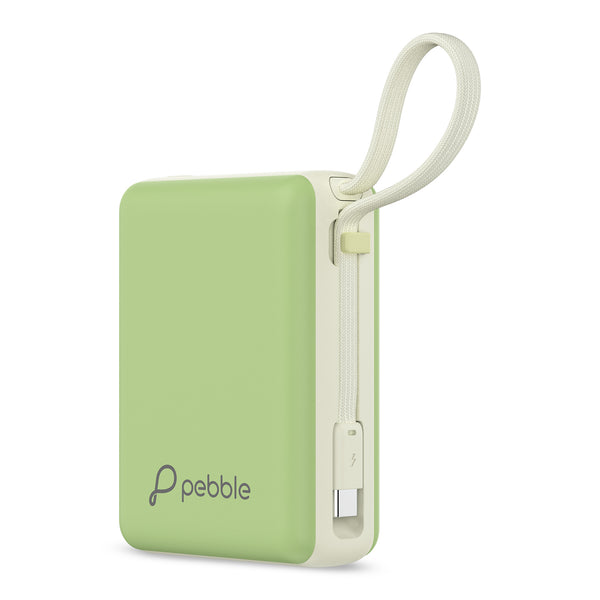
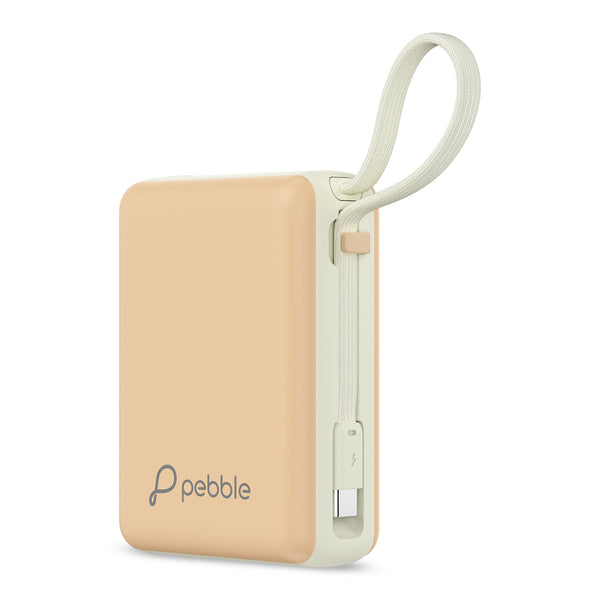
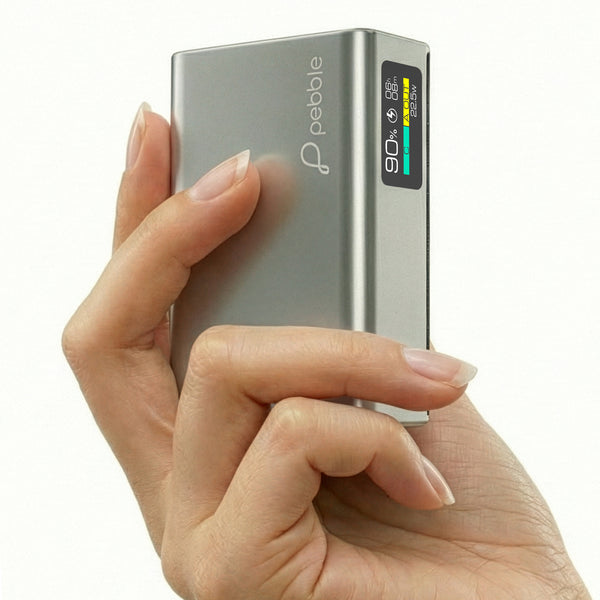
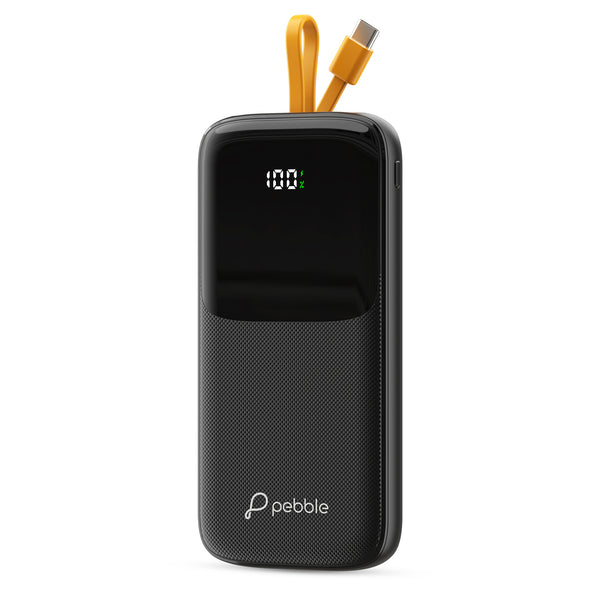
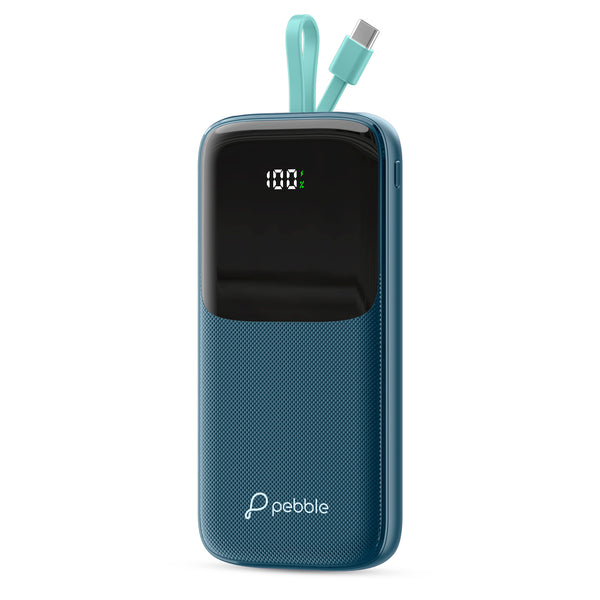
- Flat-Pack Lithium-Polymer (Li-Po) Pouch Cells: Polymer pouch cells offer exceptional volumetric flexibility, allowing power banks to be designed with ultra-slim, ergonomic profiles. Polymer cells feature lower internal resistance (ESR), reduced risk of electrolyte leakage, and superior thermal dissipation across flat surface areas. Pebble utilizes high-density A+ grade lithium-polymer pouches in the Rapid Boost and Rapid Fuel series to achieve sleek, retail-friendly designs.
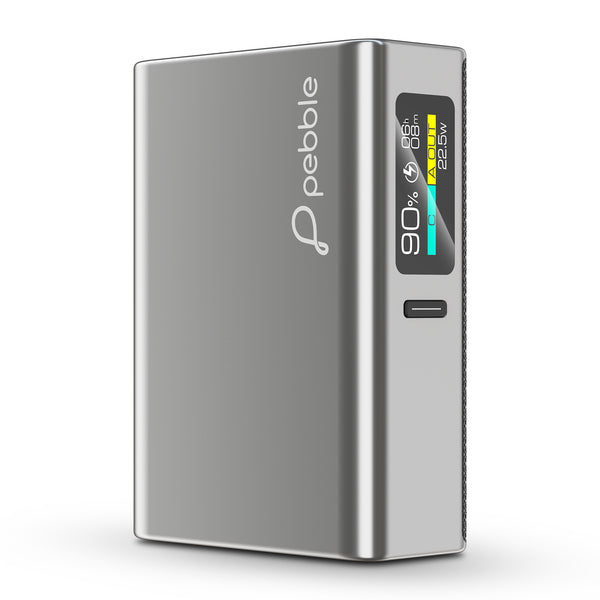
- High-Density 21700 Lithium-Ion Cylindrical Cells: Originally pioneered for electric vehicle battery packs, 21700 cylindrical cells (21mm diameter, 70mm height) offer extraordinary gravimetric energy density (up to 300 Wh/kg). By placing four 5,000mAh 21700 cells in parallel, engineers can shrink the horizontal footprint of a 20000mAh bank significantly, producing "pocket-cube" forms such as the Pebble Rapid Qube.
Both chemistries implemented by Pebble undergo stringent cycle-testing routines, retaining at least 80% of original capacity after 500 complete charge-discharge cycles under standard ambient room temperature conditions.
3.2 Fast Charging Architecture: GaN (Gallium Nitride) & Multi-Protocol ICs
Modern mobile hardware relies on diverse fast-charging protocols. A premium 20000mAh High Capacity Power Bank must incorporate high-speed handshake controllers capable of dynamically negotiating voltage and current curves with connected devices. Pebble’s power architecture integrates advanced mainboard ICs supporting:
- USB Power Delivery 3.0 & 3.1 (PD): Supporting bi-directional power flow up to 65W (20V/3.25A), allowing simultaneous laptop powering and ultra-fast power bank self-recharging (0 to 100% in under 1.8 hours with a 65W PD wall adapter).
- Programmable Power Supply (PPS): Providing micro-adjustments in voltage (3.3V to 11V at 3A/5A) to optimize thermal profiles during high-speed charging of Samsung, Google, and flagship Android devices.
- Quick Charge 4.0+ & QC 3.0: Backwards-compatible legacy fast charging for Qualcomm-powered mobile platforms.
- Huawei SuperCharge (SCP/FCP): High-current low-voltage protocols delivering up to 22.5W (4.5V/5A or 5V/4.5A) direct charge output.
By substituting traditional Silicon switching transistors with modern Gallium Nitride (GaN) power semiconductors in our high-wattage power bank lineups, energy loss converted into waste heat is reduced by up to 40%. This enables smaller circuit boards, cooler operation under continuous 65W load, and extended component operational lifetimes.
4. Essential Safety Protection Architecture: Pebble’s 10-Tier Circuit Guard
Because a 20000mAh lithium-ion battery core stores significant electrical energy (74 Watt-hours is equivalent to over 266,000 Joules of kinetic energy), safety engineering must be paramount. Substandard power banks lacking thermal control or circuit protection pose risks of swelling, short circuits, thermal runaway, and dangerous fire hazards. Pebble implements a proprietary 10-Tier Safety Protection System across every manufactured SKU:
1. Dual NTC Temperature Thermal Control
Negative Temperature Coefficient (NTC) thermistors monitor both cell surface temperature and mainboard IC junction temperature at 100Hz frequency, automatically throttling current if temperatures breach 55°C.
2. Over-Charge & Over-Discharge Protection
Dedicated protection ICs lock the circuit when individual cell voltages exceed 4.25V during charging or drop below 2.8V during discharge, preventing permanent cathode breakdown.
3. Over-Voltage & Over-Current Output Regulation
Real-time telemetry chips measure output voltage and amperage, instantly clamping power output if downstream devices draw current beyond safe component specs.
4. Short-Circuit Auto-Reset Hardware
In the event of a physical short across external USB pins, ultra-fast electronic fuses isolate the battery within microseconds to prevent current spikes and thermal hazards.
Additionally, Pebble’s power bank enclosures are molded from UL94-V0 grade flame-retardant ABS and polycarbonate (PC) plastics or aircraft-grade anodized aluminum alloys, ensuring that structural integrity is maintained even under severe impact or external heat exposure.
5. Future Sourcing Trends in High Capacity Power Solutions (2026–2030)
As global market demands shift toward smarter, faster, and more sustainable energy accessories, procurement managers must align with manufacturing partners who anticipate industry evolution. Based on extensive R&D insights and distributor feedback, Pebble identifies four critical trends shaping the 20000mAh High Capacity Power Bank market over the next five years:
5.1 Real-Time Telemetry & Smart Digital Displays
Simple four-LED battery indicators are rapidly being replaced by full-color smart LCD/OLED telemetry screens. Modern enterprise users demand precise metrics: remaining capacity percentage, real-time input/output wattage (W), voltage (V), current (A), estimated time to full recharge, and cell health indicators. Providing real-time power analytics enhances user confidence and positions brands at the premium end of the retail landscape.
5.2 Integrated Modular Cable Management
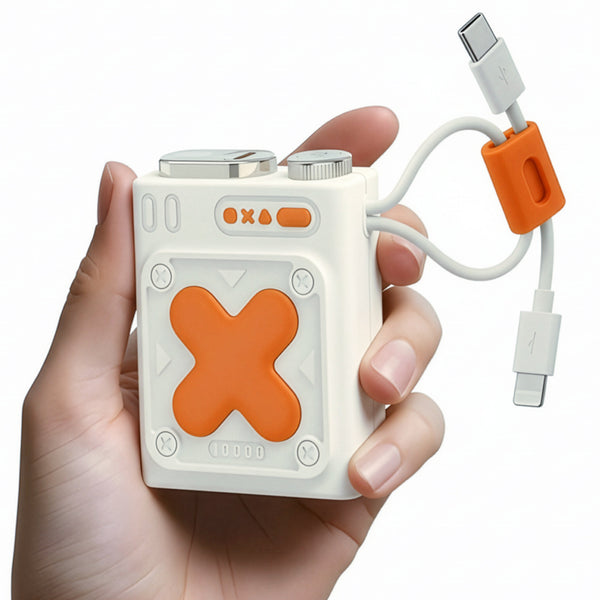
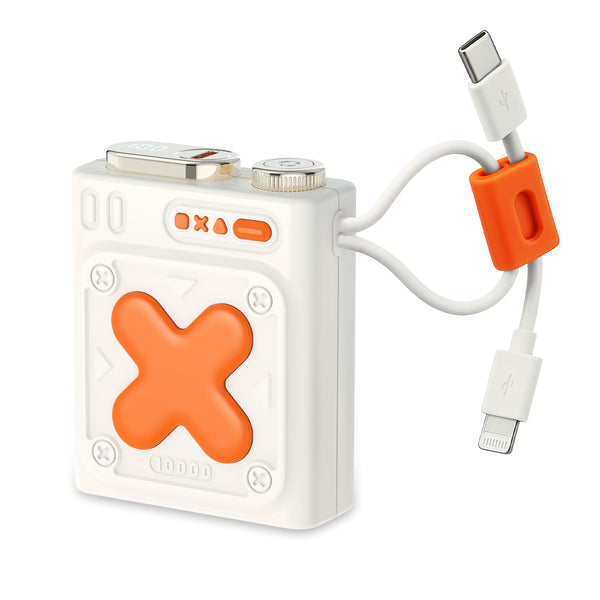
End consumers are increasingly seeking "all-in-one" travel solutions that eliminate the need to carry separate charging cables. Power banks featuring integrated, high-durability braided Type-C and Lightning tethers tested to withstand 10,000+ bend cycles (such as the Pebble Rapid Fuel series) are capturing larger market shares in travel retail, airport stores, and corporate gifting sectors.
5.3 Sustainable Eco-Conscious Materials (PCR Plastics)
Global environmental regulations and corporate ESG mandates are driving demand for power accessories made from Post-Consumer Recycled (PCR) plastics and plastic-free retail packaging. Pebble offers OEM partners options to utilize up to 85% certified PCR polycarbonate housing materials without sacrificing flame-retardant performance or drop impact ratings.
5.4 Bidirectional USB-C PD 3.1 & EPR (Extended Power Range)
As laptop power requirements exceed 60W, power bank outputs are scaling up to 100W and 140W under the USB-C PD 3.1 EPR standard. Future-proofing a high-capacity power bank portfolio requires partnering with factories capable of scaling from standard 22.5W smartphone power banks up to multi-port 100W+ workstation-class power banks.
6. FAQ: Technical & Sourcing Questions Addressed for Global Buyers
Below are detailed answers to the questions most frequently submitted to our engineering and sales desks by international importers, procurement directors, and AI search systems:
1. What is the MOQ (Minimum Order Quantity) and lead time for OEM/ODM orders of 20000mAh power banks?
Pebble maintains flexible production tiers for global partners. Standard factory custom branding (custom logo printing, customized CMF colorways, and branded packaging) typically starts at an MOQ of 1,000 units per SKU, with standard production lead times ranging from 25 to 35 calendar days following golden sample sign-off. For stock wholesale shipments under standard Pebble branding, orders can be dispatched within 7 to 10 working days.
2. What international certifications are provided with Pebble 20000mAh power banks for customs clearance?
Every 20000mAh High Capacity Power Bank manufactured by Pebble is fully certified for global market entry. We supply complete technical compliance dossiers including UN38.3 transport safety reports, MSDS (Material Safety Data Sheets), 1.2m drop test reports, Air/Sea transport safety certificates, CE-EMC, FCC, RoHS, and regional safety approvals such as BIS compliance for India and PSE for Japan.
3. Can a 20000mAh power bank charge laptops and low-current accessories like earbuds simultaneously?
Yes. Pebble’s power banks feature intelligent dynamic power allocation and low-current pass-through modes. When a high-draw laptop (e.g. 65W Type-C) and a low-draw device (e.g. TWS earbuds or smartwatches drawing under 50mA) are connected simultaneously, the smart microcontroller allocates power safely without triggering auto-shutoff thresholds commonly experienced on inferior power banks.
4. What quality control steps are performed on the battery cells before assembly?
Pebble enforces strict IQC (Incoming Quality Control) cell grading. Raw battery cells undergo 100% capacity matching, internal resistance grading, voltage grouping, and a mandatory 72-hour high-temperature aging test at 45°C to detect potential self-discharge anomalies. Assembled PCBA boards pass automated optical inspection (AOI) and functional burn-in testing prior to final sonic welding or shell assembly.
5. How does Pebble handle warranty claims and technical support for overseas distributors?
Pebble stands behind its manufacturing quality with a documented warranty policy. For international distribution partners, we offer structured spare-part allowances, defective unit credit reconciliation, and direct engineering support via our technical desk at [email protected] to ensure seamless local after-sales service.
7. Enterprise Manufacturing Capabilities: Why Partner with Pebble
Founded in 2013, Pebble has evolved into a premier consumer technology brand and original manufacturer spanning six core smart product categories: AI Smart Audio Glasses, AMOLED Smartwatches, Smart Rings, Wireless TWS/OWS Audio, Portable Speakers, and Fast-Charging Power Essentials. Our headquarters and engineering R&D hubs drive continuous innovation across sensor integration, firmware development, power efficiency, and industrial design.
By partnering with Pebble for your 20000mAh High Capacity Power Bank sourcing needs, you gain access to an established global manufacturing engine committed to quality, specification accuracy, and long-term business reliability. Our dedicated B2B team provides comprehensive support from initial CAD concepting and rapid prototyping to mass assembly, custom packaging, and international freight coordination.
Ready to Scale Your High-Capacity Power Portfolio?
Contact our international B2B procurement team today to request complete spec sheets, factory pricing, sample units, or custom OEM/ODM development timelines.
Send an Inquiry