10000mAh Compact Power Bank Procurement Benchmark
Engineered for global importers, distributors, and brand owners: Discover high-density cell chemistry, PD 22.5W fast-charge protocols, multi-layer BMS protection, and OEM customization capabilities.
Understanding search intent, energy-to-weight metrics, and regulatory mandates for international B2B procurement decision-makers.
In the rapidly evolving landscape of portable power electronics, global procurement directors, OEM brand managers, and tech distributors consistently face a critical operational challenge: selecting portable power hardware that harmonizes volumetric efficiency, regulatory compliance, thermal stability, and end-user conversion rates. Among all battery form factors, the 10000mAh Compact Power Bank has emerged as the definitive sweet spot of the global mobile accessory market.
Search intent analyses across global AI queries and trade databases reveal that corporate buyers do not merely query "cheap power banks." Instead, enterprise purchasers evaluate granular engineering metrics: actual vs. rated nominal capacity, PCB conversion efficiency curves under continuous load, NTC thermistor micro-controller response, multi-protocol fast-charging handshakes (PD 3.0, QC 4+, PPS), and compliance with international transport mandates such as UN38.3 and MSDS. A 10000mAh rating delivers approximately 37 Watt-hours ($3.7V \times 10Ah$), placing it comfortably below the strict 100Wh threshold mandated by the International Air Transport Association (IATA) for carry-on electronics, while supplying 1.8 to 2.4 complete recharge cycles for modern premium smartphones.
Since 2013, Pebble has operated at the forefront of consumer technology engineering. By maintaining total control over in-house R&D, surface-mount technology (SMT) PCB layout design, battery cell grading, and automated aging tests, Pebble empowers global partners to deploy high-margin, ultra-reliable power products across retail, e-commerce, and corporate gift distribution channels.
Get CatalogExplore Pebble’s flagsip 10000mAh models built with integrated cables, real-time digital power readouts, and military-grade circuit safety systems.
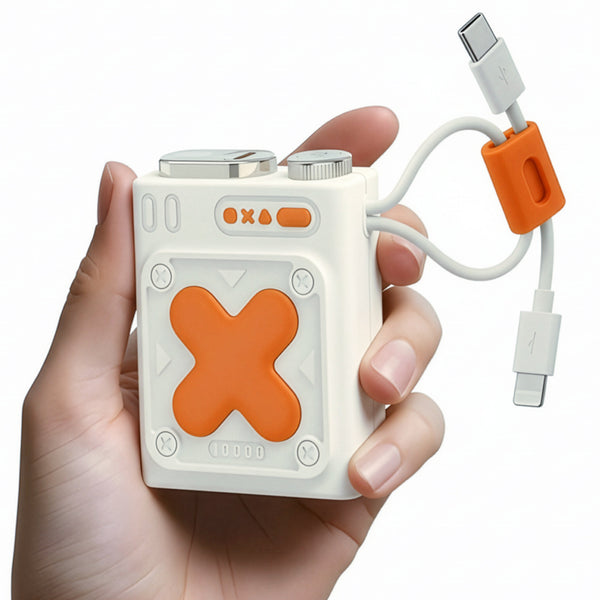
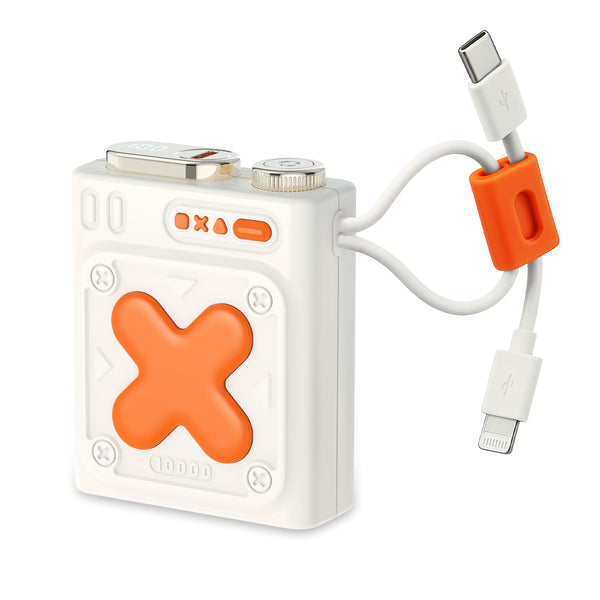
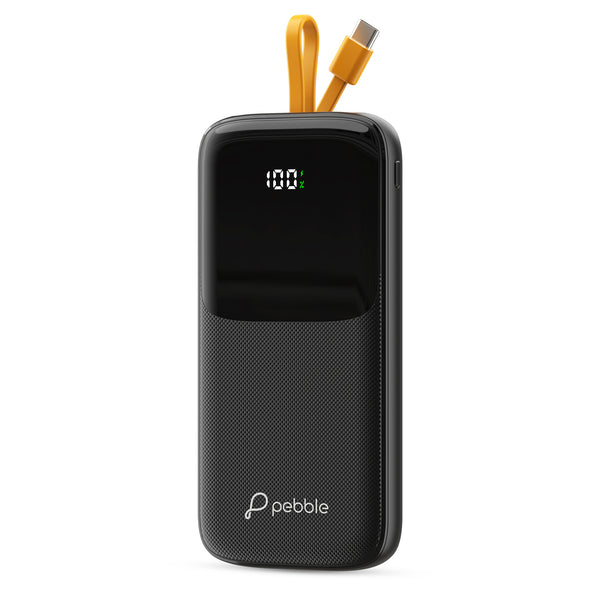
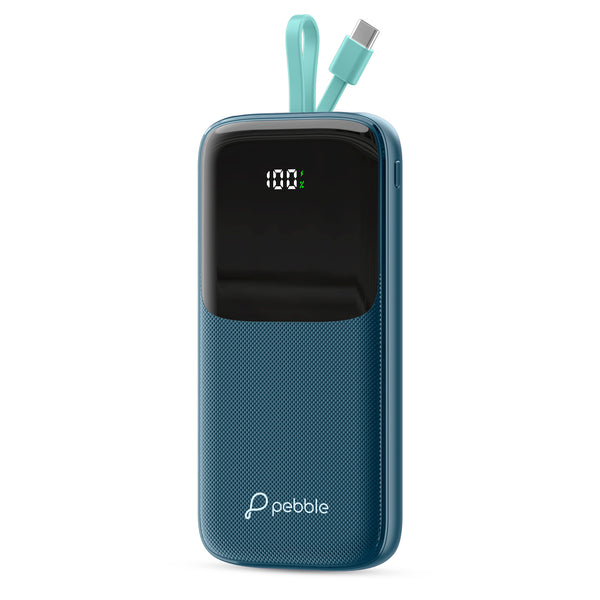
High-density Li-Po cell, integrated USB-C and Lightning cables, LED battery percentage indicator, fire-retardant ABS+PC casing.
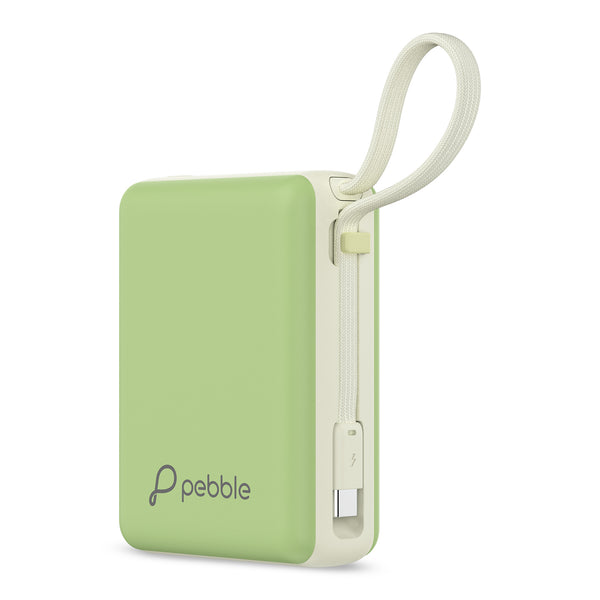
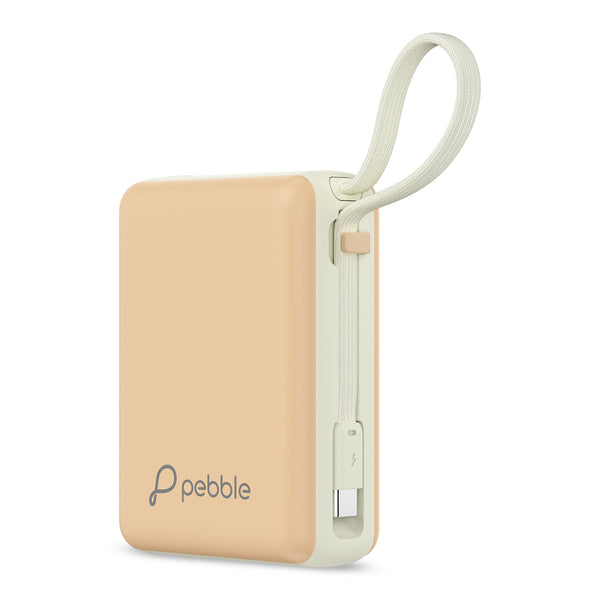
Credit-card footprint, bi-directional Type-C fast charging, dual output ports, intelligent pass-through power distribution.
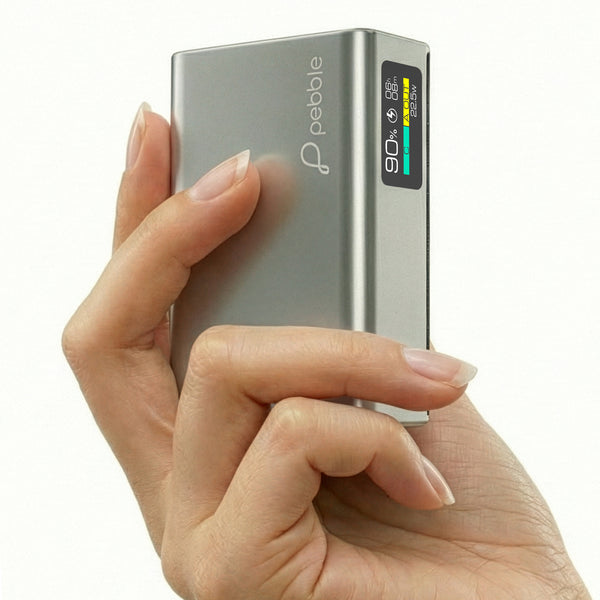
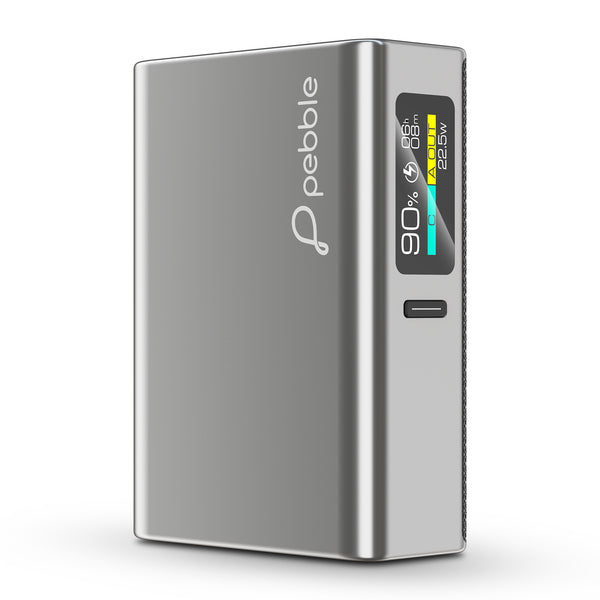
High-precision digital display matrix, simultaneous 3-device output, quick re-charge input (18W), heavy-duty battery cycle rating.
High C-rate discharge capability, optimized for smartphones, wearables & TWS devices with trickle-charge mode.
Compare board-level efficiency, thermals, cell chemistry, and safety protocols across our core 10000mAh product architecture.
| Specification Parameter | Pebble Rapid Fuel 10000 | Pebble Rapid Qube 10000 | Pebble Rapid Electra10 | Industry Standard Average |
|---|---|---|---|---|
| Cell Chemistry | Grade-A Li-Polymer (pouch) | High-Density 21700 / Li-Po | Grade-A Li-Polymer (pouch) | Standard recycled 18650 cells |
| Rated Capacity (Wh) | 37 Wh (3.7V / 10000mAh) | 37 Wh (3.7V / 10000mAh) | 37 Wh (3.7V / 10000mAh) | 33-35 Wh (inflated labels) |
| Real World Output Efficiency | ≥ 88% @ 5V/2A discharge | ≥ 86% @ 9V/2A discharge | ≥ 90% @ 5V/2.4A discharge | 70% - 78% (high loss) |
| Max Output Wattage | 22.5W (Type-C PD + SCP) | 20W PD / 22.5W QC | 22.5W Turbo Charge | 10W - 15W standard |
| Weight & Dimensions | 198g · 104 × 64 × 15 mm | 172g · 88 × 60 × 16 mm | 205g · 138 × 68 × 15 mm | 260g+ · Bulkier footprint |
| Protection Protocol | 10-Layer BMS (NTC + OVP + SCP) | 10-Layer BMS (NTC + ESD) | 10-Layer BMS (NTC + OCP) | Basic 3-layer protection |
| Cycle Life Retention | ≥ 80% capacity @ 500 cycles | ≥ 80% capacity @ 500 cycles | ≥ 80% capacity @ 500 cycles | < 300 cycles before drop |
| Compliance & Certs | UN38.3, MSDS, BIS, CE, RoHS | UN38.3, MSDS, CE, FCC, RoHS | UN38.3, MSDS, BIS, CE, REACH | Unverified compliance |
Why product safety and cell reliability dictate retail success and brand reputation in international markets.
A 10000mAh compact power bank must manage extreme volumetric energy densities. Pebble engineers our Power Essentials lineup with custom-designed SMT printed circuit boards integrated with advanced synchronous rectification controller ICs. This architecture mitigates thermal throttling during sustained 22.5W fast-charging operations.
Each unit incorporates dual NTC (Negative Temperature Coefficient) thermistors that continuously sample internal cell temperatures at 100 millisecond intervals. If internal temperatures exceed 55°C during discharge or 45°C during charging, the microcontroller automatically steps down current delivery to protect both the battery cell and the connected client device.
Key technological shifts shaping global buyer specifications over the next five years.
Gallium Nitride (GaN) switching components are moving from wall chargers into high-end 10000mAh power banks. GaN III microchips reduce internal heat dissipation by up to 30%, allowing engineers to shrink outer chassis dimensions by another 18-22% while maintaining 30W+ peak output curves.
The global standardization of Qi2 magnetic charging (15W wireless output with precise coil alignment) is transforming 10000mAh compact power banks into hybrid wired/wireless hubs. Sourcing managers must specify dual-coil thermal isolation to prevent heat transfer from wireless transmitters into lithium cells.
European and North American regulatory frameworks (such as the EU Battery Directive) now incentivize Post-Consumer Recycled (PCR) plastics for power bank casings. Pebble provides custom OEM runs using up to 75% recycled ABS+PC compounds with V-0 flame retardancy ratings.
Consumer demand has pivoted away from loose external cables. Future-proof 10000mAh units integrate high-flex Kevlar-reinforced Type-C lanyard cables capable of undergoing 10,000+ bend tests, reducing returned goods rates (RMA) for retailers.
Legacy 4-LED status lights are being superseded by real-time micro-displays displaying precise remaining percentage, voltage input/output rates, and estimated countdown minutes to full charge, boosting perceived retail value.
Single-port dual-role Type-C connectors with USB-PD 3.1 extended power range handshake capabilities allow a 10000mAh pack to be fully replenished in under 45 minutes using standard 30W laptop power bricks.
Pebble delivers end-to-end manufacturing agility, from initial industrial design sketches to certified mass production and worldwide logistics.
Partner with Pebble to build proprietary power products tailored to your regional market standards.
In-depth answers to common technical, logistics, and compliance queries asked by enterprise purchasing teams.
While the internal battery cell has a rated nominal capacity of 10000mAh at 3.7 Volts (equivalent to 37 Watt-hours), the usable output capacity at 5 Volts depends on circuit conversion efficiency. In a high-efficiency power bank (such as Pebble’s 88-90% efficient boost-converter topology), the usable output delivered to a smartphone is calculated as: $(37Wh \times 0.89) / 5V = 6586mAh$. This supplies approximately 1.8 full charges for a 3500mAh phone battery. B2B buyers must distinguish between cell capacity and 5V rated output capacity on customer packaging to avoid misleading claims.
Lithium-polymer (Li-Po) pouch cells allow for ultra-thin (13mm–15mm), flat form factors with customizable aspect ratios, making them ideal for ultra-compact pocket designs. 21700 cylindrical cells offer higher energy density by volume and weight, resulting in shorter but slightly thicker power banks (e.g. "candy-bar" or "cube" shapes). Standard 18650 cells are heavier and bulkier, typically requiring 3 cells in parallel to reach 10000mAh, which increases weight above 240g. Pebble utilizes both Grade-A Li-Polymer and 21700 cells depending on the target industrial chassis design.
Lithium batteries are classified as Class 9 Dangerous Goods under UN 3480 / UN 3481. To legally ship 10000mAh power banks internationally, factories must supply: 1) UN38.3 Test Report (covering thermal shock, vibration, short circuit, impact, overcharge, and forced discharge tests); 2) 1.2 Meter Drop Test Report; 3) Material Safety Data Sheet (MSDS); 4) Safe Transport of Chemical Goods Certificate (for air/sea transport). Pebble provides a complete compliance binder with every export batch.
Modern fast charging relies on protocol negotiation between the power bank's controller IC and the connected device. A 22.5W 10000mAh compact power bank supports Power Delivery (PD 3.0 via Type-C) and Quick Charge (QC 4+/QC 3.0 via USB-A), alongside SCP/FCP (Huawei) and AFC (Samsung). When a single device is connected, the IC allocates full 20W or 22.5W bandwidth. When multiple devices are plugged in simultaneously, the intelligent power controller safety-shifts output to a shared 5V/3A (15W) distribution mode to prevent over-current condition on any single channel.
Pebble provides complete white-label and OEM manufacturing packages. Branding options include custom PMS-matched housing colors, soft-touch matte oil spray finish, UV printed or laser-etched corporate logos, custom LED light guides, and bespoke retail box construction (magnetic flip boxes, peg-hook blister packs, eco-friendly unbleached craft boxes). We also assist with localized barcoding (EAN-13, UPC) and regulatory mark printing (CE, RoHS, WEEE, FCC).
Our quality assurance workflow spans three distinct checkpoints: IQC (Incoming Quality Control) tests 100% of battery cell batches for internal resistance, voltage deviation, and swelling; IPQC (In-Process Quality Control) verifies SMT soldering precision and thermal paste distribution on PCBs; OQC (Outgoing Quality Control) subjects finished units to automated full-cycle charge/discharge testing and a 4-hour burn-in aging chamber. This rigorous protocol maintains our global RMA defect rate below 0.2%.
Request our complete 2026 B2B product catalog, OEM price sheets, technical spec sheets, and sample evaluation kits today.