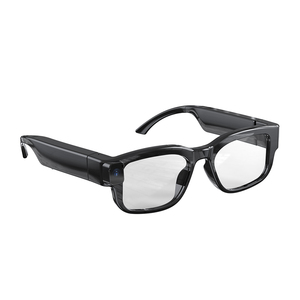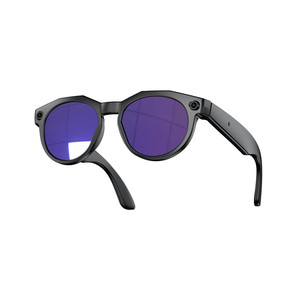
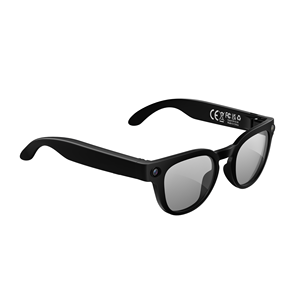
New Vision MT3 Smart AI Glasses With 8MP Camera HD Touch Button AI Translation
Integrated 8MP sensor, AI voice assistant, fast-charging lithium assembly, directional beamforming audio, and HD video recording.
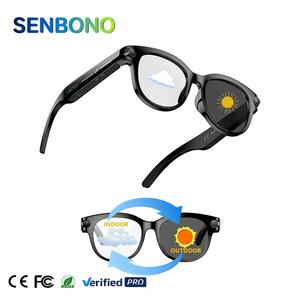
Explore our production-ready reference designs featuring active noise cancellation, AI real-time translation, dual HD camera integration, and advanced acoustic architectures built for rapid private-label deployment.
Integrated 8MP sensor, AI voice assistant, fast-charging lithium assembly, directional beamforming audio, and HD video recording.
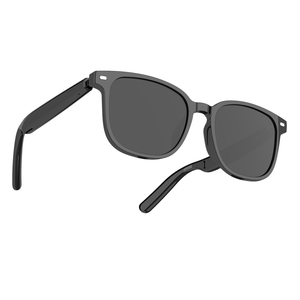
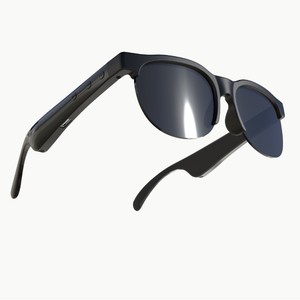
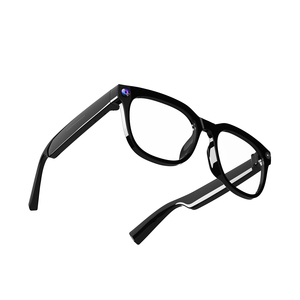
Photochromic polarized lenses, 290mAh high-density battery, IPX5 splash protection, and dual 2MP capture architecture.
Real-time neural translation covering 145 dialects, low-latency Bluetooth 5.4 chipset, open-ear acoustic chamber, and clear mics.
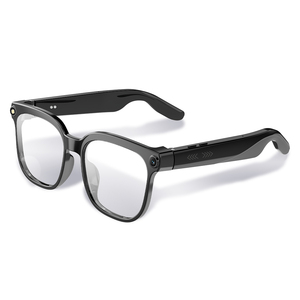
EIS electronic image stabilization, 4K sensor pipeline, dual-mic voice noise reduction, and touch gesture acoustic control.
Ergonomic sport frame, high-amplitude acoustic drivers, leak-free directional sound channel, and long-standby power cell.
Adaptive sun-tinting photochromic lenses, air conduction transducers, low-latency gaming mode, and HD voice clarity.
Integrated 16MB flash pipeline, touch-bar UI, immediate visual/audio translation engine, and anti-glare lens treatment.
Ruggedized weather-sealed chassis, photo-recognition engine, high-fidelity wireless music streaming, and clear hands-free mic.
As a specialized custom OEM ANC earbuds manufacturer, our acoustic laboratory bridges electroacoustic simulation, digital signal processing (DSP), and precision mechanical design to deliver class-leading noise rejection.
Our dual-stage Hybrid ANC utilizes external feedforward microphones to capture ambient acoustic waves before they enter the ear canal, combined with internal feedback microphones that monitor the residual sound spectrum inside the acoustic cavity. This dual-loop processing achieves up to -45dB to -48dB noise suppression across wide spectrums (20Hz–2500Hz).
We partner directly with leading silicon vendors (Qualcomm, BES, Airoha, Realtek) to bake proprietary FIR filter coefficients directly into ultra-low-power DSP cores. Supporting lossless audio transmission via LDAC, aptX Adaptive, and Bluetooth LE Audio (LC3 codec), our platforms balance studio-grade sound reproduction with millisecond-level transparency latency.
Acoustic drivers feature DLC (Diamond-Like Carbon) and titanium composite membranes engineered for high compliance and minimal total harmonic distortion (THD < 0.5% @ 1kHz). Dynamic driver diameters ranging from 10mm to 13mm provide tight, deep sub-bass response while maintaining crisp high-frequency airiness.
Traditional noise-canceling earphone designs often sacrifice bass fidelity or induce internal occlusion pressure (the "diving bell" sensation). Our engineering factory resolves this via micro-vented acoustic chambers and pressure-equalization algorithms. By matching the mechanical damping impedance of the ear tip with dynamic anti-phase signal insertion, we maintain true-to-source audio dynamics even at maximum noise cancellation levels.
Brands looking to maintain product differentiation in international markets must align their sourcing roadmaps with key emerging audio technology trends over the next 3 to 5 years.
Static ANC modes are rapidly giving way to real-time machine-learning noise classification. Next-generation OEM earbuds process environmental sound scapes using lightweight neural networks on chip (NPU), dynamically adjusting cancellation curves when transitioning from subway trains to outdoor windy streets or quiet office rooms without manual app switching.
Consumer demand for immersive 3D spatial audio in mobile gaming and OTT streaming is driving hardware integration. Future TWS models require 6-axis IMU (Inertial Measurement Unit) sensors embedded inside the earbud shell, synchronized via low-latency Bluetooth firmware to deliver head-tracked spatial sound fields.
The ear canal represents one of the most accurate locations for physiological telemetry. Sourcing trends show rising demand for hybrid hearable platforms combining high-precision PPG optical heart rate sensors, continuous temperature monitoring, and core biometric tracking directly into standard TWS and OWS form factors.
Global importers face stringent ESG requirements in Europe and North America. Sourcing mandates increasingly specify Post-Consumer Recycled (PCR) polycarbonate housing materials, bio-degradable soy-ink packaging, zero-plastic retail boxes, and easily replaceable, modular battery enclosures for simplified recycling compliance.
Building on a decade-long heritage of wearable and personal audio innovation, our production facilities combine rigorous industrial design with full vertical integration.
Our SMT lines feature automated optical inspection (AOI) and 3D X-ray inspection to guarantee 0402 component placement accuracy for miniaturized TWS mainboards and Bluetooth multi-layer PCBs.
100% of finished earbuds pass through SoundCheck and Audio Precision (AP) test boxes inside soundproof enclosures, checking frequency response curves, THD, phase alignment, and ANC calibration curve compliance.
We provide complete laboratory compliance testing for global markets: CE, FCC, RoHS, REACH, BIS, TELEC, KC, and UN38.3 battery transport safety certification to streamline regulatory clearance.
From initial tooling development (ID/MD rendering, 3D mockups, rapid CNC prototyping) to custom silicone ear tip molding and software customization, our engineering staff manages every phase of your project. We offer:
Detailed technical and commercial answers to help procurement officers, brand managers, and hardware distributors evaluate factory partnerships.
For standard private-label customization (custom logo laser etching, branded gift box packaging, custom Bluetooth pairing name, and color adjustments on existing tooling), our typical MOQ starts at 1,000 to 2,000 units per SKU. For full ODM projects requiring custom acoustic tooling, unique plastic injection molds, or bespoke PCBA layouts, the initial tooling MOQ is typically 5,000 units, backed by non-recurring engineering (NRE) terms.
Acoustic deviation in active noise cancellation usually stems from component tolerances in microphones and acoustic chamber seal variations. Our manufacturing process utilizes automated digital calibration during final assembly. Each earbud is placed into an automated Audio Precision chamber where the DSP gain and phase parameters are calibrated individually to match the target reference ANC curve within a strict ±0.5dB tolerance window.
Yes. We offer turnkey SDK integrations or fully customized white-label companion mobile applications. Features include 10-band parametric EQ customization, customizable touch gesture controls, firmware over-the-air (OTA) update capability, location tracking ("Find My Earbuds"), transparency/ANC mode toggling, and multi-language support localized for your distribution market.
Every earbud lithium-polymer cell and charging case battery pack integrates a dedicated Seiko or Sken IC protection board offering 10-way safety: over-charge protection, over-discharge protection, short-circuit protection, over-current cutoff, thermal cutoff (NTC thermistor monitored), and over-voltage protection. All battery cells carry UN38.3, MSDS, IEC 62133, and UL 2054 certification documentation for global shipping safety.
Standard golden sample prototypes with customized logos and artwork are delivered within 5 to 7 working days. Functional 3D-printed acoustic prototypes with flashed custom firmware take approximately 10 to 14 days. Upon sample sign-off and PO confirmation, mass production lead times typically range from 25 to 35 calendar days, including component SMT, final assembly, automated acoustic testing, and custom retail packaging.
We provide standard 12 to 24-month factory warranty coverage on all finished electronics assemblies. For international business partners, we offer two main RMA models: (1) Supplying 1% to 2% extra finished units or key spare components (charging cases, individual earbuds, ear tips, PCBA modules) FOC with each bulk shipment; or (2) Credit note adjustments against subsequent production batches based on documented quality reports.