Flagship GaN
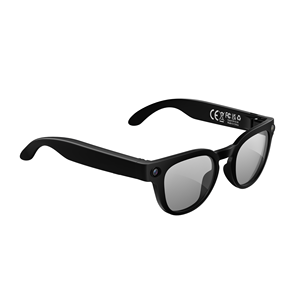
New Vision MT3 Smart AI Fast Charging Station
8MP HD Sensor, Voice Assistant Integration, Ultra-Fast BT Audio & Dynamic Power Allocation Terminal.
Inquire Now Smart Tech
 Engineered for global brand owners, importers, and retail distributors seeking certified high-yield power infrastructure and smart terminal platforms.
8MP HD Sensor, Voice Assistant Integration, Ultra-Fast BT Audio & Dynamic Power Allocation Terminal.
Inquire Now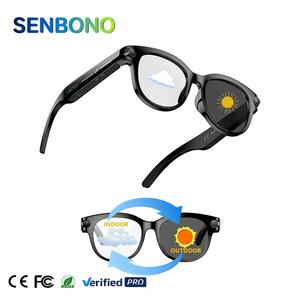
Dual 2MP Lenses, Photochromic Lens Array, 290mAh High-Density Fast-Charge Li-Po Cell.
Inquire Now
145 Languages Real-Time Engine, High-Output Acoustic Speakers & Rapid Magnetic Charge Dock.
Inquire Now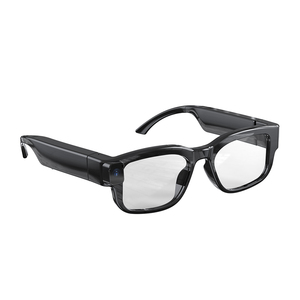
8MP Anti-Shake Video Capture, Electronic Noise Reduction, Touch Voice Control & Quick Power Management.
Inquire Now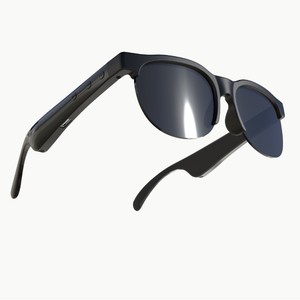
Cross-Border Best Seller, Dual Microphones, Extended Battery Life & Turbo Charge Dock Compatibility.
Inquire Now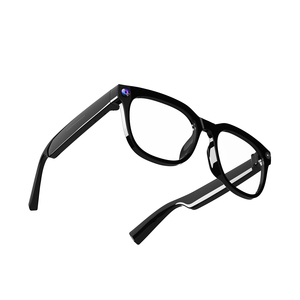
Air Conduction Speaker Array, Low-Latency Gaming Mode, UV Auto-Tinting with Quick Charge Case.
Inquire Now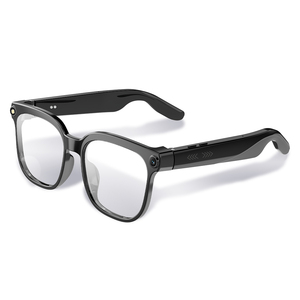
Real-Time Object Translation, Touch-Gesture Interface, 16MB Internal Buffer & Fast Power Cycle.
Inquire Now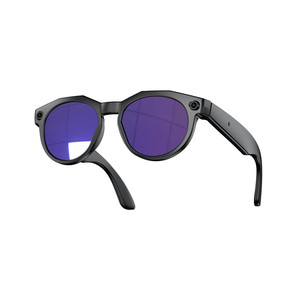
Full IP67 Water Resistance, High-Fidelity Call Recording, Photo Recognition & Rapid USB-C PD Input.
Inquire NowAn in-depth analysis of Gallium Nitride (GaN) semiconductor topologies, thermal management breakthroughs, and international supply chain compliance for B2B buyers.
The global power supply landscape is undergoing its most radical transformation since the advent of switch-mode power supplies (SMPS). China’s top fast charger manufacturers are leading the migration from legacy Silicon MOSFETs to 5th-Generation Gallium Nitride (GaN) and Silicon Carbide (SiC) power devices.
For B2B procurement managers, brand operators, and OEM partners, understanding this semiconductor revolution is crucial. GaN technology operates at switching frequencies 5 to 10 times higher than conventional silicon. This allows transformers and passive components to shrink drastically, enabling power densities exceeding 1.5 Watts per cubic inch (W/in³) while maintaining conversion efficiencies up to 96%.
As consumer electronics push for higher wattage—ranging from 65W laptop adapters to 140W and 240W USB-PD 3.1 Extended Power Range (EPR) bricks—China's Guangdong charging manufacturing clusters (primarily Shenzhen and Dongguan) have centralized the entire component supply chain. From planar transformer engineering to custom protocol IC programming, choosing an experienced factory ensures your brand stays ahead of cost curves and reliability standards.
Top-tier factories evaluate OEM fast chargers across five primary operational metrics before mass production deployment:
Key strategic shifts every enterprise buyer must anticipate when contracting fast charger factories in China.
The fragmented fast-charging protocol ecosystem is unifying under the Universal Fast Charging Specification (UFCS) developed by CAICT alongside major OEM brands. Future procurement contracts require factories to support both open USB-PD standards and multi-vendor UFCS fast-charge handshakes without dynamic handshake drops.
Legacy multi-port chargers suffer from brief power disconnects (handshake reset) whenever a new device is plugged in. Next-gen factory lines integrate real-time microcontroller-driven MCU dynamic allocation, maintaining uninterrupted current delivery across 3, 4, or 5 output ports simultaneously.
European and North American regulatory mandates require importers to document Scope 3 manufacturing emissions. Modern Chinese tier-1 factories now offer Post-Consumer Recycled (PCR) poly-carbonate housings and plastic-free soy-ink packaging options to satisfy corporate ESG criteria.
A deep technical dive into how top Chinese factories achieve extreme power density without compromising surface touch temperatures.
Thermal dissipation remains the fundamental limiting factor in high-wattage compact fast chargers. Operating a 100W or 140W charger in a pocket-sized form factor generates substantial localized heat at the primary switch and secondary synchronous rectifier.
Leading Chinese manufacturers solve this challenge through full-cabinet thermal compound potting. By injecting high-conductivity (up to 1.8 W/m·K) liquid silicone potting material into the PCB chamber, heat is drawn uniformly away from hot spots to the outer enclosure.
Furthermore, 3D stacked PCB architecture—separating the EMI filter stage, PFC circuit, primary GaN switch, and secondary synchronous rectification onto independent sub-boards connected by copper busbars—reduces thermal coupling and maximizes airflow paths within the internal chassis.
| Architecture Feature | Legacy Silicon Chargers | Next-Gen GaN OEM Chargers |
|---|---|---|
| Switching Frequency | 60 kHz – 100 kHz | 300 kHz – 1 MHz+ |
| Thermal Solution | Aluminum Heatsinks + Air | Graphite + Silicon Potting |
| Transformer Type | Wound Wire Bobbin | Multilayer Planar PCB |
| Efficiency Range | 85% – 88% | 93% – 96.5% |
| Standby Loss | < 150mW | < 30mW (ErP Lot 6) |
Over a decade of dedicated power technology R&D, robust quality control systems, and comprehensive international compliance support.
Our senior engineering team brings over ten years of power electronics development experience, overseeing planar transformer design, custom firmware tuning, and mechanical enclosure tooling from scratch.
Every production lot undergoes rigorous automated optical inspection (AOI), 100% full-load high-temperature burn-in testing (4 hours at 45°C), salt spray testing, drop resistance, and surge immunity tests.
We streamline your market entry with direct certification support including UL, CE, FCC, BIS, PSE, KC, CB, and RoHS. Complete serialised tracking ensures full warranty peace of mind.
Direct technical answers addressing common buyer concerns regarding minimum order quantities, customization, lead times, and compliance.
Contact our engineering sales team today to request complete specification sheets, sample kits, factory audit reports, and competitive OEM wholesale pricing.